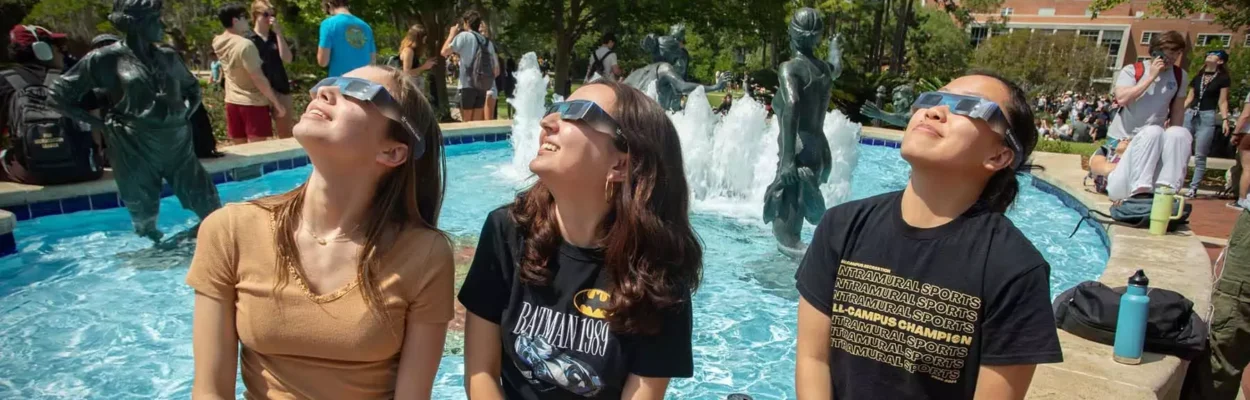
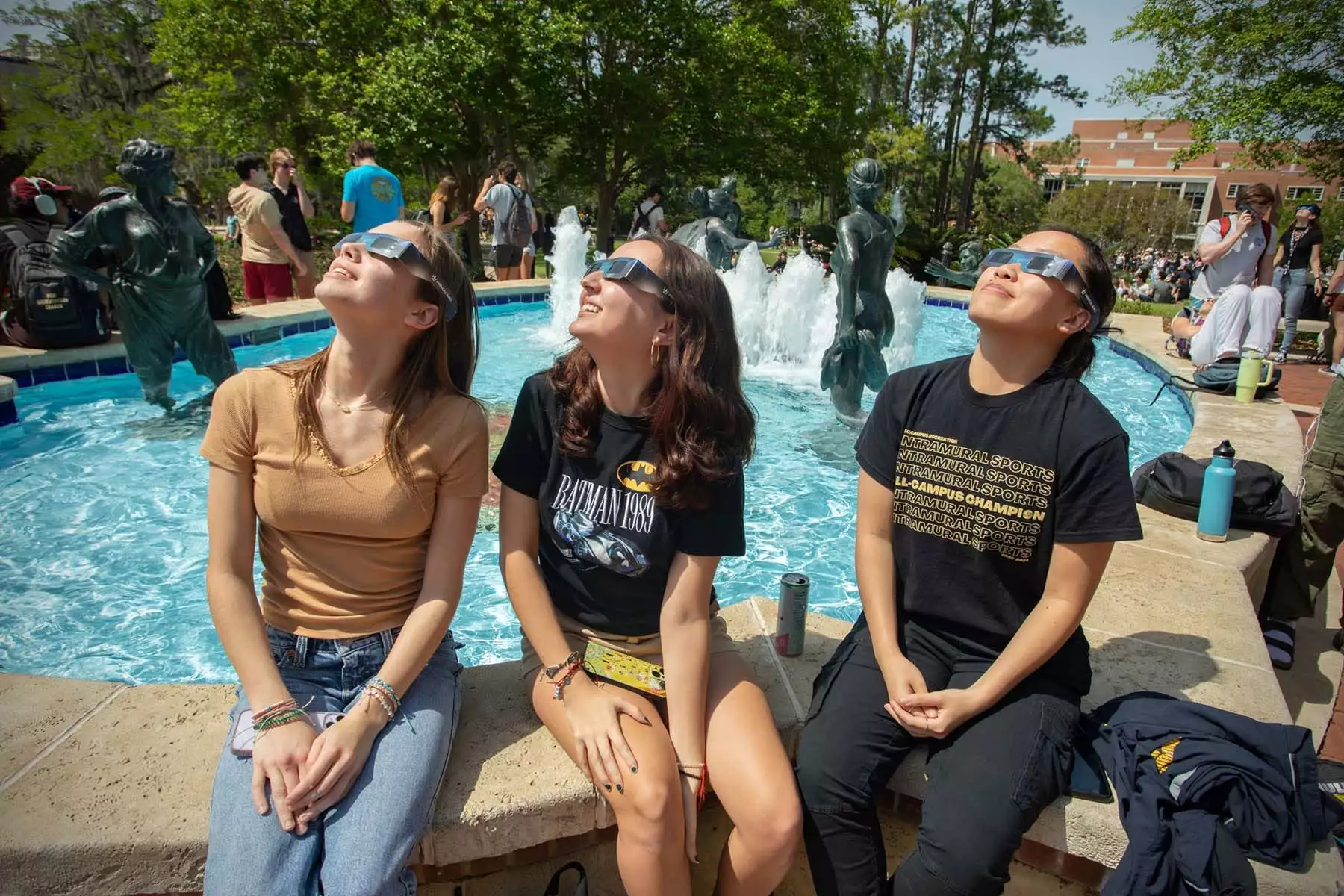
Tallahassee witnessed a partial solar eclipse on April 8, 2024. | Florida State University
Published on August 12, 2026 at 10:15 am
Free local news and info, in your inbox at 6 a.m. M-F. Sign up for the Jacksonville Today newsletter.
While millions will witness the spectacle of a total solar eclipse Wednesday, Floridians will miss out on seeing the celestial event.
Residents and visitors in Greenland, Iceland and parts of western Europe will see the eclipse in totality, while a partial eclipse will be visible from as far away as the northern United States.
Jacksonville Today thanks our sponsors. Become one.
A total solar eclipse occurs when the moon passes directly between the sun and Earth, temporarily blocking sunlight from reaching portions of the globe.
NASA says complete darkness will last for only a few minutes at most locations within the path of totality, while the entire eclipse will be visible for several hours from any given location.

Weather conditions can always play a role for anyone hoping to see the eclipse in the visibility zone.



Jacksonville Today thanks our sponsors. Become one.
Cloud cover associated with storm systems passing over the Northern Hemisphere will be the greatest potential hindrance for skywatchers, but smoke from wildfires could also lead to reduced visibilities.
NASA says solar eclipses occur during the new moon cycle when the lunar body lines up in a straight line between the sun and Earth, which occurs at most twice a year.
While Floridians will miss out on seeing Wednesday’s solar eclipse, skywatchers will have another astronomical event to look forward to later in the month.
A lunar eclipse will be visible across much of the Americas, Europe and Africa on the night of Aug. 27 through the morning hours of Aug. 28.
A lunar eclipse occurs when the alignment starts with the Sun, followed by Earth and ends with the Moon, with the globe casting a shadow across the lunar surface.
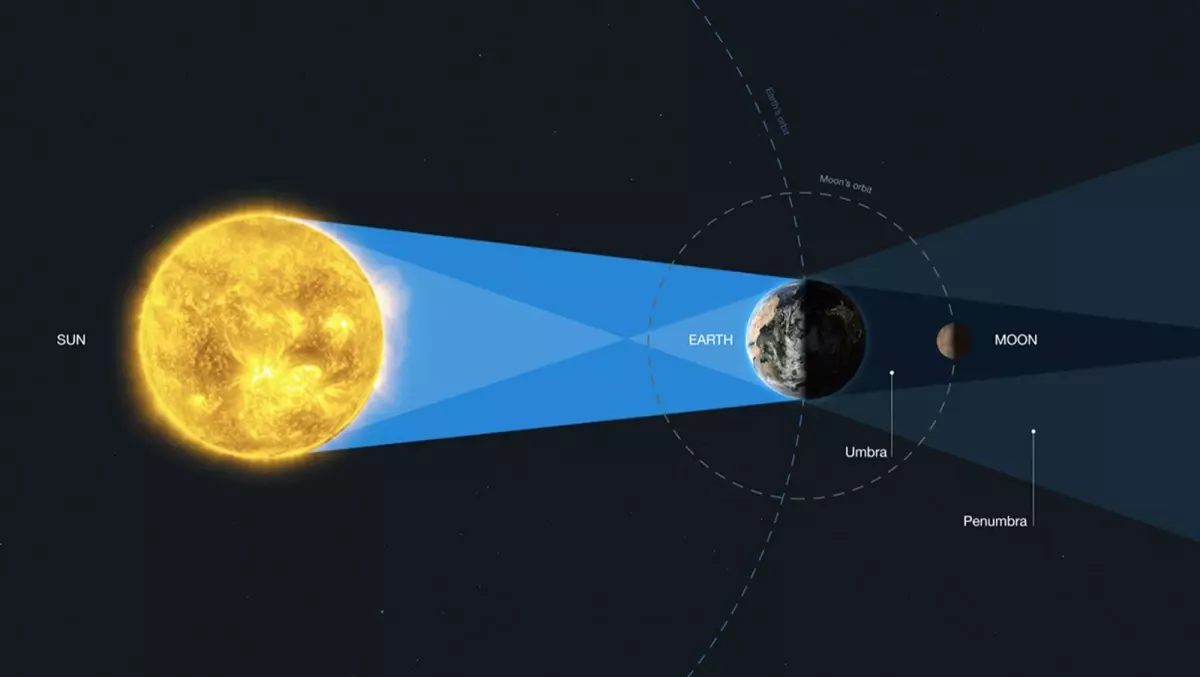
Because the alignment will not be in a straight line, the event will not be capable of being a total lunar eclipse, but that will not stop more than 95% of the Moon from temporarily disappearing during the night sky.
Across the Sunshine State, the lunar eclipse will begin shortly after 10:30 p.m. Aug. 27 and last until nearly 2 a.m. Aug. 28.
Unlike during a solar eclipse, the lunar eclipse will not require any specialized equipment for safely viewing the event with the naked eye.
Protective eye gear is required while observing a partial, annular or total solar eclipse, when direct sunlight is in view.
The last solar eclipse visible from the state occurred on April 8, 2024, when cities across Florida experienced roughly 40% to 70% obscuration of the Sun.
The next solar eclipse that will be visible from Florida will be on Jan. 26, 2028, but a more significant event is scheduled to occur on Aug. 12, 2045, when the path of totality will move over the state.

Copyright © 2026 Storm Center