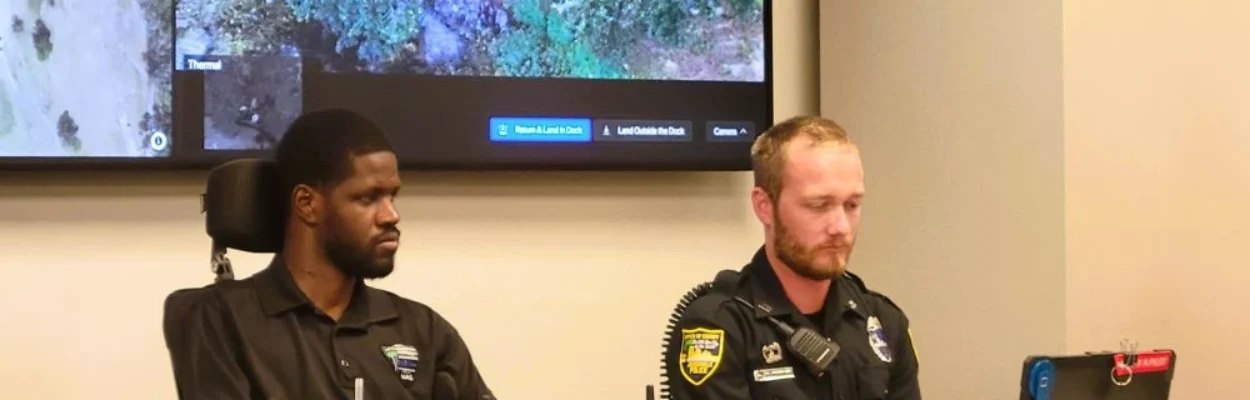
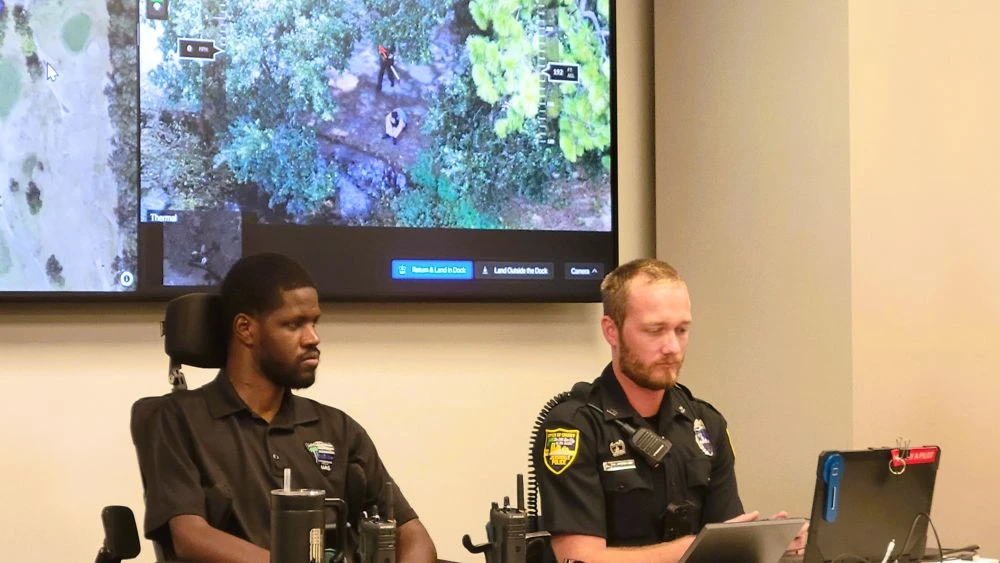
Detectives Malik Daricaud, left, and Thomas Strickland pilot a drone in a re-creation Wednesday, July 22, 2026. The screen above them shows an officer finding a missing 15-year-old with autism. | Dan Scanlan, Jacksonville Today
Published on July 22, 2026 at 5:13 pm
Free local news and info, in your inbox at 6 a.m. M-F. Sign up for the Jacksonville Today newsletter.
A few weeks ago, a 911 caller reported that a 15-year-old boy with autism was missing. A Jacksonville police officer, equipped with a drone, was dispatched to a community off Golfair Boulevard.
Within a minute, the officer pulled up and deployed the Eagle Eye drone, one of about 25 in use citywide, and flew near a lake where the missing teen might have gone.
Jacksonville Today thanks our sponsors. Become one.
The drone camera quickly spotted the missing teen next to the lake, as a sergeant guided the ground search by the view from the sky.
“Officers on the ground don’t always see lakes in the area,” said Detective James Nguyen. “But because the drone is at an altitude, it is able to scan the area and see there are bodies of water.”
The Sheriff’s Office re-created the search Wednesday to publicize the expansion of the department’s drone fleet from 25 to 61, funded with state money.
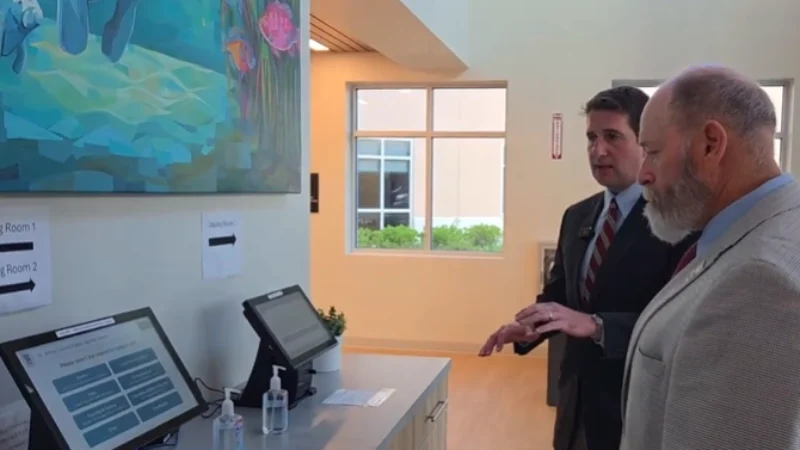
Jacksonville Today thanks our sponsors. Become one.
“Jacksonville is not getting smaller; it is growing, and it is growing at a rapid rate, so we have to grow with it. So if we cannot grow by bodies and manpower as quickly as we would like, this is a way for us to do that,” said Sheriff T.K. Waters. “This does not replace officers. It gives them better information to make more informed decisions, another tool in our big tool box, and I am very excited about that.”
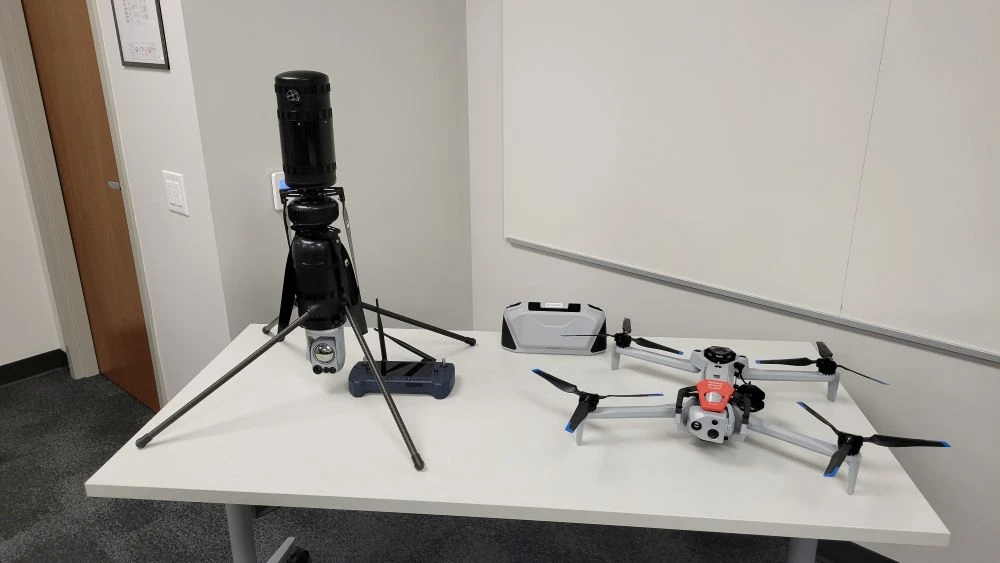
State Rep. Wyman Duggan, R-Jacksonville, filed the request for the $610,000 state allocation for the Drone First Responder Program. It will pay for a large mapping drone, 10 for outdoor use and 25 smaller ones to search indoors for missing people or suspects.
The allocation almost did not happen, Duggan said.
“Programs were cut across the board, but this program was not and, in fact, this is the only drone program in the entire state of Florida in this year’s state budget that survived the governor’s veto review,” Duggan said.
Drones in action
Drones have been in use by the Sheriff’s Office since 2018 to track missing children or look for suspects. By September 2019, police operated five and firefighters used three during natural disasters, searching for missing persons and helping SWAT find barricaded suspects.
In November 2019, the Sheriff’s Office used drones to search for 5-year-old Taylor Rose Williams when her mother reported her missing from her Jacksonville neighborhood. Police eventually found the child buried in Alabama, and mother Brianna Williams was sentenced to life in prison.
In December 2019, drones joined a massive search for two missing Westside Jacksonville children ultimately found alive in the woods off West Beaver Street, police said.
Live demonstrations Wednesday showed the drones’ capabilities before an officer arrives.
In one, drones spotted men breaking into a truck and finding a gun — which responding officers learned about from the drone operator before they arrived.
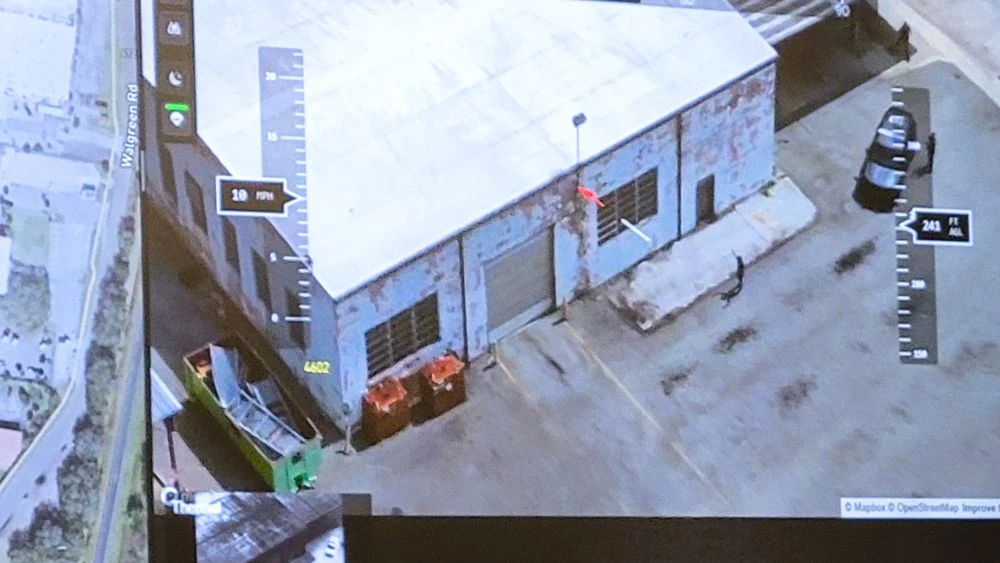
Letting officers know what they could face before they get there is an advantage, said Chris King, technology and operational support chief.
“Getting that information to the officers on scene, especially in the (Drone as a First Responder) program, they can see it in their cars, see what the suspects look like, see what the scene looks like,” King said.
Waters was asked about Florida statutes prohibiting police from flying a camera-equipped drone over private property to gather evidence from its owner or tenant. He said drones will be used only if officers get a call that a crime is occurring or a missing person needs to be found. Police cannot just “fly over a house and surveil it,” he said.
“When you have SWAT that’s got to serve a high-risk warrant for a murder suspect or drug dealer, we know there’s guns in that situation,” Waters said. “When they have to make a forced entry, before they go inside, they can breach that door and send those interior drones inside and they have 100% the ability to do that. And hopefully we can get that person in custody without any officer getting hurt or having an officer-involved shooting.”