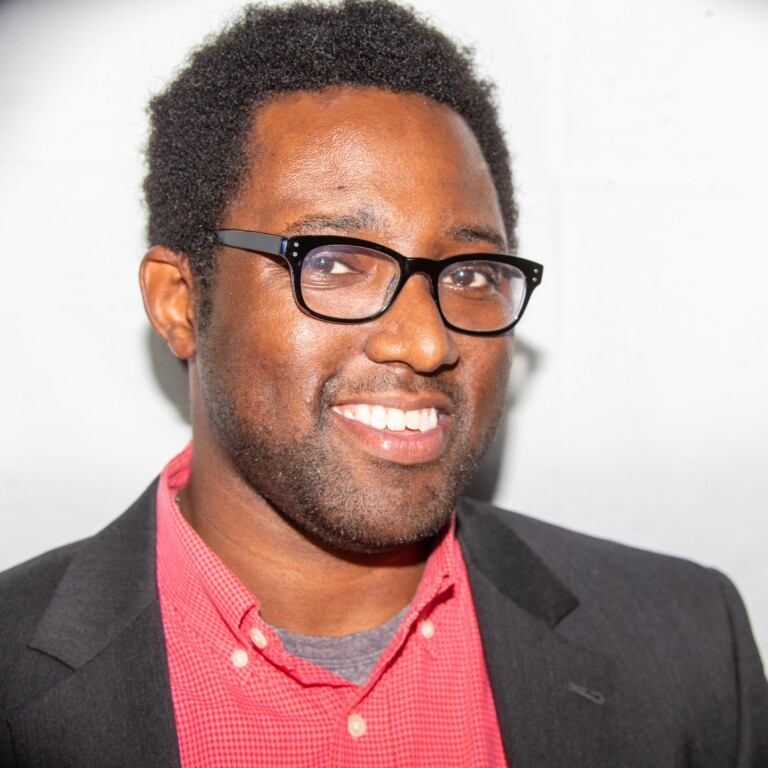


Ryan May learns on Match Day 2026 on Friday, March 20, 2026, that he will have an otolaryngology residency at Beth Israel Deaconess Medical Center in Boston. | Will Brown, Jacksonville Today
Published on March 27, 2026 at 3:17 pm
Free local news and info, in your inbox at 6 a.m. M-F. Sign up for the Jacksonville Today newsletter.
In medical circles, the third Friday in March means one thing: Match Day.
That’s the date when medical school students on the precipice of graduation learn where they will spend their medical residency honing their skills at hospitals throughout the country. Among the more than 40,000 students set to graduate this spring, fewer than 2% of them are Black.
Jacksonville Today thanks our sponsors. Become one.
Ryan May is one of them.
May has overcome obstacles and tragedies to arrive on the cusp of graduation from the Mayo Clinic Alix School of Medicine’s Florida Campus in Jacksonville.
Serving as a doctor has been a goal of May’s since he was a child.
“Everybody in my life took it as a conclusion that I was going to be what I said I was going to be,” May says. “But, for me, my path was not necessarily super straightforward at all points in time.”


Jacksonville Today thanks our sponsors. Become one.
He would earn both an undergraduate degree as well as a master’s in heath care administration from Mercer University. It’s less than a 90-minute drive from his hometown.
May applied to Mercer because his dreams of attending Harvard as an undergraduate were dashed by an arm injury that threatened his football career. He says he applied to the Macon-based school because it offered a late acceptance period as well as a Division I football program.
May played portions of three seasons with the Bears but left with valued friendships. His college teammates Austin Sanders, Sherman Grant, Camiel Grant III and Kyle Trammell were all in Jacksonville for May’s Match Day reveal.
The quartet of teammates understand the trials May endured to complete medical school.
His uncle, Brian Hughes, encouraged May to attend a Pathways to Physician Diversity summit in Jacksonville in 2020. That was the catalyst for May to pursue medical school.

That’s when tragedy struck.
“I lost my brother, Brennan, about 8 before I started school,” May says. “I lost my little brother, Bradley, about three weeks before I started school. So, I feel like over the past four years, it’s been a game of acclimate to the day … survive.”
Brennan May drowned in August 2020 preparing for naval special forces training. He was 29. Bradley was found dead outside his home from a gunshot wound in May 2021. He was only 22.
“I can’t get my brothers off my mind,” May says. “I wasn’t always a super confident kid. I was shy. My confidence didn’t match my competence for some reason; I don’t know why. But, they were two people that always believed in me. They saw this in me from the time I was 7 or 8 years old. They treated these things as a foregone conclusion from the time I was 10.
“A lot of my confidence is growing into the person I felt they saw me as.”
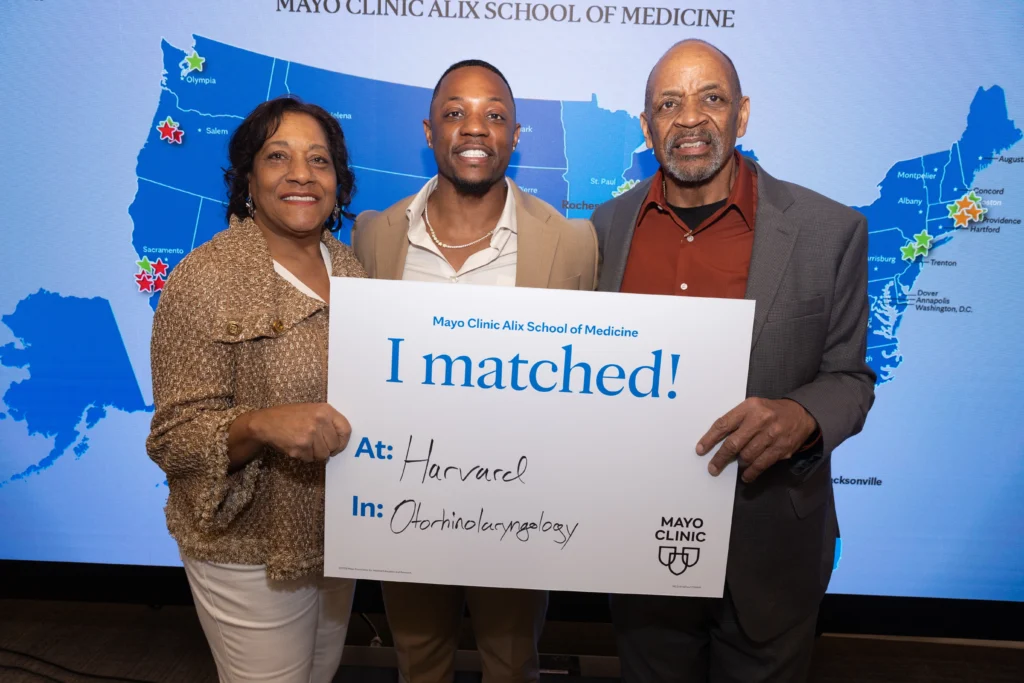
May, is the middle child of Susan and Ronald May. Because his mother earned a Ph.D. in psychology, May jokes that he will become the second Dr. May in his family. This May, he will also become one of the few Black male doctors in the United States.
An analysis by the Association of American Medical Colleges found there were 542 Black men in medical school in 1978. In 2025, the Association of American Medical Colleges reported there were only 552 Black men in medical school.
Dr. Abba Zubair is the dean of the Alix School of Medicine’s Florida campus. He says May was a standout student.
“He is always there at the forefront, asking questions, making suggestions on how we can improve our service,” Zubair says.
The eight-person cohort will focus on internal medicine, general surgery, dermatology, psychiatry and pediatrics.
May initially planned to become a trauma surgeon as a way of coping with Brennan and Bradley’s deaths.
He realized he had more to give. He considered ophthalmology, then changed his focus to otolaryngology.
“I realized that if I’m just an interventionalist, I would be missing out on, I think, a lot of what I want out of my career,” May says. “And, I wouldn’t be able to give to people what I feel a lot of my personal strengths are, simply because the time of interaction is a little bit too short in that specific setting.”

May will spend the next five years as an ear, nose and throat resident at Beth Israel Deaconess Medical Center in Boston.
It’s the teaching hospital for Harvard Medical School.