
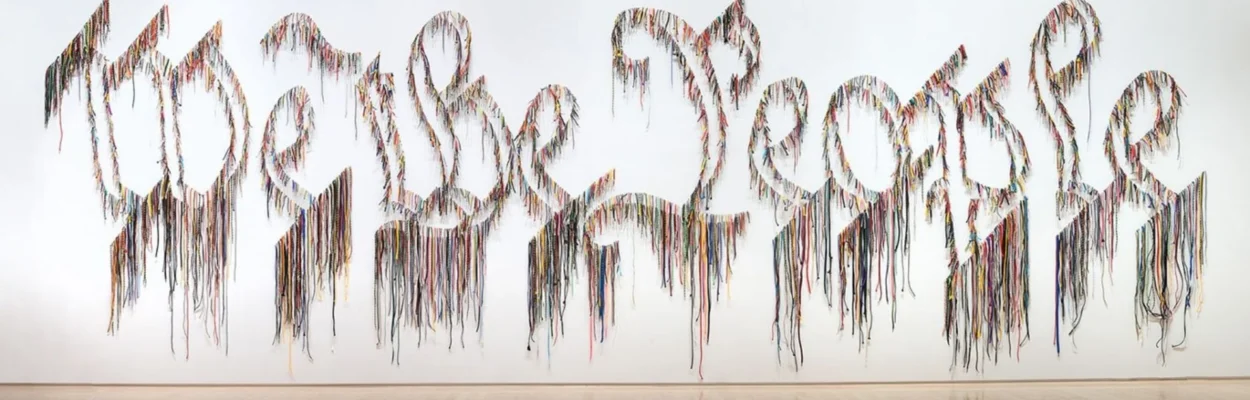
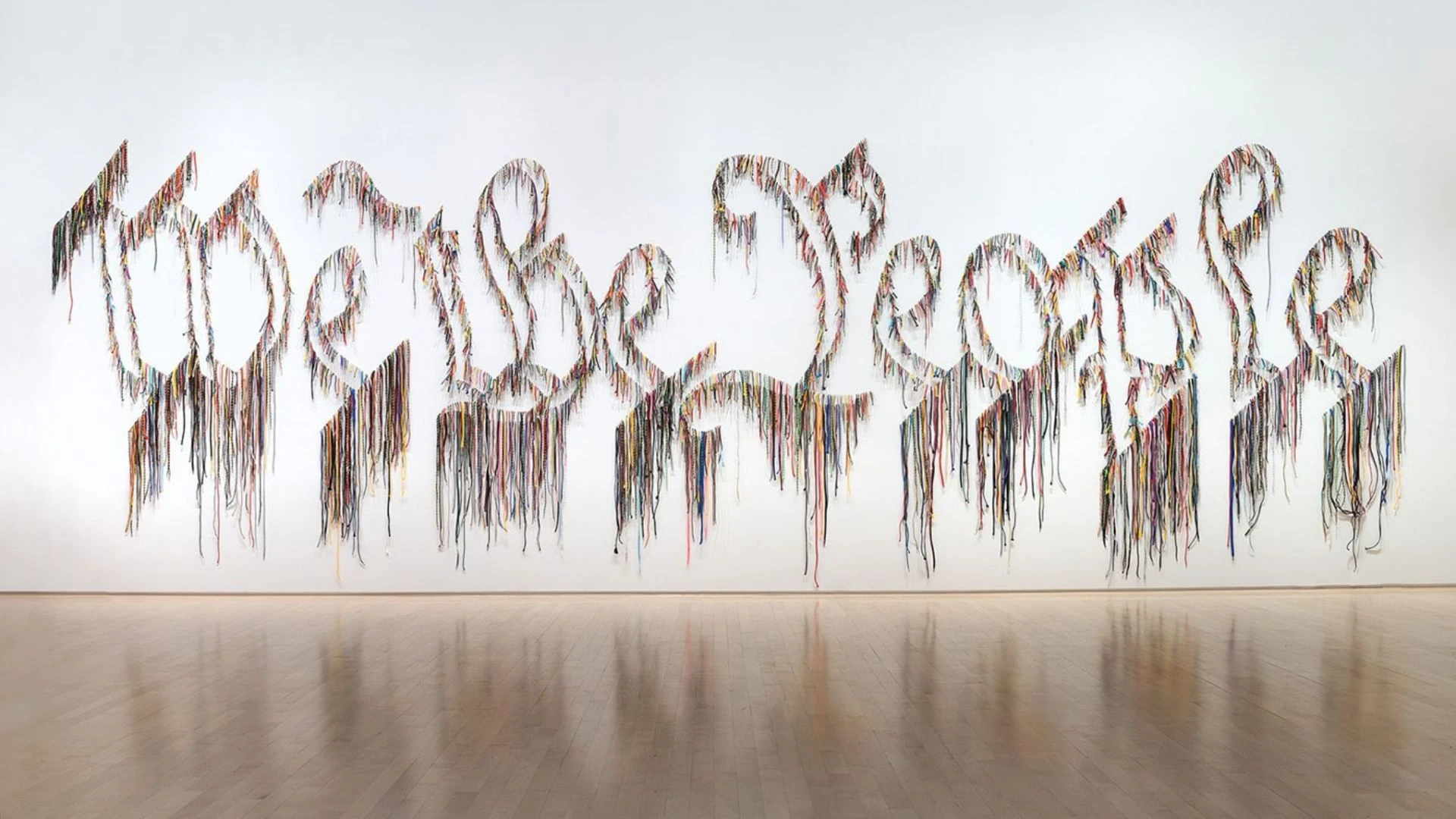
Artist Nari Ward’s well known piece made of shoelaces, “We the People.” It greets visitors to Jacksonville's Museum of Contemporary Art. | MOCA
Published on March 6, 2026 at 12:08 pm
Free local news and info, in your inbox at 6 a.m. M-F. Sign up for the Jacksonville Today newsletter.
The work of New York artist Nari Ward is the newest installation in the 40-foot Atrium Gallery at the Museum Of Contemporary Art in Downtown Jacksonville.
Ward has been part of the New York art scene for more than three decades, with his artwork the source of fascination and acclaim. In Project Atrium: Nari Ward, the artist uses cast-off items and found objects, transforming the mundane into haunting critiques of race, consumerism and contemporary culture.
Jacksonville Today thanks our sponsors. Become one.
Great Greetings welcomes visitors at the museum’s entryway, using reflective silver and gold pieces of what are known as mylar or “space” blankets (seen at ICE detention facilities). He employs emergency blankets and popular greeting card phrases to capture the essence of celebration coexisting with calamity.
Ward told First Coast Connect host Anne Schindler on Wednesday that part of being an artist is engaging with culture and what resonates in the moment.
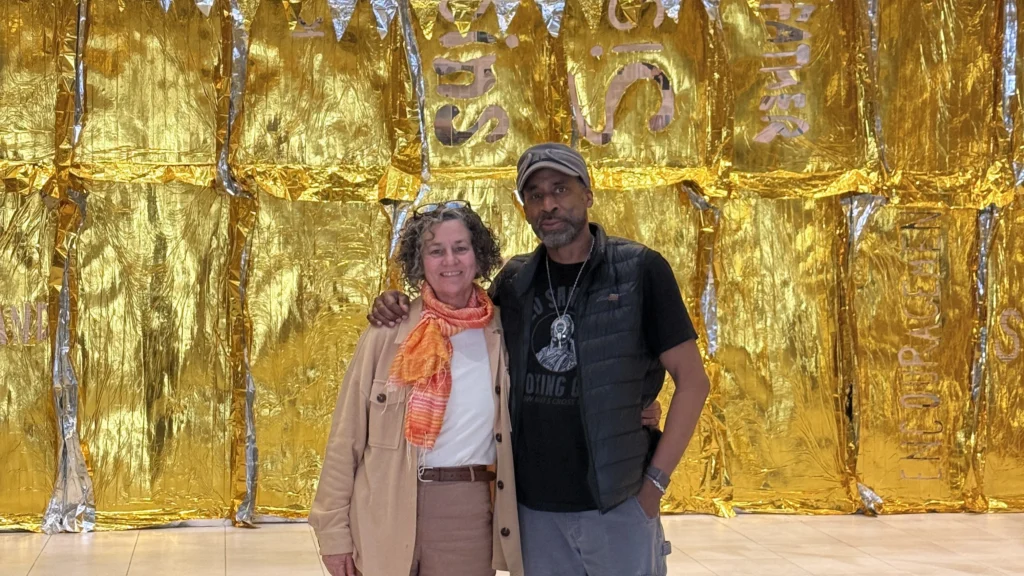
“I’m also trying to push back other possibilities. There was also a celebratory engagement that I wanted to merge that with, not to cancel it out, but how do we make sense of both of those realities at the same time?” Ward pondered. He considers the blanket material as one that doesn’t get stuck in the same place. “It’s a material that is dealt with during crisis moments but also a material that is post-marathon recovery.”

Jacksonville Today thanks our sponsors. Become one.
MOCA’s senior curator, Ylva Rouse, says working in the atrium is a unique space challenging to the artist. “In the case of the atrium, you can see it from above and from the side, so the artist has to think very three-dimensionally.”
University of North Florida students in the studio-based course “Enlivened Spaces” collaborated with Ward to execute his Great Greetings project. Ward said he got a range of input from them. “There were some inputs that made sense for the project and others that I would try to gently say ‘maybe, conceptually, it’s not related.’”
More of the artist’s work
Say Can You See (2021) displays a large American flag, but when you get nearer to it, you realize that it’s actually covered with thousands of clothing security tags (often affixed to prevent people from stealing).
Ward says he likes portraying symbols that are powerful and figuring out how to transform them in some way.
“The flag has always been like this holy grail of an object for me to think about how to transform, and so many artists have done great jobs with doing that. I wanted to do it in a way that was very respectful,” said Ward, a former security guard who said he felt an intimate relationship with these security tags.
“And I knew that if I put enough of them on the flag, I could conceal the flag with the idea that this object, this symbol, gets overburdened with security, and you can no longer see what it represents anymore.”
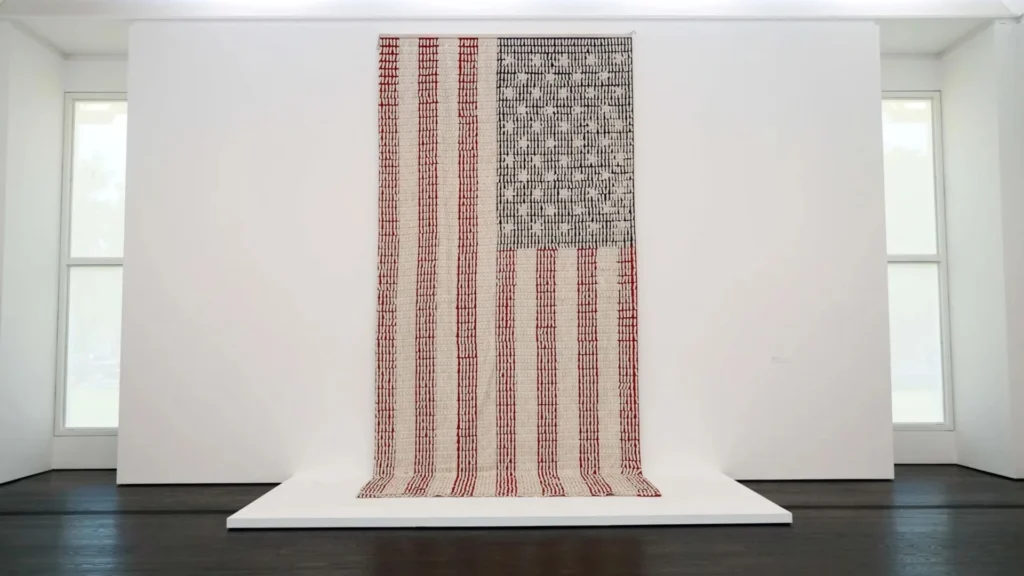
Ward said: “It was really a kind of backdrop to my logic in working with the piece. One other thing that’s important for me is that the flag isn’t ruined. In fact, all those tags can come off and you would never know they had been there.”
Another well known piece the Jamaican-born artist made uses woven shoelaces. It’s called We the People, and he wanted to find a way to enlarge it so that the viewing becomes the experience.
“Because if you’re standing close, you’re not sure what you’re reading, but if you step back, it becomes more legible,” he said. “And I think that aspect of your relationship to it, to the text itself, sort of resonates with the meaning of the words.
Great Greetings is on display at MOCA through Aug. 16.