
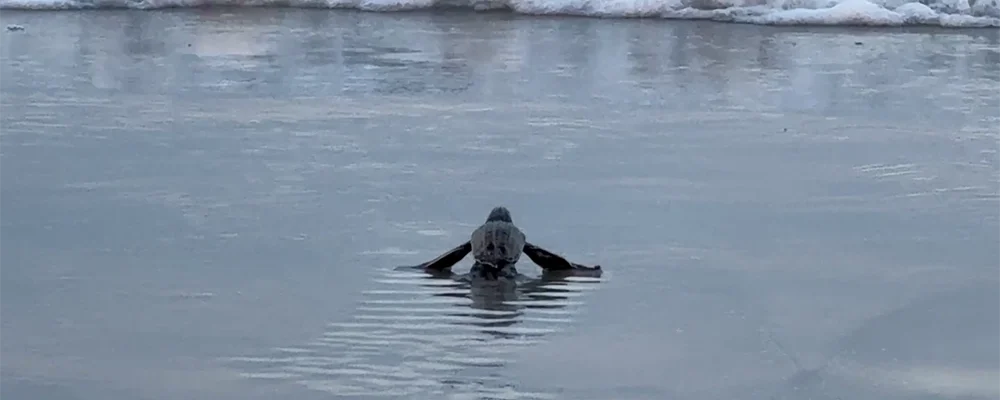
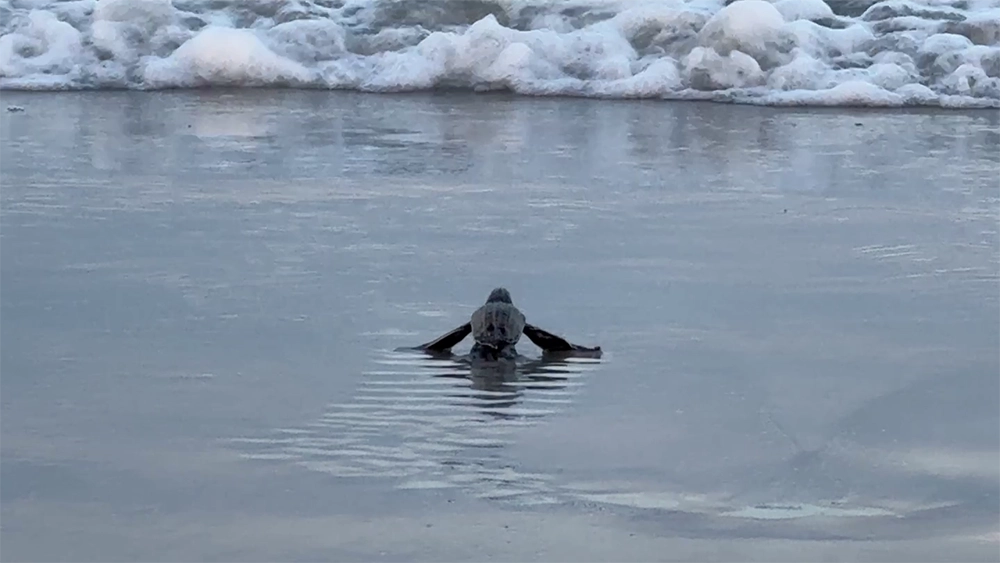
Leatherback sea turtles, like this hatchling, are one of a number of species that lay eggs on St. Johns County's beaches | Photo courtesy of St. Johns County
Published on November 23, 2026 at 12:49 pm
Free local news and info, in your inbox at 6 a.m. M-F. Sign up for the Jacksonville Today newsletter.
Every year, sea turtles travel up the sands of Florida’s beaches to lay eggs. This year, St. Johns County is celebrating a record number of nests spotted along the county’s beaches.
The 1,483 nests along St. Johns’ coast this year dwarfs the previous local record of 1,205 nests in 2023.
Jacksonville Today thanks our sponsors. Become one.
County environmental staff estimate that the nearly 1,500 nests yielded about 110,000 hatchlings during the 2026 nesting season, which ended last month.
Most of those nests were laid by loggerhead sea turtles, an endangered species that lays eggs around the entire state. Many of the other nests were from leatherback and green sea turtles, and county officials confirmed one nest from the most endangered sea turtle species, the Kemp’s ridley.
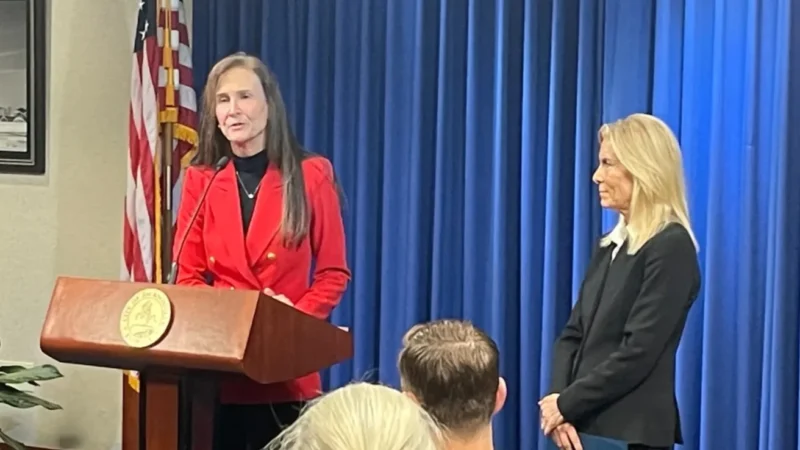
“Hopefully most of them made it. Hopefully they’re out there still thriving, and maybe decades from now they’ll return to our beautiful beaches to lay their own nests,” Ashley Raybould, St. Johns County’s environmental supervisor, said in a statement.


Jacksonville Today thanks our sponsors. Become one.
Raybould says the county worked closely with volunteers to mark nests on beaches and keep eggs safe.
One volunteer who spends a lot of time looking for sea turtle nests is Lucas Meers. Meers has been volunteering with the Mickler’s Landing Turtle Patrol since he graduated with his marine science degree from Jacksonville University. These days he runs the volunteer program and also works with JU to get students out looking for nests on local beaches.
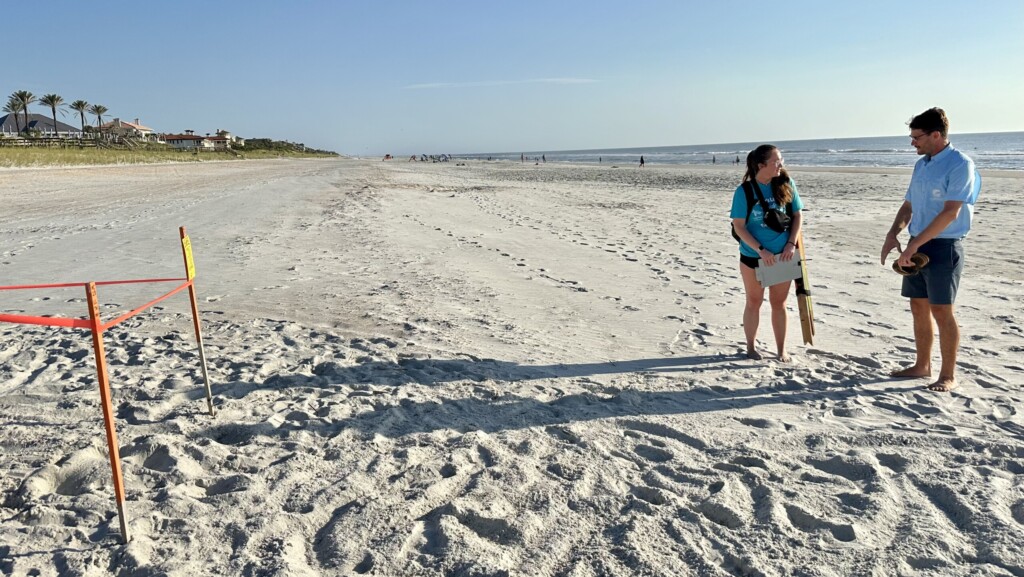
Meers partly credits the rising number of nests to local conservation efforts and excitement about protecting sea turtles.
“I think it is a testament to the success of conservation efforts and communities stepping up to support,” Meers says. “We get calls of people interested in sea turtles and wanting to help all of the time.”
For sea turtles, it’s a woman’s world
More sea turtle nests is not the entire story, though.
The sex of sea turtle hatchlings is determined by the temperature of their nests — warmer nests yield more female turtles. Meers says the phrase sea turtle researchers use to remember it is “hot chicks, cool dudes.”
Across the state and the rest of the world, that’s a trend that is concerning researchers. If the number of male sea turtles is not sustainable, the growing number of nests and hatchlings could still lead to population decline over time.
Locally, Meers says he and other volunteer groups are trying to get more data about the gender breakdown of sea turtle populations.
Scientists at the University of Georgia have developed new tools to study male sea turtles who can be more elusive to researchers than female counterparts who come out of the water to lay eggs every year.
Meers says his team is just one of a number of volunteer groups working with the university and the Florida Fish and Wildlife Conservation Commission to determine how many male sea turtles are needed to keep populations stable.