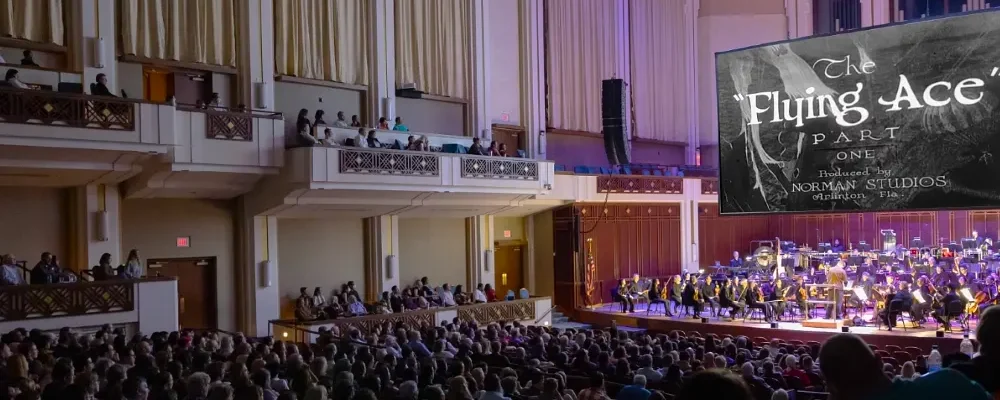
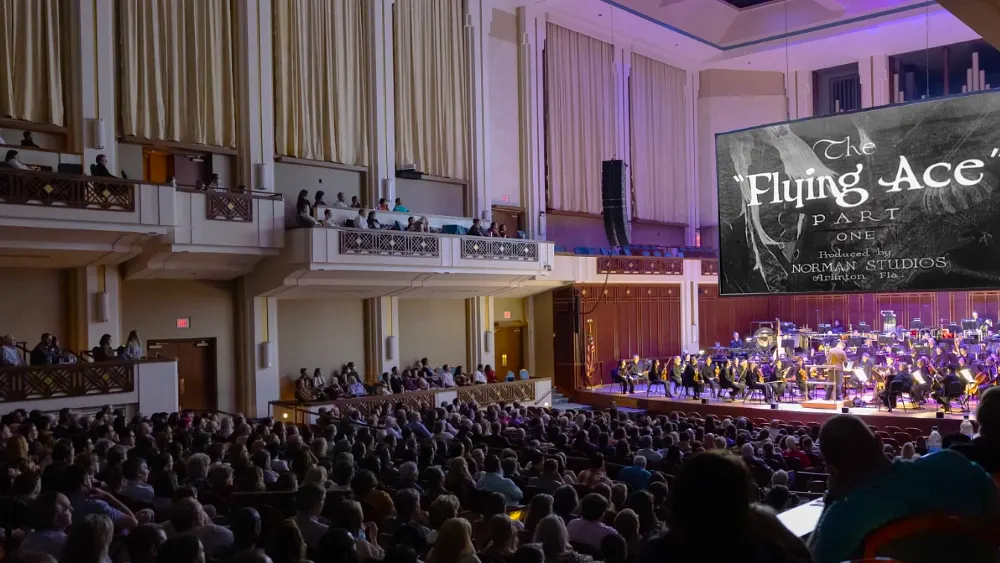
The Jacksonville Symphony will show the 100-year-old silent film, "The Flying Ace," with a new musical score on Saturday, Nov. 14, 2026. The film was produced in Jacksonville with an all-Black cast. | Jacksonville Symphony
Published on November 11, 2026 at 11:20 am
Free local news and info, in your inbox at 6 a.m. M-F. Sign up for the Jacksonville Today newsletter.
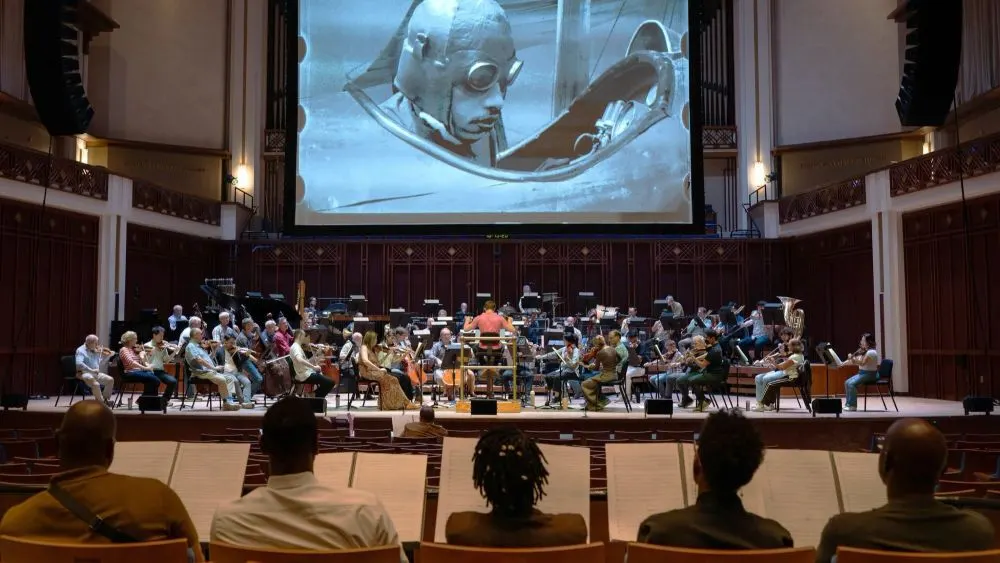
The Flying Ace, a 100-year-old silent film made in Jacksonville originally for Black audiences, will soar again on Saturday with a newly commissioned orchestral score played by the the Jacksonville Symphony.
And that brand new music was created by six composers to match the silent action in a film produced by Norman Studios on Arlington Road that still exists as a museum dedicated to its history, and the efforts of a man to produce non-stereotyped films for a Black audience who wanted them.
Jacksonville Today thanks our sponsors. Become one.
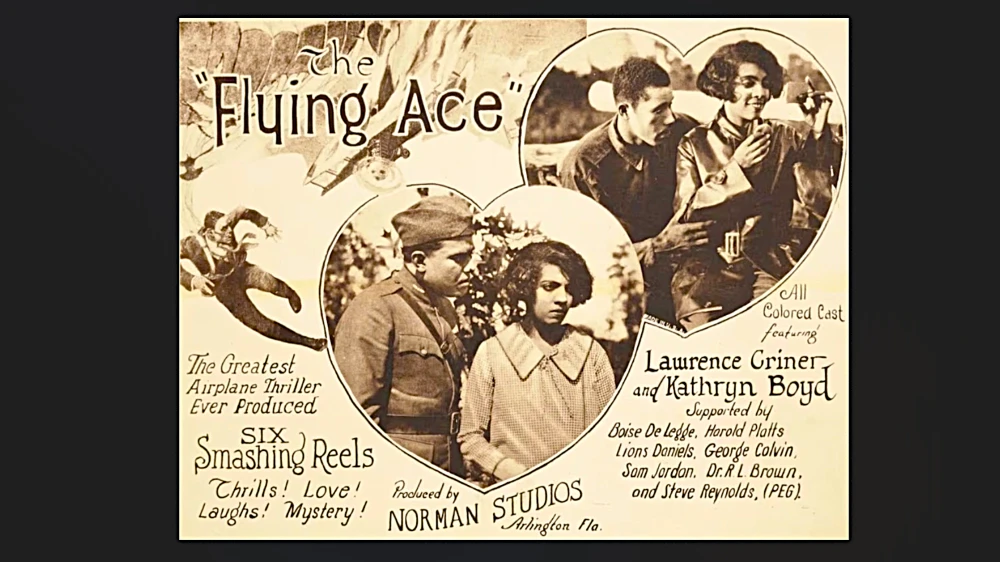
Richard Norman’s films had none of the usual depictions of African Americans seen in mainstream films of the time. The story of a Black World War I pilot (Lawrence Griner) who rescues a kidnapped woman (Kathryn Boyd) was filmed at the studio and a now long-gone railroad station in Mayport.
The only surviving feature-length film of the nine produced by Norman, it would have been played with a live piano player or band providing the soundtrack.
The idea for the new score began when composer Tarik O’Regan saw some of the Norman Studio’s film posters at The Cummer Museum of Art and Gardens in 2022 and mentioned it to a friend, Symphony Vice President and Artistic Administrator Tony Nickle.
Jacksonville Today thanks our sponsors. Become one.
“He said it would be really cool, with this sort of local connection and the historical importance of Norman Studios within the industry as a whole, if you could commission a new film score,” Nickle remembers. “I found only one of Norman’s feature-length films survived, The Flying Ace, and did some more research and found out it was digitized and available at The Library of Congress. I just started exploring the idea.”
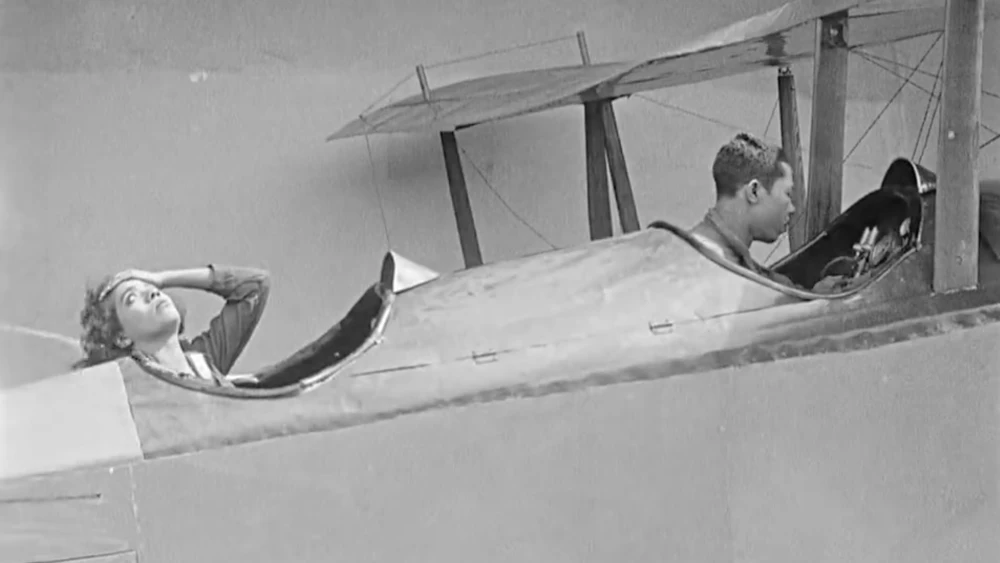
The World War I epic features Criner as Capt. Billy Stokes, a decorated World War I pilot who works to solve a theft of $25,000. In the process, he uses his biplane to rescue the film’s heroine, Ruth Sawtelle, played by Boyd. And since the original film was sent to theaters on six separate reels, Nickle said that led to a decision.
“The idea started to come more clear to commission six composers instead of one, both for artistic reasons, and also pragmatic, logistical reasons,” Nickle said. “Being about an hour long, finding a composer at the level we would be looking to commission would be quite challenging.”
One of the film score’s six composers is Jongnic Bontemps, a N.Y.-born composer who did the score for Transformers: Rise of the Beasts.
His job was to have his music convey all that a silent film does not. And Bontemps admits he’s never scored a film that has no dialog or sound effects.
“And that’s a challenge because I sometimes like hiding behind those things. (It) makes my job a little easier because the music has to play well with all those other elements, and that removes a lot of decisions for me,” Bontemps says. “(With) Flying Ace, there’s none of that.”
GRAMMY nominee Carlos Simon was chosen as lead composer for the new film score, creating its musical themes and music for its opening reel. Composers Kathryn Bostic, Nathalie Joachim, Allison Loggins-Hull, and Levi Taylor each composed about 10 minutes of music for the remaining reels.
Bontemps is amazed at how well six separate composers’ music meshes in the overall film.
“Our lead composer gave us some themes that we could or could not use, then we all went into a vacuum, our respective studios, and we wrote the music,” Bontemps says. “We were very surprised at how it came out, because it could have been a disaster. But what we found is that even though each section is separate and reflects the musical voice of each composer, they all sound of a piece.”
“In doing this, I never thought, let’s try to recreate music that sounds old-timey,” Nickle says. “I thought of having something that is of today juxtaposed against this film. I discussed this with (Jax Symphony Conductor) Courtney Lewis, and we thought this would be the right juxtaposition.”
Appropriate for someone who scored an action-filled Transformers film, Bontemps said he ended up composing music for the last reel of The Flying Ace, which contains an aerial battle, car chase and “death-defying stunts.”
“The fun part was that I really had to write music that supported all of those massive moments, and gave a rhythm, momentum and excitement to what we are seeing on screen. And it had to be everything,” he says. “It had to be the dialog; it had to be the sound effects; it had to be the explosions. All of it had to be done though the music. So it was fun to be able to think about the orchestra not only in terms of harmony, melody and rhythm, but also sound palette and texture.”
Norman Studios: part of Jacksonville’s golden film era
Jacksonville was home to about 30 silent-film studios from 1908 through about 1917, before the industry moved to California. Norman Studios is a 113-year-old National Historic Landmark first operated as Eagle Films from 1916 to 1920, then as Norman’s high-quality silent “race films” studio.
The studio complex at 6337 Arlington Road includes the two-story production office. Behind it are a dressing cottage, wardrobe building, generator/garage and a large film stage, which once featured a wall that could open to supply natural light for filming. A swimming pool for aquatic scenes was filled in decades ago, near a long-gone water tower that supplied the complex.
Through 1928, Norman made films at the Arlington Road studio including Regeneration and The Flying Ace, the only complete film from the studio to survive.
The Norman Studios Silent Film Museum is holding a free community event on Wednesday, Nov. 11, in conjunction with the symphony to explore the history, legacy and artistry behind the 1926 silent film. Richard Norman’s grandson and three of the composers will be at the 5 p.m. event, held in the Rita F. Reagan Set Building, the original film stage, on Commerce Street. And the symphony will also offer masterclasses on film score composition and sync technology, with dates to be announced.
The newly orchestrated score premieres at 7:30 p.m. on Saturday, Nov. 14, at Jacoby Symphony Hall on Water Street. Get tickets.