
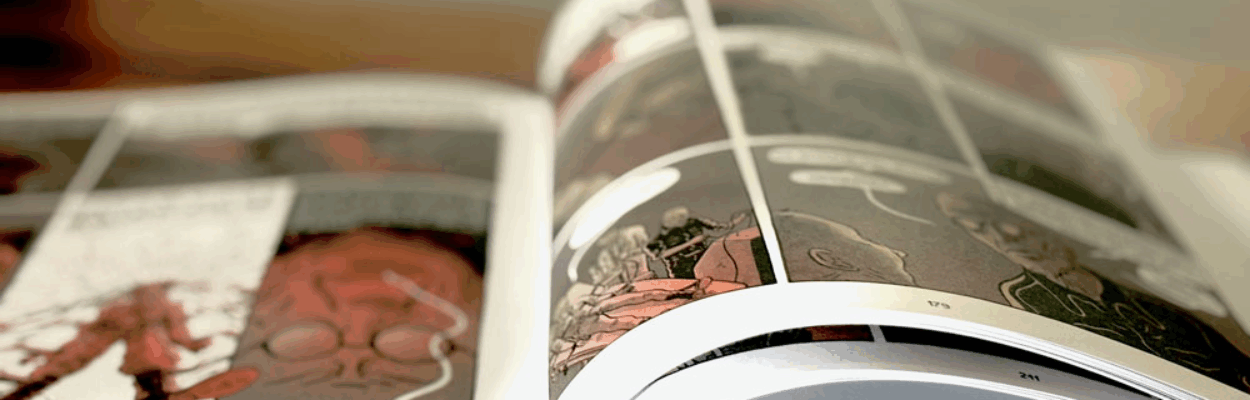
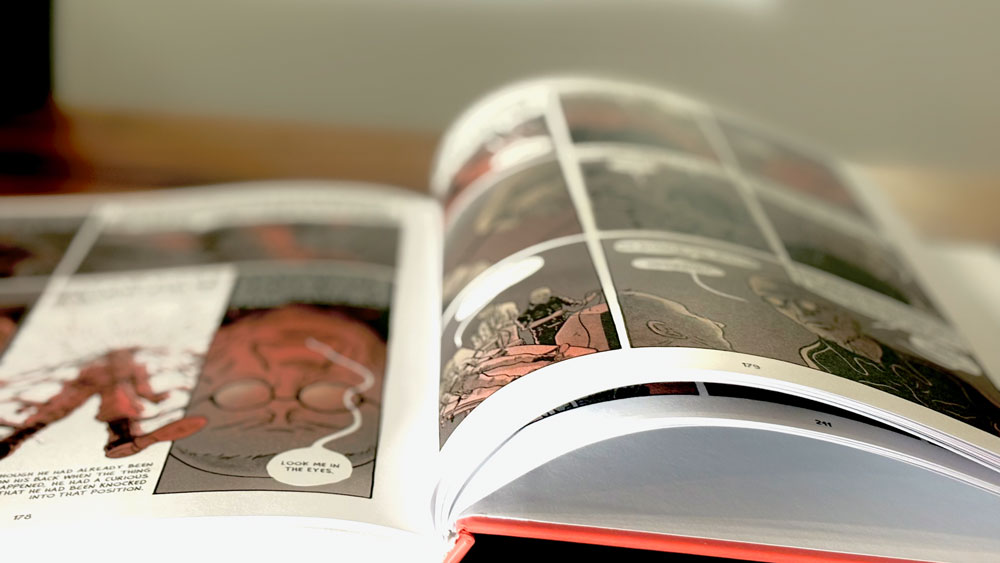
A graphic novel adaptation of the literary classic "1984" was one of four books removed from Duval Schools' libraries at October's School Board meeting. | Kailyn Mallicoat, special to Jacksonville Today
Published on October 8, 2026 at 5:21 pm
Free local news and info, in your inbox at 6 a.m. M-F. Sign up for the Jacksonville Today newsletter.
Four more books will come off Duval Schools’ shelves after a School Board vote Tuesday.
Two Jodi Picoult novels and one by Stephen King were removed according to staff recommendation without discussion.
Jacksonville Today thanks our sponsors. Become one.
Staff recommended the board keep 1984: The Graphic Novel, adapted from George Orwell’s classic by Fido Nesti, for high schoolers. Board member Tony Ricardo disagreed and flagged the item for discussion.
After an extended debate, the board voted 5-2 to pull it. Cindy Pearson and Darryl Willie were in favor of retaining it.
Because each of the four books had fewer than seven copies in circulation, the district’s media review committee did not review the books and make a recommendation to the board. Instead, staff did. Only one copy of 1984 was in circulation: at Jean Ribault High School.



Jacksonville Today thanks our sponsors. Become one.
The books were challenged by four Jacksonville residents without children enrolled in the school district. In an attempt to rein in frivolous challenges, Florida lawmakers in 2024 passed legislation limiting people without children enrolled in a district’s schools to one challenge per month.
None of the four checked pornography as a reason to remove the books, but they cited examples of content they said was vulgar and pornographic.
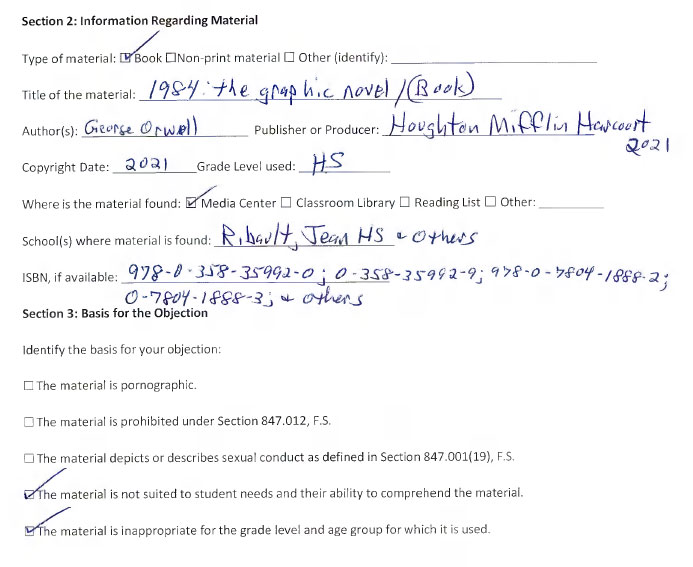
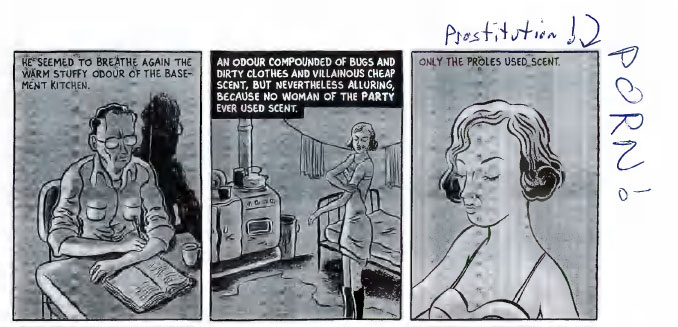
During the board’s half-hour discussion about what to do with 1984: The Graphic Novel, board members debated whether the book’s illustrations constituted pornography and whether the state Education Department would take issue with a decision to return it to Duval shelves.
Much of their discussion focused on a directive received from the state Education Department two weeks before the board meeting and how its instructions compared with Florida law.
“The statute itself has not changed,” District 4 rep Darryl Willie said Tuesday at the meeting. “Yes we got a memo, but I think it’s our job to follow statute.”
District 7 rep Melody Bolduc, who spent many years as an English teacher, said she had taught the original 1984 novel in her classes. The graphic novel didn’t “feel or look pornographic,” she said.
“For something that is depicting what’s meant to allude to the female form, it wasn’t shocking. It wasn’t, to me, graphic,” Bolduc said.
She said she would have liked to have kept it in circulation as a resource for students, with parent permission, perhaps.
Graphic novels — if written with students in mind — are a useful learning tool for some students, Bolduc tells Jacksonville Today. Particularly for students with processing disorders, like dyslexia, for example, or for students with ADHD, graphic novels can help kids connect with the material.
When Bolduc showed the book to other people, though, she says she received feedback that the images seemed inappropriate. And so, she voted to remove it.
Mack’s memo
Florida’s recently appointed education commissioner, Henry Mack, instructed school districts last month to proactively remove books or risk losing their state funding.
He sent a seven-page memo to districts across the state demanding they pay closer attention to their library collections and remove anything that might be considered pornographic.
“A process that depends on a parent discovering explicit material, reading it in a public meeting, and then forcing a district response is not only severely flawed; it is administrative neglect masquerading as either ignorance or ineptitude,” Mack wrote. “Whatever it may be, it is unacceptable and must end.”
He outlined a 90-day plan to ensure districts proactively review all of their books and told superintendents to hold principals “personally accountable” and to communicate like executives, not defendants.
Mack said districts need to first review all books already removed by another Florida county and then they should review books written by “high-frequency challenged authors.” He said districts that don’t comply could lose their state funding.
He also suggested superintendents “give the board a closed session or workshop briefing” to report data points like the number of titles under review, removed and retained. Florida law requires school boards to meet publicly with few exceptions.
Author’s notes
In late September, New York Times bestselling author Jodi Picoult visited Jacksonville for a stop on her latest book tour.
Picoult has been an outspoken advocate against removing books from school libraries and has commented on her social media several times about Duval Schools’ efforts to remove her books. To the crowd gathered in Jacksonville, she spoke about a handful of the titles singled out.
“Shame on you, Duval,” she said to a round of deafening applause.
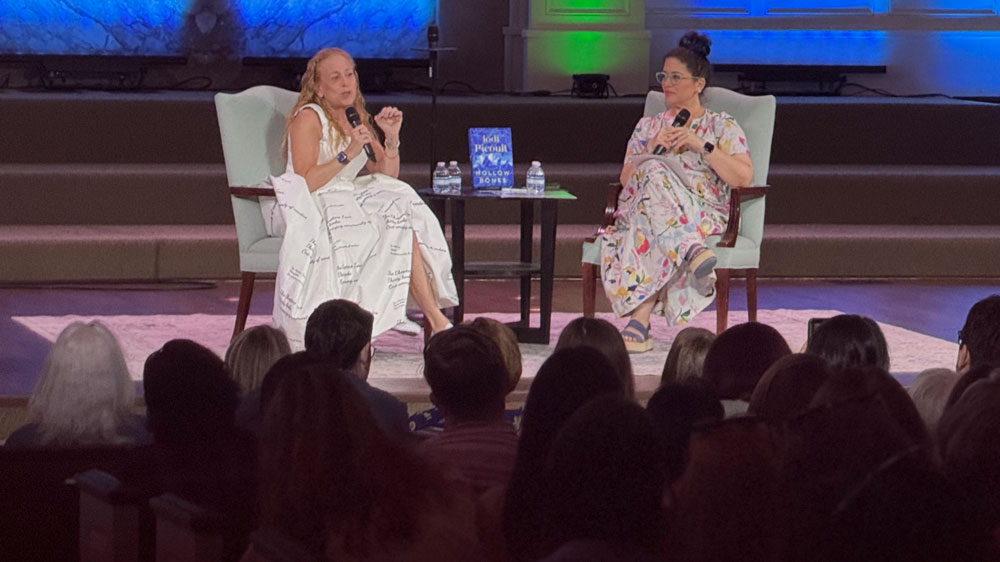
Picoult’s book Vanishing Acts was sent to the district’s newly re-formed review committee over the summer, but it’s not clear if the committee has reviewed the book yet. Her novels Handle with Care and The Tenth Circle were removed this week.
She said that although the people calling for books to be removed often do so in the name of protecting children, that is not the outcome.
“We know there are so many studies that prove that marginalized kids who see themselves in the pages of a book actually feel less alone,” Picoult said. “What they’re really doing is removing tools that help kids deal with an increasingly complex world.”