
Published on October 7, 2026 at 10:59 am
Free local news and info, in your inbox at 6 a.m. M-F. Sign up for the Jacksonville Today newsletter.
Whenever Nancy Baker returns to the little church of her childhood, there is someone else she has to visit.
Across from where her family’s home once stood is an old oak tree. Nancy walks over to it, puts her arms around its trunk and hugs it.
Jacksonville Today thanks our sponsors. Become one.
She has a good reason.
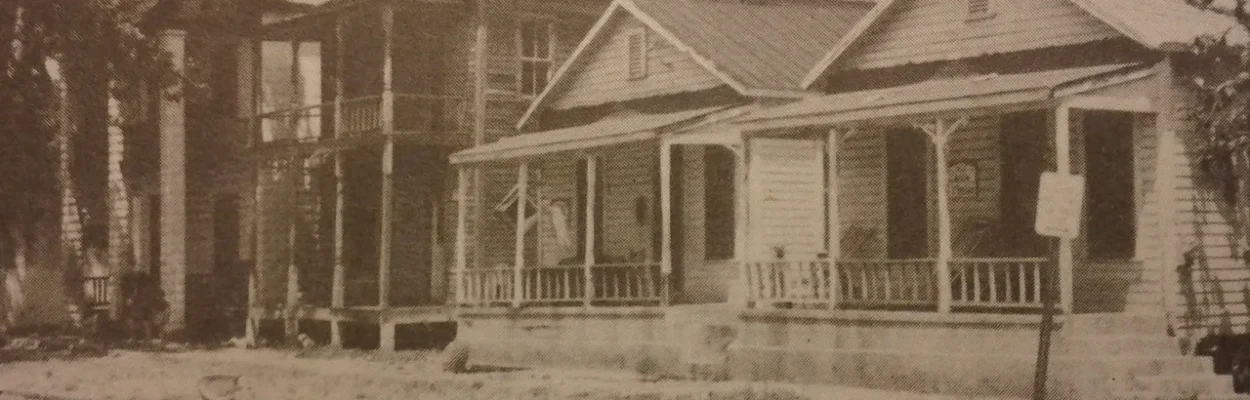
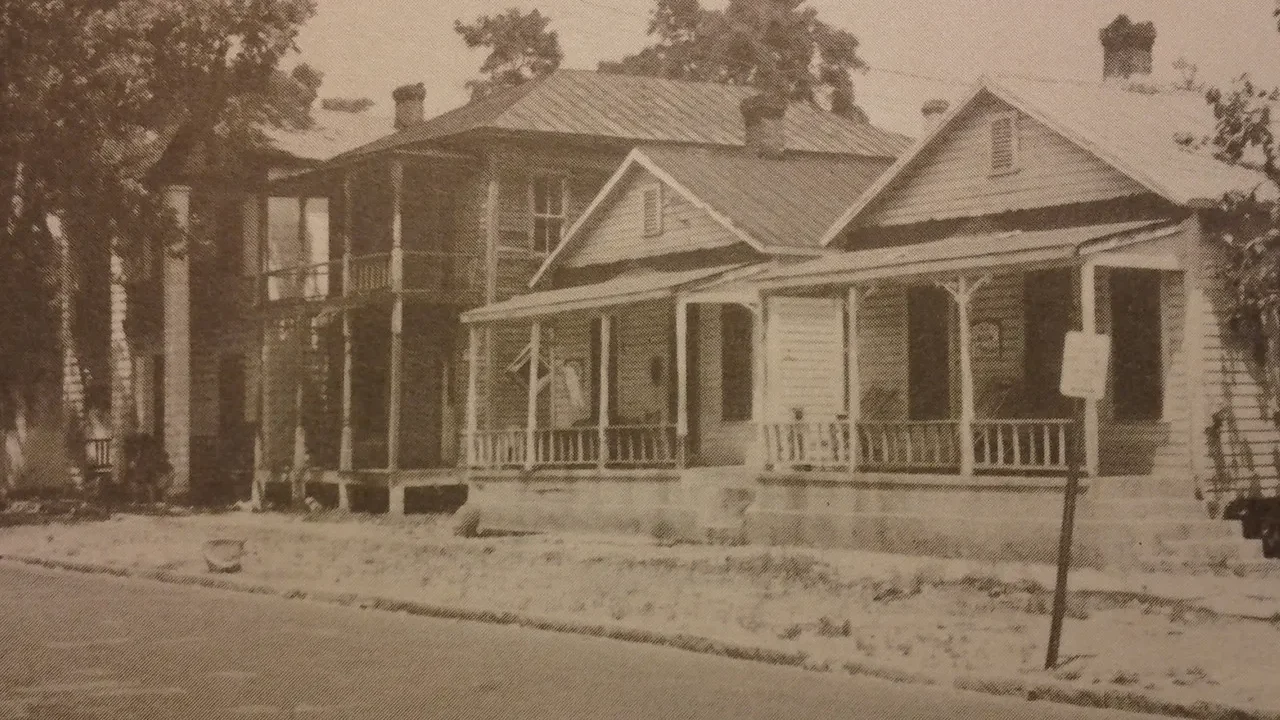
So much of the Jacksonville neighborhood where Nancy grew up is gone that finding the places of her childhood can sometimes feel like searching for something that exists only in memory. The houses are gone, the little stores are gone and families who once lived within shouting distance of one another scattered long ago. But the oak is still there.
It stood across from the Murphy family home when Nancy was a little girl. Her mother and other adults threw a rope over one of its heavy limbs and made a swing for the neighborhood children. Nancy remembers playing beneath it, hiding around it and gathering there with children whose families all seemed to know one another.
The tree knew Black Bottom when Black Bottom was still home.

Jacksonville Today thanks our sponsors. Become one.

Nancy grew up on Clinton Lane, between Dewdrop and Orange streets, in a part of Jacksonville commonly identified as Hansontown. But that is not what Nancy and the people around her called their neighborhood.
“We didn’t call it Hansontown. We called it Black Bottom,” she said.
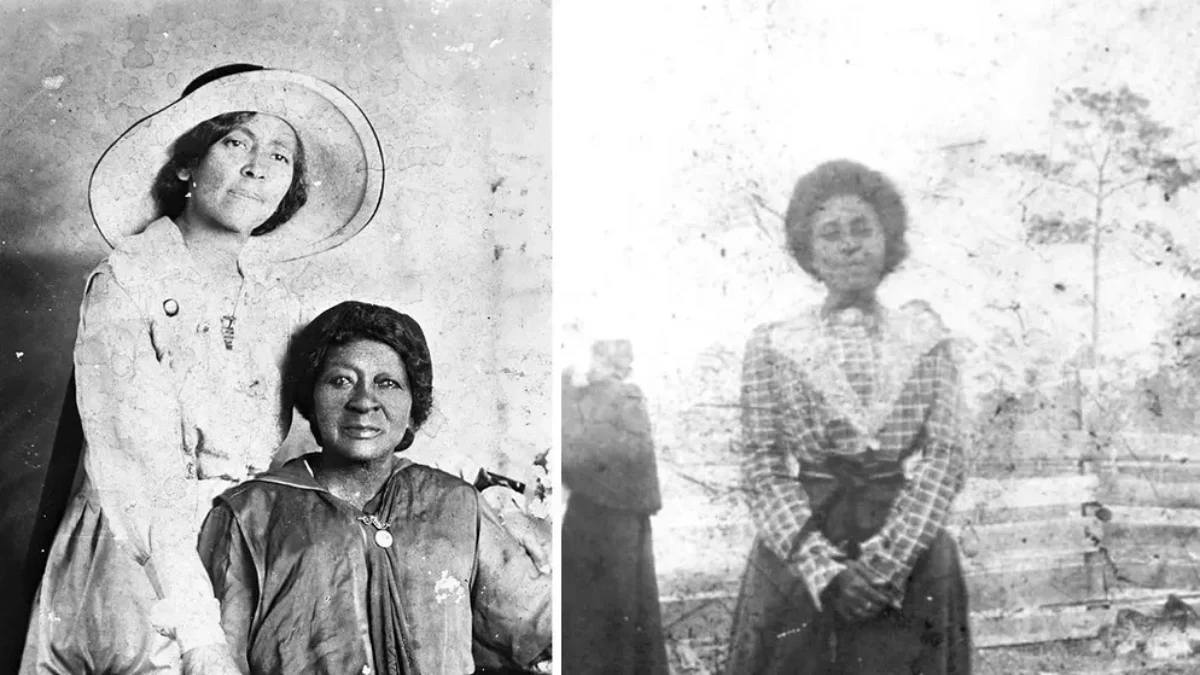
Her grandmother, Rena Murphy, raised 12 children and stood at the center of the family. Nancy’s mother, Margaret Murphy Baker, was the kind of woman everybody in the neighborhood seemed to know. Nancy remembers young men shooting dice when her mother came walking down the street. They would stop what they were doing, stand up, straighten themselves and respectfully greet “Miss Margaret.” Only after she passed would they return to their game.

That was Black Bottom as Nancy remembers it. Children belonged to their parents, but in another sense they belonged to everybody. Adults knew who you were, who your mother was and who your grandmother was. If you did something you weren’t supposed to do, there was a good chance somebody in your family would know about it before you got home. Children were expected to say “yes, ma’am,” “no, ma’am,” “yes, sir” and “no, sir.” Nancy could walk through the neighborhood without being afraid because people knew she was one of the Murphys.
The family was so closely associated with Black Bottom that one of Nancy’s uncles was known as “Black Bottom Charlie.” He had served in the Navy, boxed while in the service and played Negro baseball at Myrtle Avenue Ballpark. Nancy grew up hearing that he had played with Hank Aaron before Aaron became nationally famous. These were the family stories children heard at home, stories that connected them to the people and places that had come before them.
Black Bottom was not wealthy, but Nancy does not remember it as a neighborhood defined by poverty. Teachers and professionals lived alongside construction workers and families struggling to make ends meet. Some people owned homes and automobiles while others had very little. The streets were unpaved, but Nancy remembers something more important than pavement. People knew one another and watched out for one another.
There was Jack’s Meat Market at Broad and First streets, with a soda fountain where children could get ice cream and drinks. Nancy remembers her mother shopping there on Saturdays. There was a wood yard and other neighborhood businesses, and there was seldom much reason for a child like Nancy to leave Black Bottom except to attend school. Most of the world she needed was within walking distance of home.

St. Joseph was another center of that world. Nancy remembers that people in the neighborhood helped build the little church and that her grandmother took part in that effort. Church members made homemade ice cream and fried fish during the summer to raise enough money to put neighborhood children on a bus and take them to the beach. Nancy sang in the choir, ushered, led devotion, attended Sunday school and participated in Easter and Christmas programs.
One of her strongest memories is of her grandmother walking home from church dressed in white and carrying her flat pocketbook. Rena Murphy must have touched many lives because when she died, the little church could not hold everyone who came to say goodbye. People filled the church and stood outside while the doors remained open.
Nancy’s memories of school are just as personal. At John E. Ford Elementary School, she was a frightened little girl who was afraid to speak in class or ask questions. She did not pass the fourth grade the first time, but a teacher named Mary Simpson refused to give up on her. During Nancy’s second year in the grade, something changed.
“I found that I had a voice,” Nancy remembered. “I started talking. I started asking questions. And I found out that I was actually a smart person.”
She carried that new confidence with her to Stanton and eventually to Miami, where she finished high school. Then life took one of those unexpected turns. Nancy accompanied a friend to an Army recruiting office and was persuaded to take the entrance examination herself. She passed. Nancy graduated on June 16 and remembered being sworn into the U.S. Army just two days later.
She had always imagined that if she entered the military she would follow her uncle into the Navy. Instead, because she happened to accompany a friend into an Army recruiting office, she found herself wearing Army green. She served as a supply clerk until illness shortened her active duty service and she received an honorable discharge.

When Nancy eventually returned to Jacksonville, the place she remembered as home was changing. She could remember those changes beginning when she was still a child, when piles of dirt and clay appeared and Interstate 95 began taking shape. Later, houses started disappearing and people talked about families receiving money to move. Empty spaces appeared where homes had once stood.
The loss happened gradually, which made it difficult to understand while it was happening. “You see it, but you don’t see it,” Nancy explained. Only later did she fully understand that Black Bottom itself had been disappearing. It was not simply the loss of buildings. The relationships connecting families, businesses, churches and children were being broken apart as people moved away.
Nancy continued building a life in Jacksonville. She worked at Kmart and held temporary work connected with HUD. When her children attended Head Start programs, she volunteered so often that volunteering eventually became employment, and for a period she worked as a pre-K teacher. She married Danny Watson, and the two were married for 38 years and together for 42.
Eventually, another place from Nancy’s childhood came back into her life: the Clara White Mission. She vaguely remembers being brought into the building as a little girl for Vacation Bible School by her older sister. She believes she may even have seen Eartha M. M. White, although Nancy is careful not to claim a memory she cannot be certain about. She remembers the building and remembers being there, and she leaves it at that.
Decades later, Nancy returned to that same building to serve others. Through the National Caucus and Center on Black Aging program, she works at the Mission, answering phones and emails, checking messages, handling paperwork, organizing files and helping people who come through the doors.
“I’ve always wanted to help people,” she said. “I’ve always had a heart for God’s creation and God’s children.”

Perhaps some of that spirit came from the Black Bottom of her childhood, from Rena Murphy and Miss Margaret, from Mary Simpson and from neighbors who corrected children who were not their own. It came from church members selling fried fish and homemade ice cream so children could spend a day at the beach and from a community where people did not need to be related to feel responsible for one another.
Most of Nancy’s Black Bottom can no longer be seen. The stores disappeared. The houses disappeared. Families scattered, and the landscape where she learned about family, faith and community changed almost beyond recognition. Yet two pieces of that world remain especially important to her: the little church and the old oak across from where the Murphy family once lived.
That is why Nancy’s visits to her old church do not end at the church door. She goes across to the oak and embraces it. The tree that once held a swing for the neighborhood children is now something she can physically hold when so much else from those years can only be held in memory.

“You don’t know what you have until you lose it,” Nancy said. She wants Jacksonville to remember that as the city continues to grow and neighborhoods continue to change. “Think about the people that are there,” she said. “Think about what we lost.”
For a moment, she is touching home.