Published on August 5, 2026 at 10:04 am
Free local news and info, in your inbox at 6 a.m. M-F. Sign up for the Jacksonville Today newsletter.
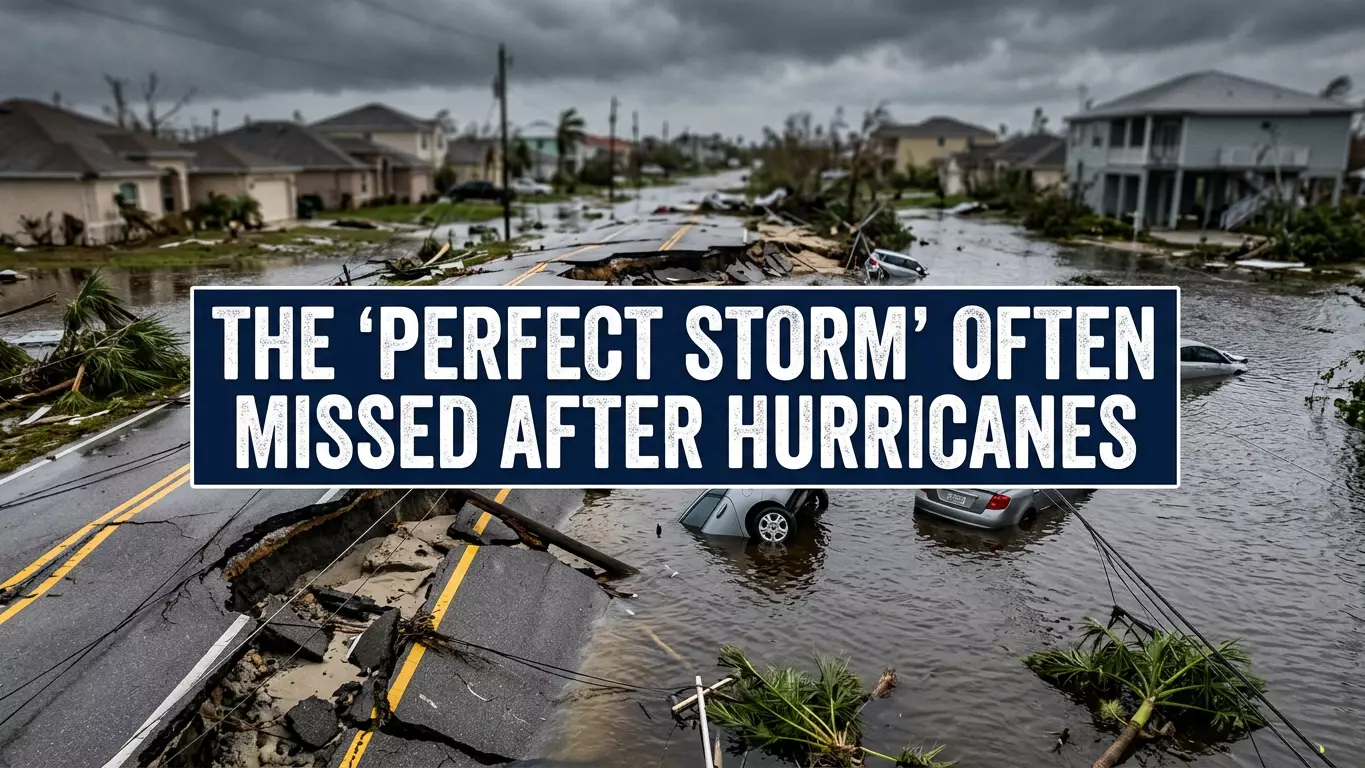
The headlines usually focus on the moment a hurricane makes landfall, but in Florida, the real danger can often be what happens next.
From the silent threat of power failures to the compounding effect of back-to-back storms, the recovery phase is a “perfect storm” of its own.
Jacksonville Today thanks our sponsors. Become one.
In this deep dive, meteorologist Leslie Hudson breaks down the data from historic seasons to show how indirect deaths and compounding storm damage create a unique perfect storm of risk.
What we explore:
The power failure crisis: Lessons from Hurricane Ian (2022) and how the loss of electricity affects life-saving medical equipment
The cumulative effect: A look back at the historic 2004 season when four hurricanes (Charley, Frances, Ivan, and Jeanne) hit Florida in just six weeks

Jacksonville Today thanks our sponsors. Become one.
Persistent hazards: Why erosion, inland flooding and infrastructure damage from one storm can make the next one even more dangerous
In Florida, the most dangerous part of hurricane season isn’t always the landfall. Sometimes it’s what’s left behind, and sometimes it’s what comes next.
During hurricane season, it’s a common misconception that the danger ends when the wind dies down. In reality, the recovery phase is one of the most hazardous periods for Floridians. In this video, we look at why the aftermath can be just as deadly as the landfall itself.
Florida’s 2004 hurricane season is still one of the clearest reminders of how risk can compound. Charley, Frances, Ivan and Jeanne all struck the state in just six weeks, leaving behind repeated flooding, prolonged power loss, standing water and a recovery stretched so thin that the next storm often arrived before the last one was fully behind it.
Copyright © 2026 Storm Center