
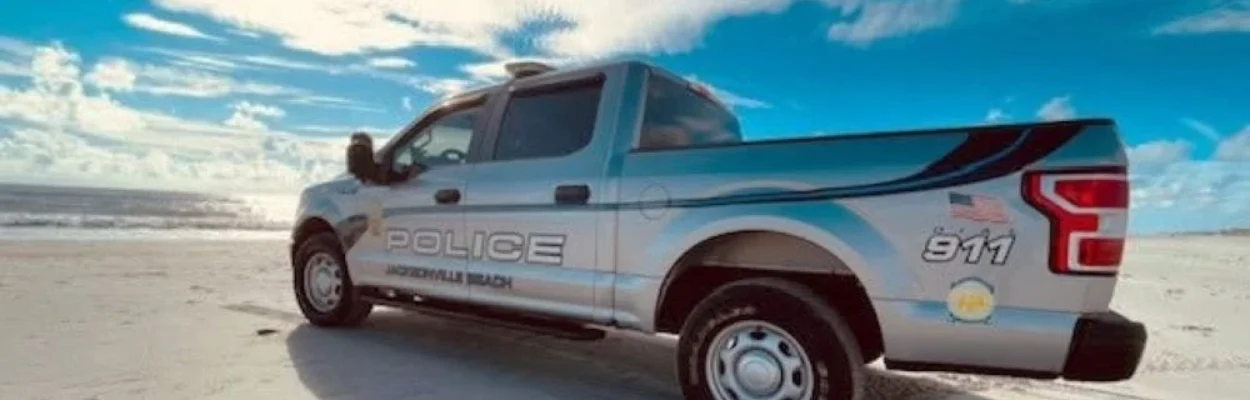
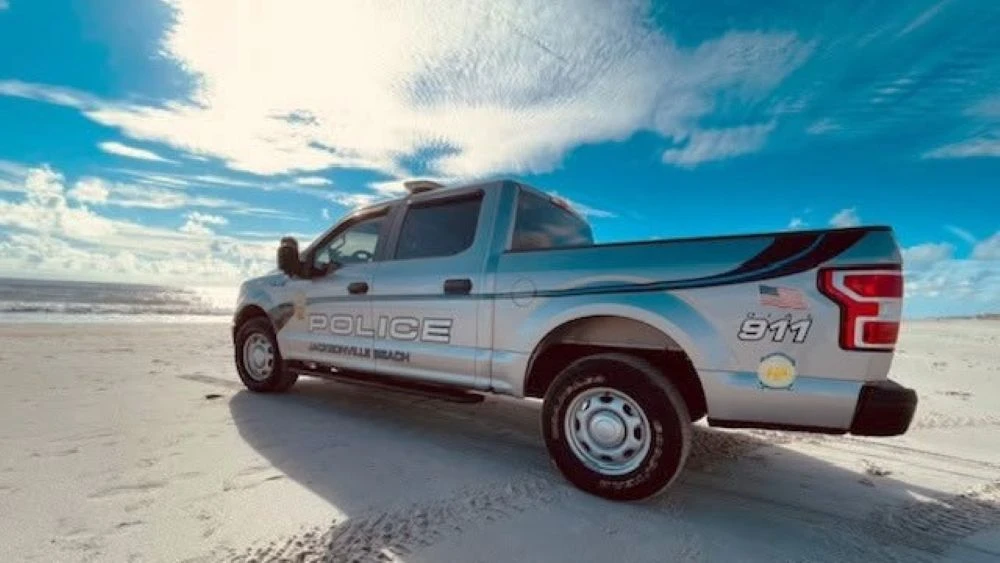
A Jacksonville Beach Police Department vehicle. | Jacksonville Beach Police
Published on June 10, 2026 at 4:24 pm
Free local news and info, in your inbox at 6 a.m. M-F. Sign up for the Jacksonville Today newsletter.
A Fort Myers man is suing the Jacksonville Beach Police Department after he was wrongfully arrested almost two years ago due to a faulty facial recognition match, according to the American Civil Liberties Union of Florida.
Robert Dillon, 52, sued the Jacksonville and Pinellas county sheriff’s offices and says police concealed evidence that shows he could not have committed the crime.
Jacksonville Today thanks our sponsors. Become one.
Dillon was accused of trying to lure a child at a fast-food restaurant in Jacksonville Beach after the Jacksonville Sheriff’s Office ran grainy surveillance photos of the suspect through an AI-assisted facial recognition program, the suit says.
The program, operated by the Pinellas Sheriff’s Office, identified Dillon as a possible match. A restaurant employee also picked Dillon’s photo out of a lineup, and Jacksonville Beach police arrested him in August 2024.
“The night I spent in jail after they arrested me for a crime I did not commit still haunts me to this day,” Dillon said in a news release about the lawsuit. “I will never get over how terrified and worried I was, wondering if I’d ever go home to my wife and daughter again. Over a year later, I’m still picking up the pieces of my life, all because the police relied on this dangerous technology instead of doing their jobs and actually investigating.”


Jacksonville Today thanks our sponsors. Become one.
The Jacksonville and Pinellas sheriff’s offices did not respond to Jacksonville Today‘s requests for comment Wednesday. Jacksonville Beach Police Department spokesperson Tonya Tator said the agency would not comment on the advice of its attorney.
Private attorney Steve Silverberg, whose New York-based firm filed the lawsuit with the ACLU, said Dillon’s case illustrates what happens when police deploy AI-assisted identification tools without adequate safeguards.
“Digital information can be a powerful tool for law enforcement, but its proliferation, supercharged by the AI boom, carries profound Fourth Amendment implications,” Silverberg said in the news release.
When facial recognition technology generates a false match, it will often be to someone who looks similar to the suspect, the lawsuit contends. That could mislead witnesses, who are asked to choose between that innocent look-alike and a set of random filler photos, the suit said.
What police didn’t pass along was that the McDonald’s employee who picked Dillon’s photo out of a lineup said the suspect was a “regular” at the Jacksonville Beach restaurant. But Dillon told police he had never even been to Jacksonville Beach and lived five hours away.
An automatic license plate reader search did not have any evidence of his car anywhere near the McDonald’s in the days surrounding the crime, the suit says.
All charges against Dillon have since been dropped, with no record of his arrest in the Duval County jail files or any prosecution record in the Duval County Clerk of Court website.