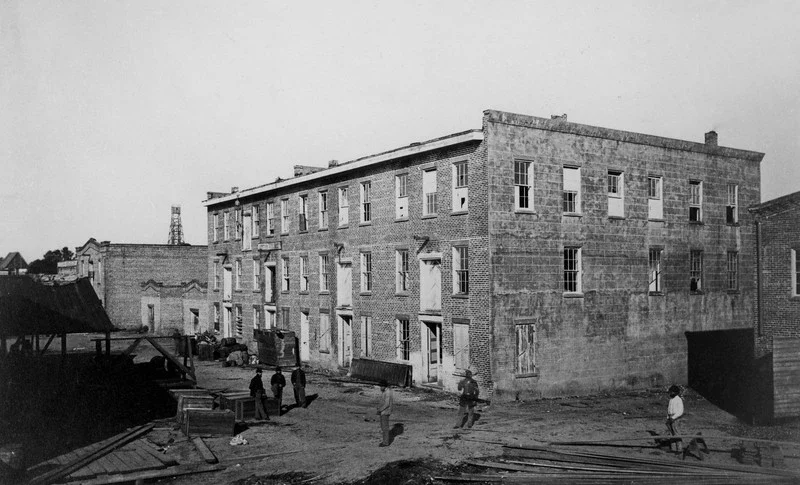

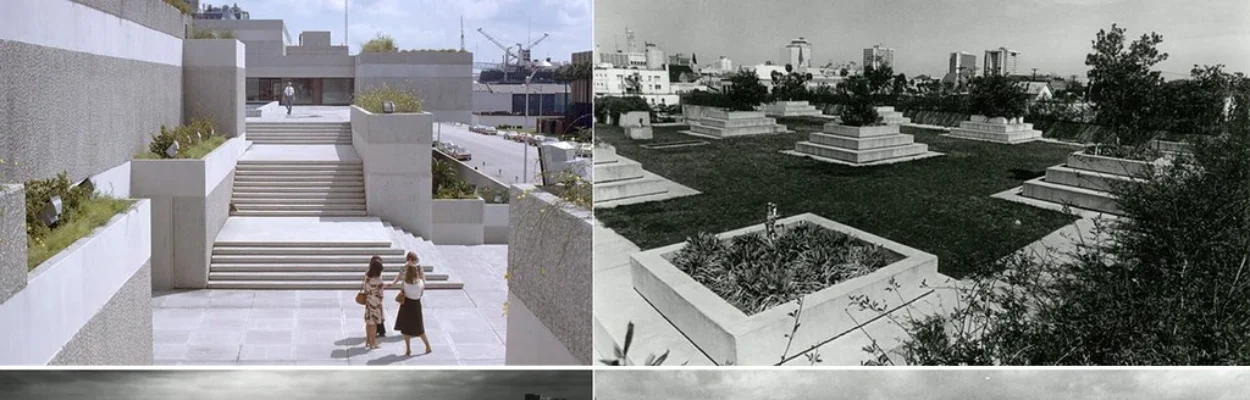
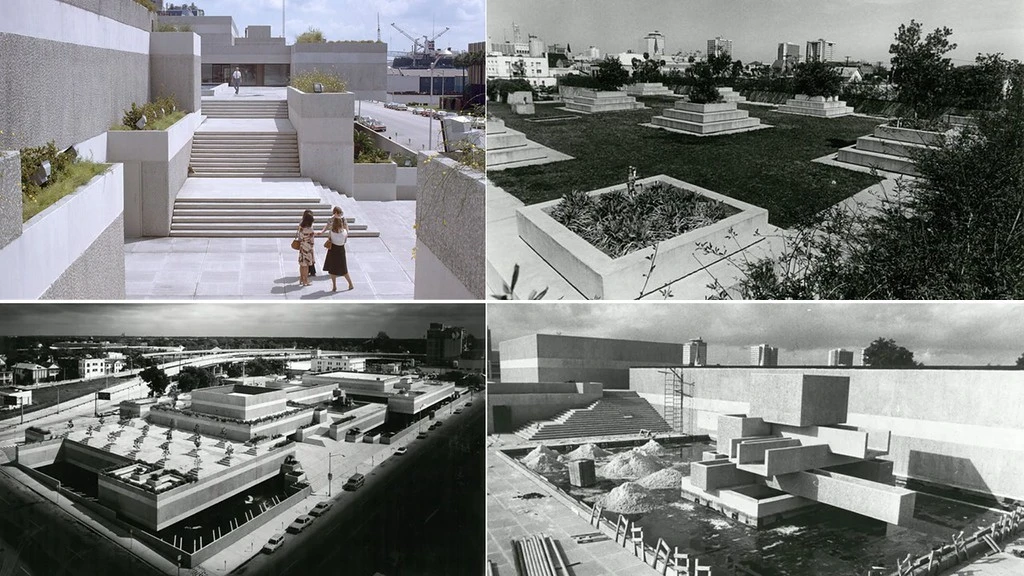
Historic photos show Jacksonville's Police Memorial Building under construction and as it looked when finished in the mid-70s.
Published on May 27, 2026 at 10:24 am
Free local news and info, in your inbox at 6 a.m. M-F. Sign up for the Jacksonville Today newsletter.
As National Historic Preservation Month shines a spotlight on the economic, cultural and tourism value of protecting America’s historic places, the Florida Trust for Historic Preservation has announced its 2026 “11 to Save” list, recognizing 11 endangered historic sites across the state in need of advocacy and preservation.
Established in 1973, National Historic Preservation Month celebrates the nation’s heritage through community landmarks and historic architecture, while the Florida Trust’s annual list draws attention to vulnerable places whose stories remain essential to Florida’s identity and future.
Jacksonville Today thanks our sponsors. Become one.
About the 11 to Save program

Each year, the Florida Trust announces 11 to Save sites, which are nominated by the public and reflect the historic places that matter to local communities statewide. The program is designed to increase the public’s awareness of the urgent need to save Florida’s historic resources, highlight the breadth of Florida’s unique history, inspire collaborations and empower local preservationists and community groups in their work to preserve Florida’s rich history.
The 2026 11 to Save represents endangered historic resources in 10 counties, covering hundreds of years of history and a variety of cultural resources. Locally, Downtown Jacksonville’s Police Memorial Building and St. Augustine’s Flagler-era railway depots are included.
Here is a brief look at the history and challenges related to each property on this year’s 11 to Save list:

Jacksonville Today thanks our sponsors. Become one.
Ace Theatre
Miami, Miami-Dade County; Built in 1930

The Ace Theatre is one of the last surviving landmarks of Miami’s historic Black Grove community, also known as West Grove or Little Bahamas, that was founded in the late 19th century by Bahamian settlers. Built in 1930, the theatre served as the place for African American moviegoers in the Coconut Grove community during segregation, often running stage shows along with films.
Although listed on the National Register of Historic Places in 2016, the Ace Theatre is threatened by a combination of advanced physical deterioration and external development pressures that put its long-term survival at risk.
Capt. Francis A. Hendry House
Labelle, Hendry County; Built in 1914

The Francis A. Hendry House is an early 20th-century wood-frame residence located in LaBelle, Florida. Designed in a vernacular style typical of Southwest Florida pioneer homes, the structure has a raised foundation, wide porches and elements adapted to the region’s climate. The property reflects the character of early settlement in Hendry County and remains a prominent historic landmark associated with the county’s founding figure, Capt. Francis A. Hendry.
Like many historic properties, the Francis A. Hendry House faces threats from age, environmental exposure and limited funding for maintenance and restoration. Deterioration of structural elements, vulnerability to Florida’s weather conditions and the high cost of preservation pose ongoing challenges. Additionally, development pressures and changing land use priorities in growing communities can place historic sites at risk of neglect, alteration or potential demolition if they are not actively protected and maintained. Without dedicated resources and attention, the long-term survival of the property is uncertain.
Egmont Key State Park
Hillsborough County

Egmont Key is located at the mouth of Tampa Bay, southwest of Fort De Soto Beach. Accessible only by boat, Egmont Key has a unique natural and cultural history, including a lighthouse that has existed since 1858. During the 19th century, the island served as a concentration camp for captured Seminoles at the end of the Third Seminole War and was later occupied by the Union Navy during the Civil War. In 1898, as the Spanish-American War threatened, Fort Dade was built on the island and remained active until 1923.
In addition to touring the historic sites and trails, visitors can enjoy swimming, fishing, wildlife viewing and picnicking. As the community rebuilds, sustained support and resources are essential to preserving Cedar Key’s historic fabric and identity. Inclusion on this year’s 11 Most Endangered list is intended to raise awareness and foster critical public dialogue around the unique challenges, and preservation-based solutions facing Florida’s small, historic and often isolated coastal communities. Today, Egmont Key is threatened by erosion of its west beach and damage from recent hurricanes.
Flagler-Era railway depots
St. Augustine, St. Johns County; Built in 1906 & 1930

The Carpenter’s Shop Depot and Trolley Ticket Depot are tangible remnants of the transformative era shaped by Henry Flagler and the Florida East Coast Railway, an era that redefined the economic, cultural and physical landscape of Florida’s East Coast. These structures embody the expansion of rail infrastructure that made St. Augustine a premier tourist destination and enabled the growth of surrounding agricultural communities.
For over 40 years (1984–2024), both structures resided on property owned by the St. Augustine–St. Johns County Airport Authority. With the sale of that property for hotel development, the buildings faced imminent demolition until a plan to relocate them to Hastings Main Street was proposed. If relocation is successful, the Carpenter’s Shop Depot will be rehabilitated as a trailhead amenity station and Trolley Ticket Depot will become a museum that tells the story of Hastings’ agricultural and transportation roots.
Hamilton County Old Jail & Museum
Jasper, Hamilton County; Built in 1893

Constructed in 1893, the Old Hamilton County Jail stands as one of the oldest continuously used civic buildings in North Florida and a powerful symbol of Hamilton County’s heritage. Designed and built by the Pauly Jail Co. of St. Louis, the two-story brick and steel structure was engineered to be fire-resistant, an innovative feature for its time.
For more than 91 years, it served as the county’s only jail, housing both inmates and the sheriff’s family under one roof, reflecting the intertwined nature of law, home and community life in late 19th century rural Florida. Listed on the National Register of Historic Places, the jail now serves as the Hamilton County Historical Museum, offering visitors a rare, immersive view of early justice systems and local history.
The Old Hamilton County Jail faces an urgent and escalating threat from both environmental damage and prolonged deferred maintenance. Inclusion to the 11 to Save program is intended to raise awareness for addressing threats through a focused, community-driven preservation and reuse plan.
Lincoln Lane Schoolhouse
Interlachen, Putnam County; Built in 1938

Built in 1938 at a cost “not to exceed $600,” the one-room Lincoln Lane School House was the first Black school in Interlachen, serving African American children from grades 1 through 6. It closed following the 1954 landmark U.S. Supreme Court decision of Brown v. Board of Education of Topeka that said the “separate but equal” doctrine, which had been used to justify segregation in public schools, was unconstitutional. The Historical Society of Interlachen, Inc. purchased the land and building in 2013 in recognition of its historic significance. The school house’s future is threatened due to years of structural deterioration.
Lubbe House
Orlando, Orange County; Built in 1930

Built in 1930, the Lubbe House is a rare surviving example of Mediterranean Revival or Moorish-style residential architecture in Downtown Orlando. Located within Lake Eola Park, the house retains much of its original exterior character, including historic windows, doors, and ornamentation. Although some decorative entry details have been removed, photographs documenting the original carved features survive. The Lubbe House is especially significant as the last remaining residence originally constructed along the shores of Lake Eola.
The house is now threatened by redevelopment pressures surrounding Lake Eola Park. After years of debate over a proposed high-rise development, the city of Orlando acquired nearby properties through a partnership with the Orlando Land Trust to expand parkland. Adjacent buildings are slated for demolition, leaving the future of the Lubbe House uncertain. Preservation advocates fear the loss of the structure would erase the final residential link to Lake Eola’s historic waterfront development.
Pasadena Community Church
St. Petersburg, Pinellas County; Built in 1961

The Pasadena Community Church sanctuary represented the crowning achievement of the Rev. Dr. J. Wallace’s ministry when it was completed in the 1960s. This mid-century modern, 2,000-seat sanctuary is topped by a dramatic folded-plate roof, above floor-to-ceiling glass walls that create a luminous, garden-like worship space. Embracing the congregation’s historic tradition of both indoor and outdoor worship, the sanctuary stands as a defining landmark in St. Petersburg.
The sanctuary also embodies the postwar era’s optimism and spirit of innovation in structure, materials and spatial design. Constructed during St. Petersburg’s westward suburban expansion, it reflects the evolution of religious architecture in response to technological advancements while also honoring the congregation’s origins as a “drive-in” church.
In February 2026, Pasadena Community Church members approved a resolution to demolish and replace the sanctuary with a new worship center because the cost of renovating and preserving the building would exceed that of constructing a new facility. The sanctuary has remained unused since sustaining damage during Hurricane Milton.
Police Memorial Building
Jacksonville, Duval County; Built in 1974

A massive, multi-block Brutalist structure, Jacksonville’s Police Memorial Building was a product of William N. Morgan, one of Florida’s best-known architects. The building originally included pedestrian amenities and foliage on its roof, providing a beautiful view of the adjacent St. Johns River. The green roof and park were an effort to democratize and humanize the law enforcement HQ’s structure. Morgan was an archaeologist as well as an architect, and the Police Memorial Building reflects aspects of pre-Columbian design and construction including platformed terraces and pyramid motifs. Other thoughtful aspects of the project include underground parking, which negated the need for surface lots and garages, which have taken over the fabric of Downtown Jacksonville.
Recently, the Jacksonville Sheriff’s Office relocated most of its functions to a new location. Situated adjacent to an area of the Downtown riverfront where the city is making significant investments to encourage infill mixed-use development, the multi-block Police Memorial Building site is in danger of being demolished.
Stuart High School
Stuart, Martin County; Built in 1922-1923

Stuart High School opened on September 21, 1923, and was designed in the Art Deco style by Frederick Homer Trimble, a prominent architect known for designing more than 50 schools across Florida. The original campus centered on the high school building and expanded over time with a WPA-built cabin in the 1930s, a wooden gymnasium in 1934, and additional classrooms and a cafeteria in the 1950s. The later additions, designed in the mid-century modern style by Stuart architect Don Armstrong, completed the campus. Today, only the 1923 high school and the two modernist classroom wings remain. The historic building has been vacant since October 2023 following its decommissioning by the Martin County School District. Without active use or stewardship, the property faces increasing deterioration and deferred maintenance.
Villa Serena
Miami, Miami-Dade County; Built in 1913

Built in 1913, Villa Serena is one of the last surviving icons of early 20th century residential settlements of the once-primeval Brickell Hammock. Facing Biscayne Bay, its 200 feet of shoreline is overlooked and bordered by a segment of the Silver Bluff, as the exposed Atlantic Coast Ridge is known.
One of the first reinforced concrete homes in Miami was the winter home from 1913 to 1920 and the permanent home thereafter of Mary Braid and William Jennings Bryan. Bryan served as the 41st U.S. Secretary of State during the President Woodrow Wilson administration.
The style is early or pre-Mediterranean Revival, likely inspired by Cuban mansions seen by the Bryans during their travels. It was one of the first reinforced concrete homes in Miami. In 2022, the former owner sold it to a hedge fund magnate whose plan is to move the house to a collection of buildings near and belonging to Villa Vizcaya. The plan endangers an existing archaeological site.