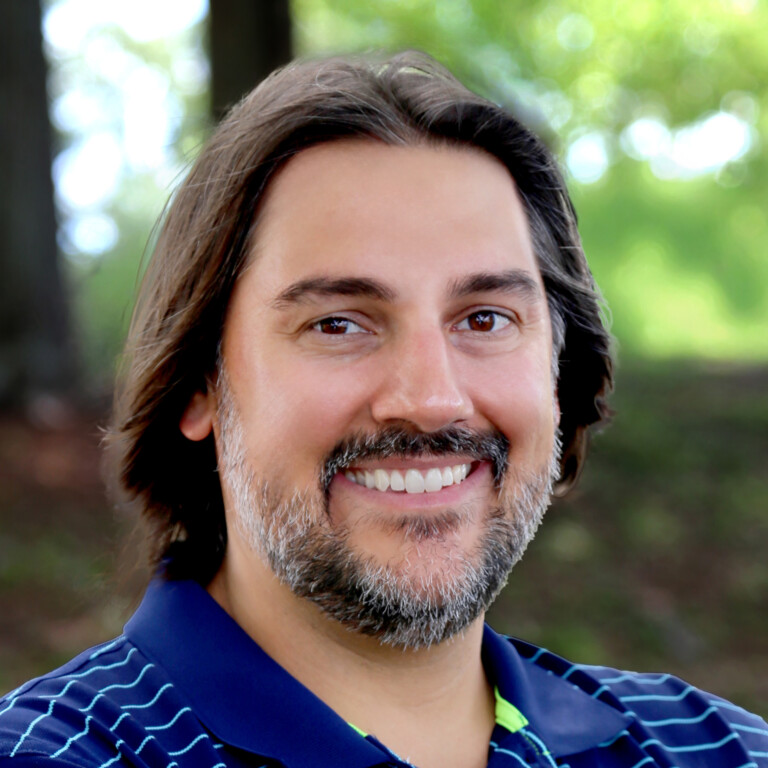
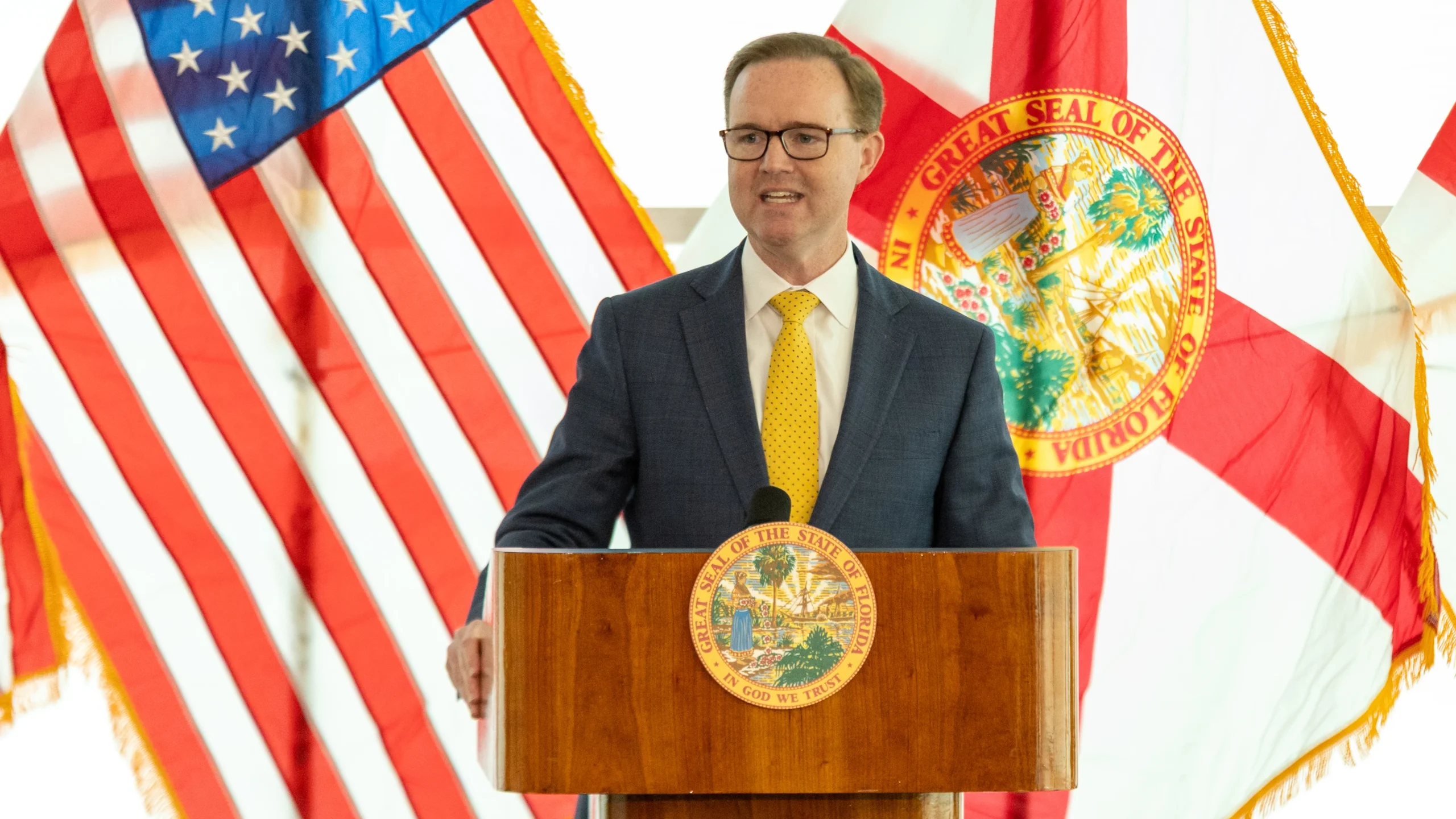
Sen. Clay Yarborough, R-Jacksonville, sponsored a bill that prohibited local governments from using taxpayer dollars to fund diversity, equity and inclusion offices and programs. He spoke during a bill signing Wednesday, April 22, 2026, in Jacksonville. | Will Brown, Jacksonville Today
Published on April 25, 2026 at 1:12 pm
Free local news and info, in your inbox at 6 a.m. M-F. Sign up for the Jacksonville Today newsletter.
Florida lawmakers will return to Tallahassee on Tuesday for a special session that’s meant to tackle the desire of state Republican leadership to redraw the congressional district maps.
Gov. Ron DeSantis called for the April 28 special session after delaying it one week and added two more of his legislative priorities to lawmakers’ agenda that failed to pass in this year’s regular session.
Jacksonville Today thanks our sponsors. Become one.
In addition to redistricting, the four-day session will include a bill by Republican Sen. Clay Yarbrough of Jacksonville that adds a nonreligious and nonmedical exemption for parents who don’t want their children to receive the immunizations required to attend Florida schools.
The Legislature also is poised to take another shot at an Artificial Intelligence Bill of Rights, based on legislation originally filed by St. Johns County Republican Sen. Thomas Leek. It adds consumer protections for children and regulations for the AI products in Florida.
What’s not on the special session agenda is the state budget. Lawmakers left Tallahassee in March without an agreement on state spending — and DeSantis’ long-sought push for property tax reform.


Jacksonville Today thanks our sponsors. Become one.
In a memo Thursday to all senators, Sen. President Ben Albritton said House and Senate leadership have reached an agreement on joint allocations in the budget. He expects an announcement of another special session to finish budget work May 12 to 29.
“Senators should plan to return to Tallahassee the week after Memorial Day to vote on the conference report,” the memo says.
Florida’s move to redistrict
The GOP supermajority in Tallahassee is attempting to redraw the lines after months of pressure from President Donald Trump on Republican-controlled states to secure more electorally favorable seats to preserve the party’s U.S. House majority in the 2026 midterm elections.
Florida’s special session comes days after Virginia voters approved a referendum that gave Democrats in that state four more seats. A judge has temporarily blocked it from taking effect. But the judge’s order is being challenged, and the Virginia Supreme Court, which allowed the vote to move forward, is expected to have the final say.
In Florida, the state constitution does not allow district maps to be drawn with the intent to benefit or disserve a political party or sitting elected official.
DeSantis and other top Republicans say their redistricting effort is not politically motivated. The governor said last week that the districts are not fairly appropriated after a decade of population growth, according to WFSU Public Media.
Proposed maps for Florida have not yet been released. In a memo April 15, Albritton said the Senate will not draft the maps and he expects the governor’s office will present a proposal before the Senate Committee on Rules on April 28.
Yarborough declined to comment about the redistricting effort during an interview Friday with Jacksonville Today.
Democratic Sen. Tracie Davis of Jacksonville says she thinks the vote in Virginia, coupled with the Florida Constitution provision, could make Republicans in Tallahassee rethink or even drop their redistricting effort.
“I actually am still expecting for a memo to come out saying, ‘OK guys, we don’t have maps, we’re not going to do this.’ That’s where I am,” Davis told Jacksonville Today. “I just don’t see how you move forward with the decision that was made on the Virginia maps.”
‘Conscience’ vaccine exemption
Yarborough says he’ll file a new “medical freedom” bill before next week’s special session that will be identical to his Senate Bill 1756, which died during the regular session. It passed the Senate 23-15 in March, but the House did not take it up.
It would create a third, nonmedical and nonreligious category for parents who want to exempt their children from immunizations under the Florida School-entry Vaccination Requirements.
The “conscience-based” exemption would add to the religious and medical exemptions K-12 parents can obtain from school districts that allow children to opt out of required vaccines like polio; Diphtheria, Tetanus and acellular Pertussis; and measles, mumps and rubella.
“Today, we have those who choose the religious opt-out. But providing the conscience or philosophical opt-out would give all parents the ability to make the decision they believe is best for their child, best for their family, and then move forward in that regard,” Yarborough said.
The bill requires physicians and paramedics who administer vaccines to children to provide parents and guardians the Vaccine Information Statement published by the U.S. Centers for Disease Control and Prevention, as well as the most recent materials on how the vaccines prevent communicable diseases approved and adopted by the Board of Medicine and the Board of Osteopathic Medicine.
It also makes it illegal for vaccine manufacturers to offer pay or financial incentives to practitioners who administer their vaccine products.
The legislation also would authorize pharmacists to provide ivermectin as a behind-the-counter medication without a prescription to anyone 18 years or older.
According to the Mayo Clinic, doctor-directed, oral ivermectin is used to treat river blindness and intestinal infection from threadworms. The medication has been studied for other benefits and was looked at as a possible alternative treatment for COVD-19 during the early days of the pandemic. Numerous studies later determined it was not effective.
The provision also grants the pharmacist immunity from civil or criminal liability or disciplinary action for prescribing the medication.
DeSantis, Yarborough and the Senate Republicans that passed the original bill say Florida should be added to the list of 16 U.S. states that have the nonreligious, nonmedical exemptions on the books.
Opponents worry the new policy could bring additional risk of illness to immunocompromised students and teachers who cannot safely get vaccines.
The Florida Legislature is trying to revive Yarborough’s bill at a time when vaccine skepticism among the public is rising, split largely along political party lines, according to a Politico poll early this month.
The bill also comes as the U.S. is grappling with one of the worst measles outbreaks in decades, a disease previously controlled by high vaccine rates among children.
The John Hopkins Bloomberg School of Public Health U.S. Measles Tracker said, as of Friday, there had been 1,877 cases of measles reported nationwide in 2026. That’s ahead of the pace set in 2025, which concluded with 2,213 reported cases.
The latest spike is in Utah, which has recorded 451 cases in 2026. But the biggest outbreak this year has been in South Carolina with 699, according to the tracker. Florida is No. 4 on the list with 180 cases this year — the hotspot being Collier County, with 103 cases.
In Northeast Florida, six cases have been reported in Duval County and three in St. Johns County.
Davis, a former special education teacher for the Duval County Public Schools, voted against the bill in March and says she’ll oppose it again.
She told Jacksonville Today that she is personally immunocompromised and finds a bill that could reduce the vaccine rates in schools dangerous.
“To take myself back into a classroom, as I was a classroom teacher, being a person who is already dealing with an immune situation, walking around the Capitol now is a difficult situation for me,” she said. “I haven’t taken as many meetings as I would normally take because I don’t want to expose myself like that. And for a teacher, a classroom and other children, to be exposed in that way I think is dangerous.”
Yarborough compares the proposed exemption to Arkansas’ law, passed in 2003.
According to Johns Hopkins, Arkansas has seen some of the smallest numbers of cases during the measles surge — none in 2026 and eight in 2025.
During a news conference Wednesday in Jacksonville, DeSantis said he supports the bill. He says it’s necessary to keep medical providers from profiting from administering vaccines.
The bill does not go as far in eliminating all childhood vaccine mandates as DeSantis and his appointed state surgeon general, Dr. Joseph Ladapo, wanted. But he used the stop to tout his efforts to lift COVID-era restrictions in Florida sooner than other states.
“None of the things I did to protect you guys from COVID mandates, none of that has been made permanent in law,” DeSantis said. “They made it temporary. We need to make that permanent because when I’m not around, you guys need to be protected against this stuff coming back.”
When asked by Jacksonville Today if he worries that it could lower the overall vaccination rates in Florida schools and reduce students’ herd immunity to infectious diseases, Yarborough said lawmakers have to be “mindful of public health” but balance that with what he says are the personal liberties of parents.
“So they exist simultaneously. The balance we are trying to achieve is to make sure they (public health and personal liberty) are balanced but we should not let … the choice that one parent wants to make — if they wish to have their child vaccinated, then they can certainly do that,” he said.
“But the parents who do not wish to, that should be their choice from a conscience standpoint, which is part of the nature of this bill,” he said.
AI Bill of Rights
Sen. Jason Brodeur, R-Sanford, will file a new AI Bill of Rights bill for the special session that mirrors Leek’s previous legislation. It will prohibit minors from signing up for an AI platform account without parental or guardian consent.
The bill also prohibits AI companies from selling or disclosing personal user information, and it requires AI chatbots to notify users once per hour that they are interacting with an AI model and not a human.
Florida lawmakers are debating AI use among youth in the wake of multiple reports nationwide by parents who say an AI chatbot was involved in their child’s decision to attempt or commit suicide. A 14-year-old in Florida was among them.
The AI Bill of Rights legislation received bipartisan support in the Senate in March in a 35-2 vote. But it was not considered by the House.
“This is totally out of control. And these are very common sense things to be able to protect the people of this state,” DeSantis said Wednesday. “They also shouldn’t be able to take your intellectual property; they shouldn’t be able to steal your data without your consent. And I think they should compensate you.
“They make a fortune off taking your data. You should be able to get some of that money.”