
Published on March 11, 2026 at 12:04 pm
Free local news and info, in your inbox at 6 a.m. M-F. Sign up for the Jacksonville Today newsletter.
Due to the perseverance of the Latter-day Saints, a long-overdue Mormon temple is set to be completed in the near future after its groundbreaking ceremony in January 2026. The story of how the Latter-day Saints came to Florida first began in the Panhandle, gradually spreading eastward in the 1890s, but it wasn’t until they reached Jacksonville that they were able to firmly plant The Church of Jesus Christ of Latter-day Saints in the Sunshine State.
Mormon missionaries first came to Jacksonville in the early 1900s, establishing a significant presence in the Riverside and Springfield areas. The growth of the church in Jacksonville led to the establishment of the first stake, a group of local organizations similar to a Catholic Diocese, which was not only the first in Florida but the entire South. Over time, the church grew beyond those early iterations with meetinghouses on the Westside, San Marco, Mandarin, Fort Caroline and the Beaches, as well as a Mission Office. Jacksonville’s welcoming of the church established it as a city of righteous benevolence within that fait.
Jacksonville Today thanks our sponsors. Become one.
Joseph Smith, the founder of the church, called two missionaries in April 1843 to serve a mission in Pensacola, but a lack of records prevents us from verifying whether they arrived in Florida. Phineas Young, the older brother of Brigham Young, is said to have come to Florida in 1845 or 1854 and gave copies of the Book of Mormon to Native Americans, but it is unverified.
Florida remained quiet in the realm of Mormonism until the 1890s, when Latter-day Saints, informally termed Mormons, finally made headway for the church from Pensacola to Live Oak. It was through the work of missionaries that Florida was finally brought into the realm of the church. Floridians were first converted to Mormonism in a small town about 40 miles west of Jacksonville called Sanderson.
An elder in the church is an ordained male of the Melchizedek priesthood who can administer spiritual matters, including priesthood blessings of the church, and serves as a missionary. In 1896, elders of the church came to the home of the Hill family in Sanderson. Thaddeus A. Hill was well-received by the words of the elders, who announced that he had found the true gospel and decided to convert. The Hill family was baptized on July 25, 1897, in a small creek near their home in Sanderson.
Jacksonville Today thanks our sponsors. Become one.

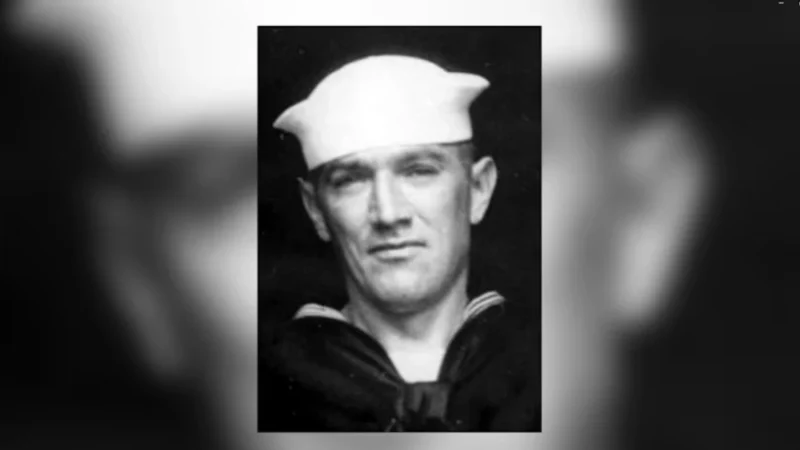
George Paul Canova and his family were, at first, hesitant in joining the church after hearing of the conversion of the Hill family. Although George was Catholic and his wife, Dianna, was a Baptist, the missionaries converted the Canova family to the church six weeks after the Hills. The Canova family was baptized in the Little St. Marys River on September 8, 1897. George was ordained an elder on January 3, 1898, and then became the first branch president in Sanderson by Elder Francis M. Lyman. Lyman at the time was an apostle in the Quorum of the Twelve Apostles, which is the second-highest leadership of the Church.
The church appeared to have a promising future in Sanderson until conflict soon arose due to the differences in the Mormon faith and prejudices from non-members in the area. In March 1898, a letter the elders in Sanderson received said: “We here notified you dam rascals once to vacate this county and you haven’t done so. Now you infernal deadbeats, let this be the last time. We will give you all until Monday, March 28th, and if you polygamous villains are not gone by that night, we, committee of 8, will go to Sanderson (same time) and cow hide every one of you, especially a certain man [Canova] that is encouraging and feeding you dogs now. Remember this will be your last notice.”
The threats in the letter materialized on June 5, 1898. That evening, George and Thaddeus were returning from a conference in a horse-drawn buggy and someone blocked their route with a gate. While Thaddeus got out to check the gate, guns were fired off behind nearby trees. George was killed by unknown assailants, and Hill fled on foot to get help. The identities of the individuals who assassinated George were never identified.


In 2002 a monument was erected by the Church at Heritage Park Village in Macclenny to commemorate the founding of the Florida Stake in Jacksonville in 1947. On the other side of the monument is a short inscription about George Paul Canova and his murder in 1898. | Andrew R. Nicholas
It was reported in June 1898 that Elders had begun missionary work in Jacksonville. In August, Elders John Z. Brown and W.G. Fisher held what was called “washing of feet as a testimony against those who rejected the gospel” in McGirts Creek. Despite the work of missionaries in Jacksonville, it wasn’t until the Hill family moved from Sanderson to the city around 1902 that the church became further established in Jacksonville. They no doubt had Canova’s assassination on their mind among the reasons to move.
Ella Hill Roberts, the oldest daughter of Thaddeus Hill, had already moved to Jacksonville before her family, which made her the first member of the church in the city. Charles A. Callis, a self-taught attorney, was also an important figure in establishing The Church of Jesus Christ of Latter-day Saints in Jacksonville. Callis served as president of the Southern States Mission from 1908 to 1934. The church established the Southern States Mission in 1876. Jacksonville became integral to its success thanks to its prime location in North Florida. Today, the Florida Jacksonville Mission, established in 1987, coordinates Latter-day Saints missionaries called to serve in Jacksonville and the surrounding area.
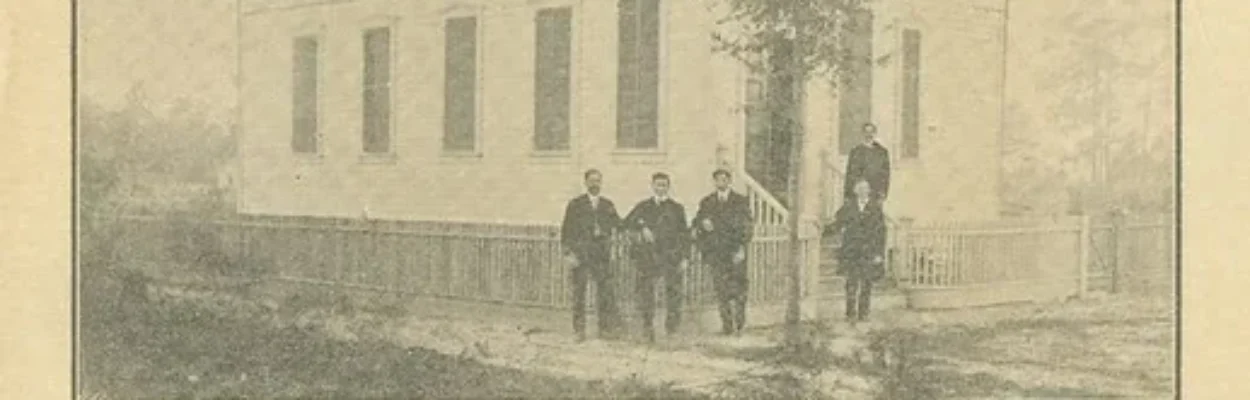
In the early days of the church in Jacksonville, elders held the first meetings in the Lackawanna and Riverside areas. Missionaries would teach and preach Sunday school in private homes. A small frame meetinghouse with a steeple was built on the corner of Short and Claude sStreets in 1906 with a dedication by Ben E. Rich, president of the Southern States Mission. Nellie Hill, daughter of Thaddeus Hill, was interviewed by Callis in 1913 to serve in the Southern States Mission. With her letter of appointment dated January 12, 1914, she was the first lady missionary from Jacksonville. Nellie Hill first served her mission in Atlanta and then in Chattanooga.


A colonial-style building at 2165 Park St. was dedicated in 1925, becoming the first Latter-day Saints Church in Florida. The building was funded through church members and the business community of Jacksonville. It was said that the bricks of this building, originally red, were kilned for the church at a brickyard at Doctors Inlet. The congregation outgrew the building on Park Street by 1975, and it became vacant for several years. In 1980, the Junior League of Jacksonville acquired the former church and extensively renovated it to become the present-day Riverside House.


In Springfield, a chapel was built around 1916 for neighborhood residents, eliminating the need for them to travel by bus to the chapel on Claud and Short streets in Riverside. The chapel was referred to as the Ashley Branch, but it did not last, as it was later destroyed in a storm. A small, temporary structure was then built on the property of Nathan Smith for the Springfield members. Despite a new building being dedicated in Riverside in 1925, the members in Springfield continued to have a meeting place in their neighborhood. At one time, the Springfield members used the upstairs room above a whiskey store at 17th and Main streets. The Springfield members lastly acquired the former building of the First Evangelical Church of Jacksonville on 9th and Main streets with a dedication on November 24, 1940. The Springfield members were part of what was once the Springfield Ward, which changed its name to the Jacksonville Third Ward in 1957 and existed for around 30 years.

By the 1930s, there were around 50 members of the church in the Wesconnett neighborhood. The membership increased to a point where on July 16, 1939, the group was organized as the Wesconnett Branch. The branch first met at the Old Wesconnett School Building on Wesconnett Boulevard. On November 15, 1942 a chapel was dedicated on Timuquana Road. The Wesconnett Branch was renamed the Jacksonville Fourth Ward on June 16, 1957.
The Florida Stake was officially organized on January 19, 1947, and was organized by Harold B. Lee and Charles A. Callis. Callis traveled to Jacksonville from Salt Lake City to celebrate the Florida Stake. On January 21, 1947, just two days after the Florida Stake was organized, Callis died of a heart attack in Jacksonville, after fulfilling what he considered his “crowning achievement.”
Alvin Canova Chace became the first president of the Florida Stake, and the South. Chace was the grandson of George Paul Canova. In an interview in 1981, Chace said of his grandfather, “Of course, the family is right proud of our grandfather, that he was so strong of character that he’d join the church in those days when prejudice was bad in the area. He took care of the missionaries on many occasions.”
Growing up, Chace was not a member of the church because his father was Episcopalian, but his mother, being the daughter of George Canova, was a member of the church. It wasn’t until Chace was 7 years old that his father decided to join the church, which led to him being baptized in the Trout River. On January 19, 1947, Chace was ordained by Charles A. Callis as high priest and soon after became the first president of the Florida Stake.

James Roland Boone became the first patriarch of the Florida Stake. A patriarch is part of the Melchizedek Priesthood who is ordained to give patriarchal blessings to members of the church. Boone had been baptized into the Church at age 9 and served in the Southern States Mission in the 1930s. The year 1937 was pivotal for Boone because he was chosen to be president of the newly formed Florida District, became the first patriarch of the Florida Stake and married Ruth Flake, the granddaughter of William J. Flake, co-founder of Snowflake, Arizona.
Boone was recognized in 1971 by Thomas S. Monson, then a member of the Quorum of the Twelve, at a stake conference in Jacksonville. In one of his speeches, Monson praised Boone for his work in the church as well as his large family of 14 children. Monson had visited Boone at his home when he was ill and remarked, “As I looked upon this wonderful man, a great leader in the church in Jacksonville, I thought to myself, `Our Heavenly Father has been good to him. He has not blessed him with material things, but He blessed him with a posterity which has done honor to him all through the years.’”
After Boone died, Monson said, “Brother Boone passed away nearly seven years ago, in December 1987. His great desire was to have 100 grandchildren born to his sons and daughters while he lived in mortality. His 100th grandchild was born on the day that Brother Boone was laid to rest.” Monson would later serve as president of the Church from 2008 to 2018 the highest office of the Church.

Permanent meetinghouses began to be established in Jacksonville starting in the 1950s in San Marco. On January 3, 1955, the San Marco meetinghouse of the San Marco Ward was dedicated at 4087 Hendricks Ave. with Elder Henry D. Moyle presiding over the ceremony. At the time, the Florida Stake consisted of North Florida going as far west as Lake City and included part of the Waycross, Georgia, area. On October 24, 1966, construction of the Firestone meetinghouse of the Firestone Ward on 5100 Firestone Road commenced, marking it as the first permanent meetinghouse on the Westside. On June 20, 1976, the Orange Park meetinghouse of the Orange Park Ward held its first services and is part of the Jacksonville Florida West Stake. The establishment of these meetinghouses in Jacksonville and the surrounding area demonstrated that the Latter-day Saints faith had grown from a few in the early 1900s to a significant yet undetermined number by the 1950s.

-L.jpg)

The growth of the church in Jacksonville led to the reorganization of the Florida Stake, as well as the establishment of three new stakes in Jacksonville. The Florida Stake was renamed in 1974 to the Jacksonville Florida West Stake, consisting of Orange Park, Fleming Island and the Westside of Jacksonville. The Jacksonville Stake was organized in 1968 and consisted of Arlington, Mandarin, San Jose, San Marco and the Beaches. It was renamed the Jacksonville Florida East Stake in 1994. The Jacksonville Florida South Stake was organized in 2009 and consisted of Bartram Trail, Longleaf Pine, and Silverleaf.
Thomas S. Monson spoke at a regional meeting in Jacksonville on January 28, 1996, when he referred to the Southern members as the salt of the South, which was later used as the title of La Viece Moore-Fraser Smallwood’s phenomenal book about the history of the church in Florida, Salt of the South: the LDS trailblazers. On January 19, 1997, President Gordon B. Hinkley, along with Russell M. Nelson of the Quorum of the Twelve, visited the West Stake in Orange Park to celebrate the 50th anniversary of the first stake in Florida and the South. The 50th anniversary brought 5,000 members in attendance.
As growth in the church accelerated throughout the 20th and 21st centuries, a need for temples in Florida and the Southeastern U.S. arose. A temple in the church is a unique building separate from a church or meetinghouse where special ceremonies are performed, such as baptisms for the dead, the endowment and marriage sealings.
Members must be temple-worthy to enter a temple, which includes being an active member, adhering to the health code called the Word of Wisdom, and having a testimony. Non-members are not allowed to enter a temple. Jacksonville members had to travel to Utah throughout the early 1900s because it was the only state with temples. It wasn’t until the Washington, D.C., Temple was dedicated in 1974 that members on the East Coast had a temple. The Atlanta Temple was dedicated in 1983, making it the closest temple for members in Jacksonville until the Orlando Temple was dedicated in 1994. Today, there are four temples in Florida: Tallahassee, Orlando, Tampa and Fort Lauderdale.
A temple in Jacksonville finally came to fruition when President Russell M. Nelson announced the Jacksonville Florida Temple in October 2022. In 2025 the church announced more details on the temple, with its cost of $27 million, size of 29,000 square feet, and location on Loretto Road in Mandarin. The groundbreaking and site ceremony of the Jacksonville Florida Temple was on January 24, 2026. The property, once the farmstead of Fleming Henry Bowden, was acquired by the church for $7.4 million in 2024.
Fleming Henry Bowden was the Duval County supervisor of elections until his death in 1964. The Fleming house, built in 1907, was bought by Charles and Murel Cissell in 1963. They added land to the property, making it 23.59 acres. In 1995 the house was moved 164 feet back when Loretto Road was widened. Due to the age of the house and the expenses of upkeep, the Cissells decided to put the property on sale in 2018. The house was unable to get a historic designation or a buyer, and it was demolished in 2024, clearing the way for the Jacksonville Florida Temple.
At the groundbreaking ceremony, Massimo De Feo of the General Authority Seventy came to preside over the dedication. The General Authority Seventy assists in regulating the affairs of the church worldwide under the direction of the Quorum of the Twelve. De Feo remarked during the dedication, “This house of the Lord will be a beacon for the community. It will be a symbol of Jesus Christ.” De Feo further added, “It will be a symbol of peace, a symbol of unity, a symbol of interfaith dialogue, a symbol that we are all children of Heavenly Father, who loves all of us, regardless of our beliefs.” The groundbreaking ceremony of the Jacksonville Florida Temple came five months after the groundbreaking of the Tampa Florida Temple.

President Gordon B. Hinkley said in Orange Park at the 50th anniversary of the first stake, “The future lies ahead. Let every man and woman and child in this congregation today resolve to make of the work of the Lord in this part of His vineyard better and stronger and greater than it has ever been before.”
His vineyard of Jacksonville for the church has become bountiful, from the early 1900s into the 21st century, with a faith like a stubborn mustard seed refusing to back down and to grow in the unknown territory of the Sunshine State. Grow forth it has, sprouting from the fruits of the Latter-day Saints of Jacksonville and finally leading to the long overdue establishment of the Jacksonville Florida Temple.