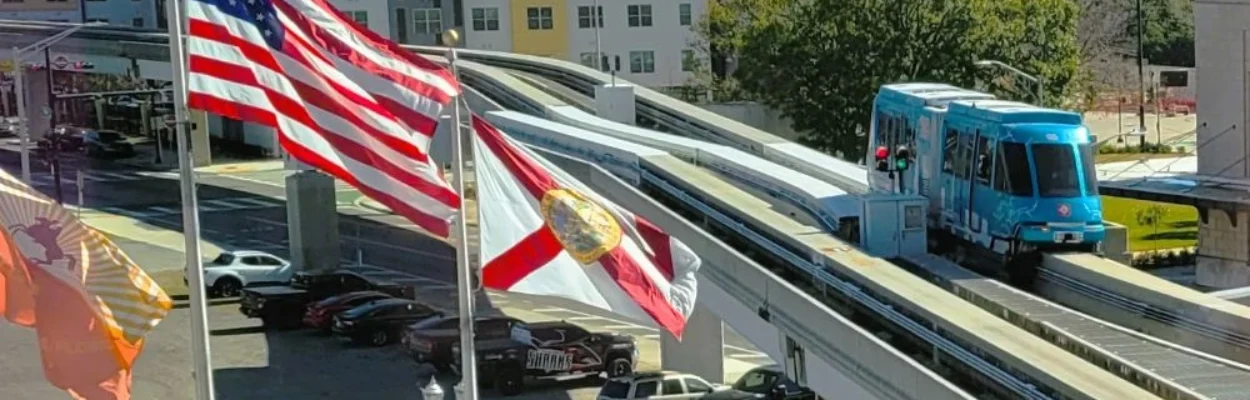
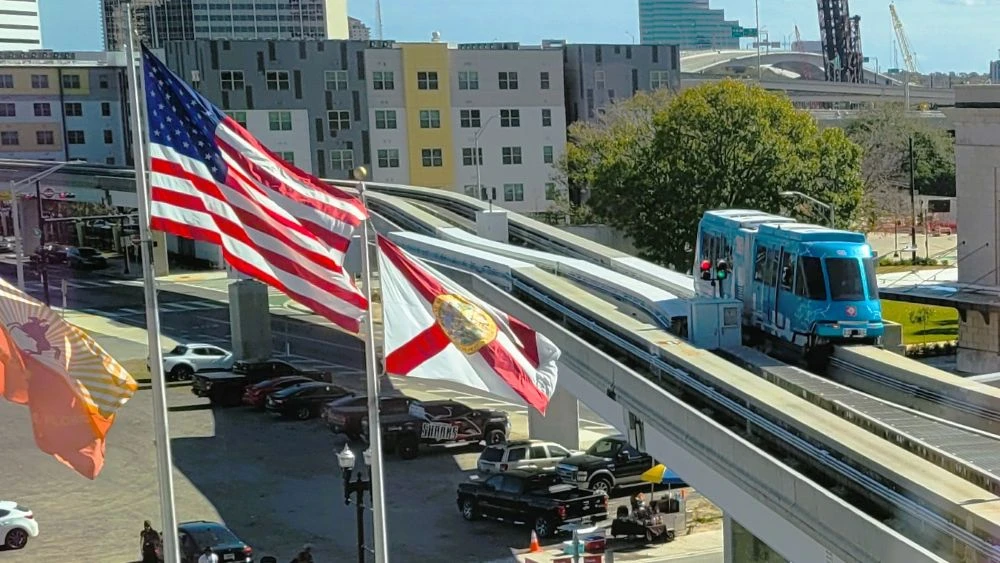
The Jacksonvill Transportation Authority is considering five proposals for the future of the Skyway.
Published on February 25, 2026 at 4:57 pm
Free local news and info, in your inbox at 6 a.m. M-F. Sign up for the Jacksonville Today newsletter.
Planners have come up with four new possibilities for the future of the Skyway.
The ideas, plus a previous proposal, could represent the next phrase of Jacksonville’s autonomous mass transit system, known as the Ultimate Urban Circulator system.
Jacksonville Today thanks our sponsors. Become one.
So far, the commuter system — called U2C for short — mixes autonomous vans on Downtown streets with the 35-year-old Skyway trains on overhead rails.
Now it will be up to the public to prioritize what to do with the Skyway next — ranging from revamping the system to tearing it down.
Possibilities include:
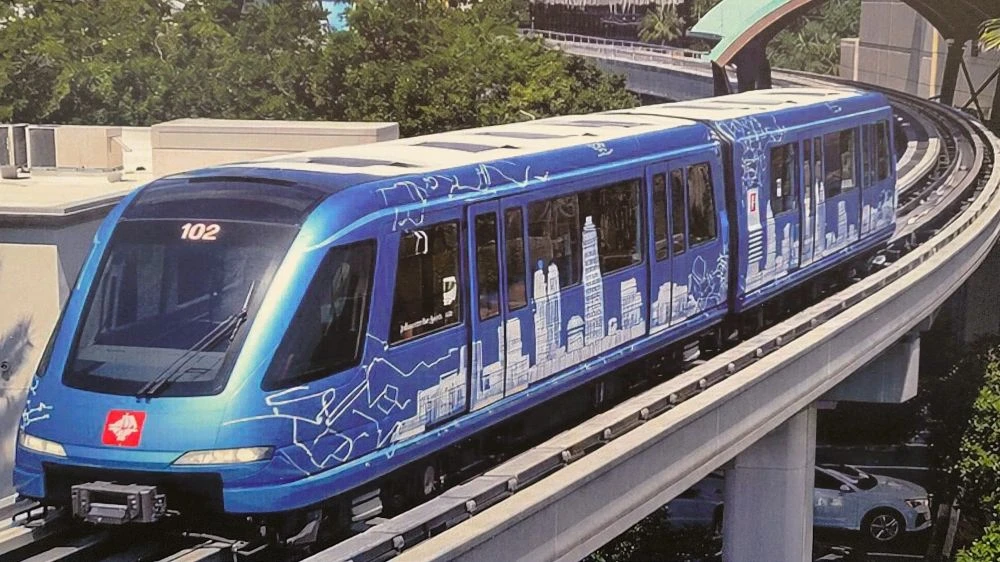
- Rehabbing the existing Skyway trains
- Replacing the current Skyway trains with new ones
- Upgrading Skyway tracks to handle the current NAVI vans and future vehicles, with ramps at Kings Avenue, Leila Street and the Rosa Parks station Downtown. (This was the original proposal.)
- Removing the overhead Skyway tracks and operating NAVI and future vehicles on Downtown, San Marco and Riverside streets only
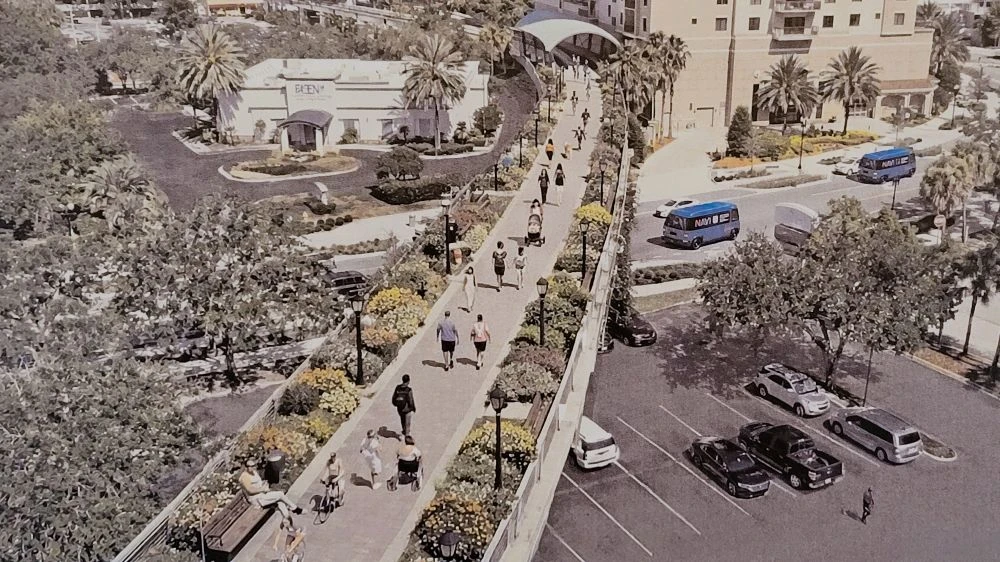
- Repurposing elevated Skyway tracks as landscaped walkways
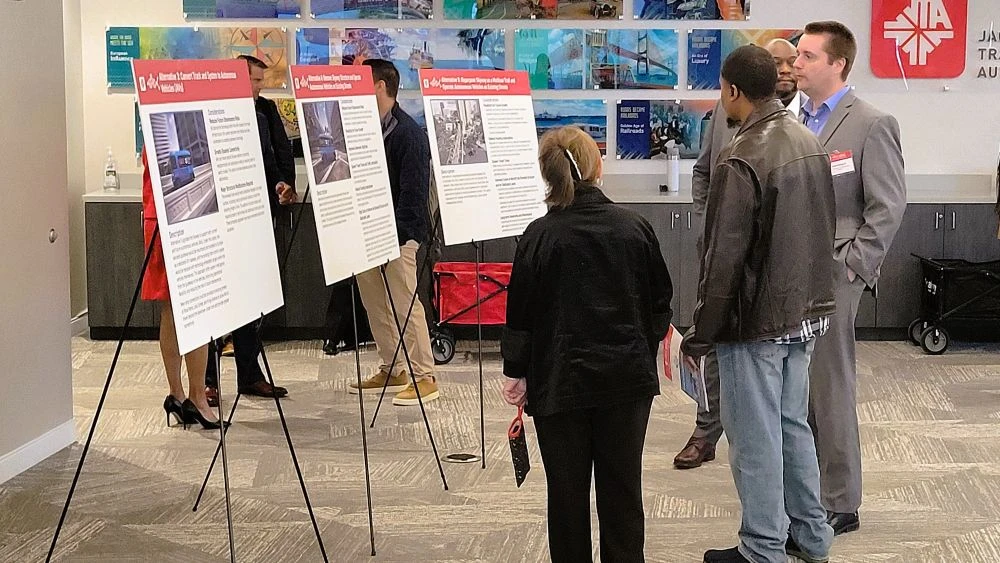
The Jacksonville Transit Authority is showing a video about the alternatives at public meetings, which started Wednesday. The meetings will continue March 5 and 26.

Jacksonville Today thanks our sponsors. Become one.
JTA CEO Nat Ford said the five alternatives are not a reversal from plans that have been discussed for years — an autonomous system linking the Northbank with San Marco, Brooklyn and Riverside.
“Oh no, not at all. This is professional project development,” Ford told Jacksonville Today at the first town hall.
“You always have a vision of an optimal solution, then you have to deal with the physics of finance, cost, our partners and also public acceptability,” he said. “There was never going to be a single option going forward. That is not the way you develop any major transportation infrastructure project. By statute, you have to look at multiple options.”
Former commuter Karen Hannah reviewed the five proposals. She said she makes sure her children know how to use the bus and Skyway. She hopes the Skyway does not become a walking trail.
“I do love the autonomous vehicles, making sure everyone receives reliable transportation to get where they are going,” said Hannah, a resident of Northwest Jacksonville. “Make it very accessible.”
Skyway plus NAVI
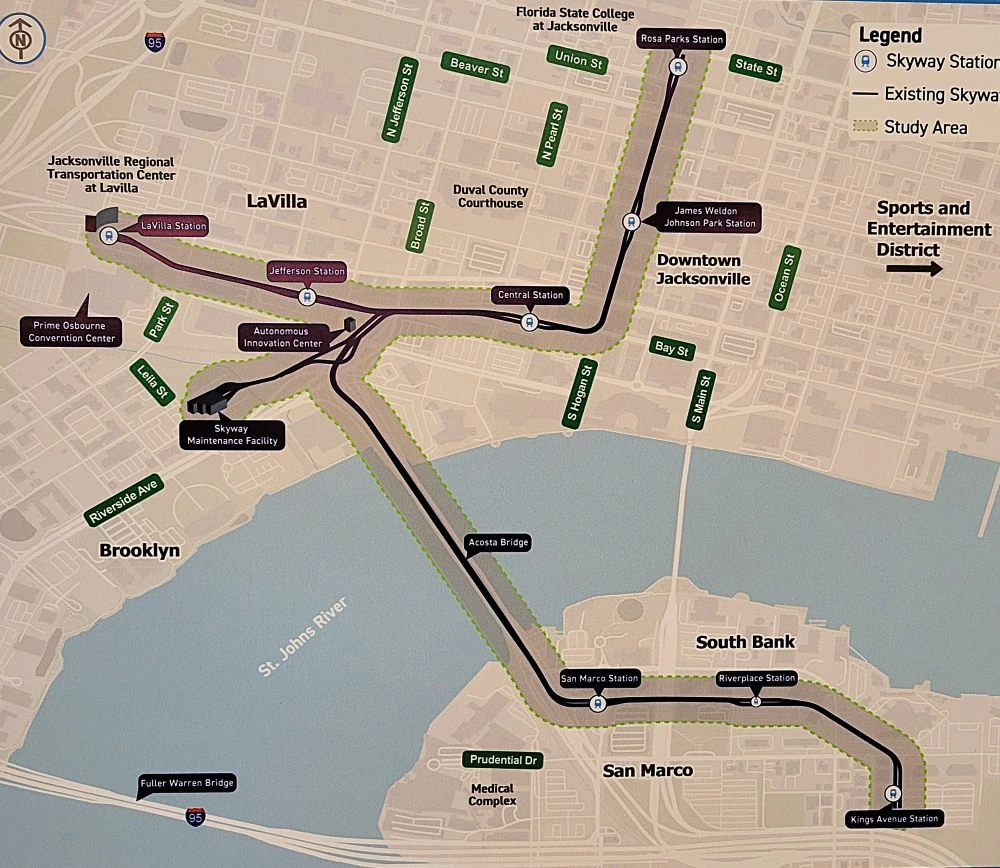
The JTA got more than $23 million in federal funds in 1985 to start the Skyway. The first 0.7-mile length opened in 1989, and by 1998, it ran from James Weldon Johnson Park to Florida State College at Jacksonville, and across the Acosta Bridge to San Marco. Its original 10-car fleet is down to two, JTA said.
NAVI is the transit authority’s first step into the bigger Ultimate Urban Circulator plan, which would replace the Skyway and link the Northbank to San Marco, Brooklyn and Riverside at an estimated cost of $400 million.
Begun in June, it currently uses 14 autonomous electric Ford E-Transit vans, taking passengers to multiple stops between LaVilla and EverBank Stadium. Each van uses cameras, lasers and guidance systems to navigate around cars and pedestrians. An attendant will sit on board for the next few months as an observer.
The current NAVI system costs $65 million. Holon Urban EVs will replace the Ford vans sometime in 2027, to be built at the company’s first autonomous vehicle factory in Florida, planned for Zoo Parkway on Jacksonville’s Northside.
U2C Phase II
The original U2C proposal included converting the 2.5-mile Skyway system in Downtown and San Marco into an elevated roadway for the current NAVI vans, then Holon vehicles. JTA then decided to offer more for the public to consider.
The main reason is that it has been at least a decade since the first suggestion of repurposing the Skyway with the autonomous vehicles, Ford said.
“And part of what drove that was the federal payback — up to $100 million in federal payback if we didn’t leverage the existing Skyway structure,” he said. “In this case, 10 years have passed by, and we have launched NAVI — autonomous vehicles are actually operating. So we do believe examining multiple options is in the best interest of the taxpayers.”
JTA has begun discussions with the Federal Transit Administration about the complications.
“We don’t want to end up in that same situation years downstream because we went for a one-of-a-kind system that is not common for parts, vehicles and things of that nature,” Ford said. “Autonomous vehicles and that technology gives that opportunity to future-proof, and if we can leverage the aerial structure, there’s time-savings and federal investment that still has to be determined whether we would trigger that payback.”
The Skyway options
The most radical proposal would convert the Skyway tracks into something like New York City’s Highline, which renovated unused elevated subway tracks into linear parks. The multiuse trails would connect to the city’s Emerald Trail network. The cost to renovate and maintain the trails is an issue, JTA said.
Another proposal would rehabilitate the existing Skyway trains still in service. The existing monorail-style track would be upgraded. The proposal has the least possible impacts, but JTA officials said it may be difficult to rehab the existing trains.
Buying new Skyway trains would bring newer, more reliable transportation and more frequent service. But any new systems would require removal of the Skyway’s current center guide beam and “significant infrastructure upgrades,” the JTA proposal states.
The original proposal would rebuild the existing overhead rails to handle current and future autonomous vehicles, with expansion to three Skyway stations in San Marco and the bus hub at the Regional Transportation Center at LaVilla.
That would include three new ramp connections so they could travel to and from the current and expanded street routes. This would require major structural modifications, but it expands “commuter connectivity,” the JTA said.
A final alternative would involve the JTA tearing down all overhead Skyway tracks, with new street-level stations built. NAVI would operate on all existing Downtown streets, with flexibility for future growth.
JTA will use public feedback from the town halls over the next few weeks to come up with final proposals, then submit them for more public review in May. The authority is also seeking public input in this online survey.
The JTA board would review a final Skyway rehabilitation proposal and vote in June, then it would go into a planning and design study.
No cost estimates or construction dates are available yet, but an extension of the local option gas tax was originally slated to partly fund the Phase II cost, JTA officials say.
The next town hall meetings are:
- 11 a.m. to 1 p.m. and 5 to 7 p.m. March 24 at FSCJ’s Downtown’s Advanced Technology Center at 401 W. State St.
- 11 a.m. to 1 p.m. and 5 to 7 p.m. March 26 at the DoubleTree Jacksonville Riverfront, 1201 Riverplace Blvd.
More information is available at jtafla.com.