
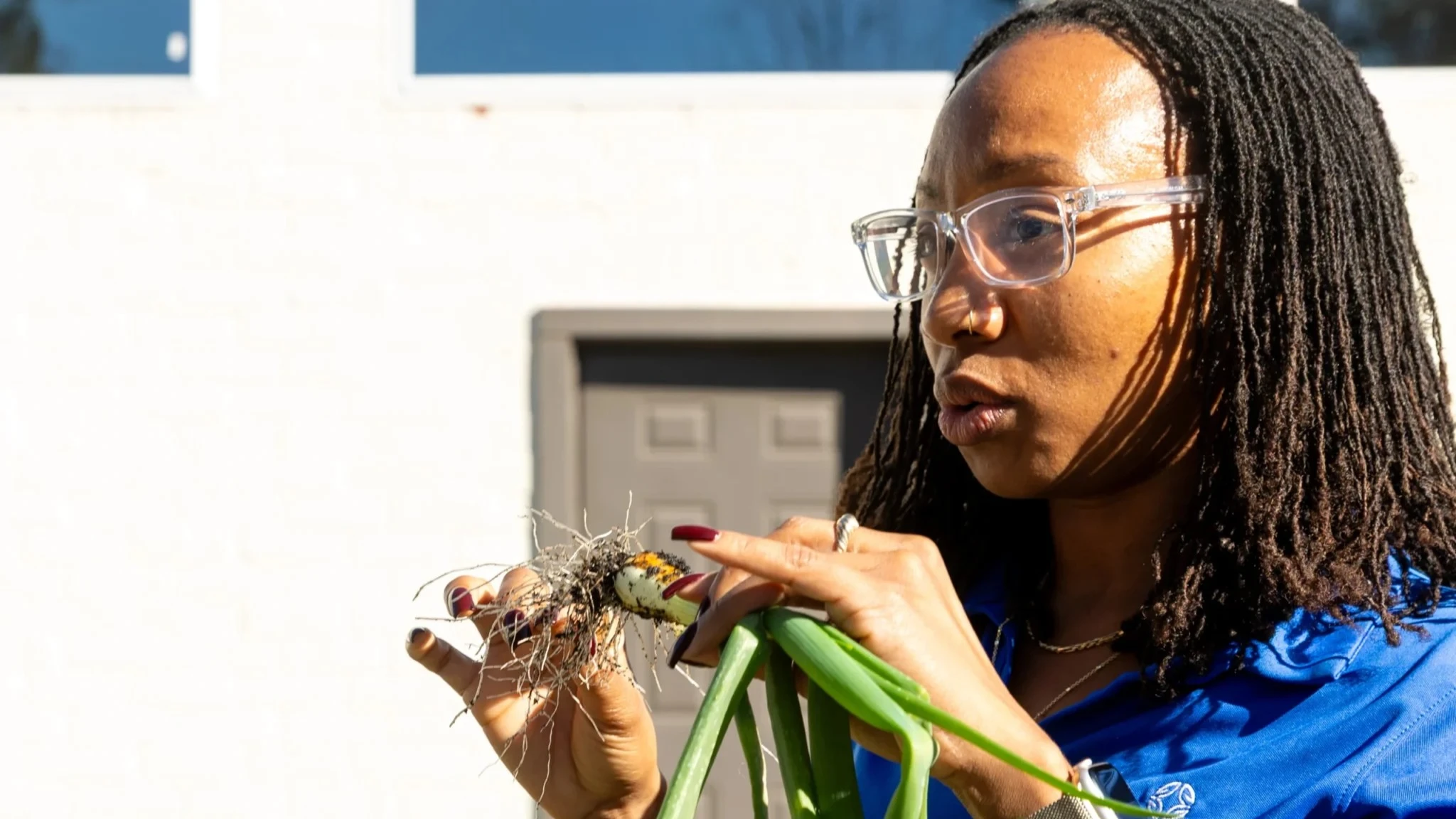
Blue Zones Jacksonville Executive Director Nicole Hamm smells green onion that was grown at its headquarters. Blue Zones Jacksonville has harvested more than 150 pounds of vegetables since its first yield in in fall 2025. | Will Brown, Jacksonville Today
Published on February 16, 2026 at 4:34 pm
Free local news and info, in your inbox at 6 a.m. M-F. Sign up for the Jacksonville Today newsletter.
Financial well-being has declined in some of Jacksonville’s historically under-resourced ZIP codes.
Those findings were part of a 2026 Well-Being Index that Blue Zones Jacksonville released during a town hall meeting this month. Pride and safety in community within the 32206, 32208, 32209, 32210 and 32244 ZIP codes has all increased over the last three years; however, that has been offset by reduced confidence in financial well-being amid respondents on the Eastside and Northside.
Jacksonville Today thanks our sponsors. Become one.
It concluded: Respondents on the Westside recorded increases in high blood pressure and cholesterol numbers, but the number of smokers has declined. The 2026 index noted respondents in the 32206 ZIP code — which is the Eastside, Brentwood and Springfield — recorded their daily stress decreased compared with the 2025 index.
Lastly, the Blue Zones Jacksonville index found respondents in both the 32208 and 32209 ZIP codes faced less food insecurity that prior surveys, but were less optimistic about their financial health.
This year’s index surveyed 536 people between mid-October and Thanksgiving weekend.

Jacksonville Today thanks our sponsors. Become one.
Jacksonville Today listened to Blue Zones Jacksonville Executive Director Nicole Hamm inside the organizations headquarters, nestled between Springfield and the Eastside.
This conversation was lightly edited for length and context.
Q: Blue Zones had a town hall meeting on Feb. 11 to share the findings of some polling and data. What are some of the findings from that data that most surprised you from when you saw it?
A: Unfortunately, I was not surprised, but I was disappointed. This survey, and fielding of data, was taken during the government shutdown. There is already an external economic barrier that people are navigating. To see that financial well-being is down. To see that people’s physical health is down was not surprising, to me.
I think what was surprising, in that October to December window, was how much resilience existed, even within that time frame.
We broke down by racial group, between Black adults and white adults, levels of resilience and response rates to varying questions. Even though we are seeing in our communities that financial well-being is down, (and) people don’t have healthy options at work or at home, we are seeing that people feel like they have a leader in their life that empowers them.
We still see people that say Jacksonville is the perfect place for me to live. We still see people that speak to their neighbors. Resilience, I think, is the true them of our data. Especially in this time and in this season.
I will absolutely acknowledge that … we have to band together and elevate wellness work and good work. It’s going to take collaborative partnerships and deep trust to continue to build that. The community has the resilience. They have the tenacity. We have to make sure we bring them the resources to support and the access that they deserve.

Q: So many of the ZIP codes that Blue Zones works in are, frankly, forgotten by people who do not live in those ZIP codes, work in those ZIP codes, pray in those ZIP codes or have family in those ZIP codes. What are some of the things that you would like people who don’t live in the ZIP codes that Blue Zones serves to understand, specifically from the data that was collected late last year?
A: I would want them to understand this is an incredible community. The great work and people there don’t get enough media attention or highlights. There’s a lot of really positive things happening. Beyond the ZIP codes, each community in it is uniquely beautiful.
I think about 32206. You’ve got Out East. You have Brentwood. You have Springfield. Those are three unique neighborhoods that are all beautiful and different. I would say: Understand that these are our neighbors and understand that there are not just historical and systemic inequities. Also, maybe (ask) where have you fallen short in giving back to your community?
It’s going to take all of us. When one of us rises, we all rise. The problems on one side of town that might not directly affect you do indirectly affect you. We all have a moral responsibility to lift others and bring them along with us.
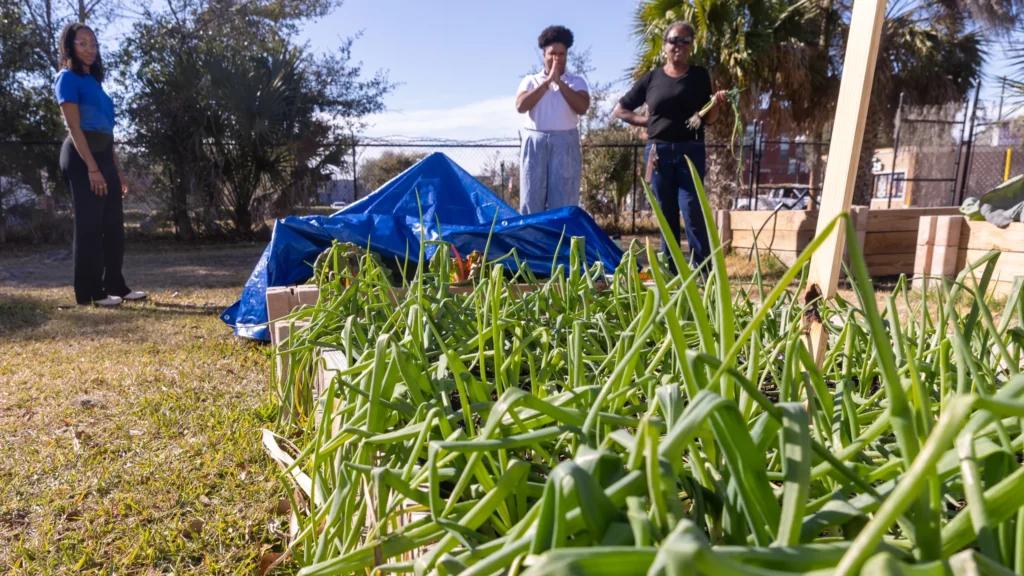
Q: Recently, there has been a renewed local conversation about urban farming, starting from the mayor’s office and among urban farmers (about) how resources can be shared with the community. What impact do you think that a renewed conversation and commitment to urban farming in Jacksonville will have on the ZIP codes that Blue Zones Jacksonville serves?
A: I think it really starts right at home. One of the things that we have supported is the Free to Garden Act, which allows people to grow food in their yards and actually be able to share, exchange, distribute without the limitations of commerce, government restrictions and et cetera. That’s one part of it: Giving people autonomy to grow and build community with neighbors is something that’s really beautiful.
The second part is building a robust food plan is critical to any city, especially one as big as Jacksonville. When we have an infrastructure that understands where our food is coming from, growers being on one accord … everyone can commit to a wholesale method, which increases buying power.
It also gives a little bit of economic opportunity. It also keeps farmers local. Keeping local farmers is good for everybody. We want to eat locally. But, it also keeps money in our community so we can aggregate and distribute our own food.
God forbid if there was a major hurricane and distribution and logistical channels got a little backed up. We could be OK.
When we look at our ZIP codes, specifically on the Northwest side of Jacksonville, there are food deserts throughout the city of Jacksonville. There are over 40. When we take that to a neighborhood approach, we see that in our (Blue Zones) ZIP codes, there are fewer access to food growing opportunities in other parts of town. Having a food plan, infrastructure and opportunities to self-sustain, we are better able to support our community’s well-being and ensure that the right nutritious-dense foods are something everyone (can) access.
(Writer’s note: The Florida Legislature passed legislation in 2019 that prohibited the regulation of vegetable gardens on residential properties. Florida is one of few states with a Right to Garden law in effect.)
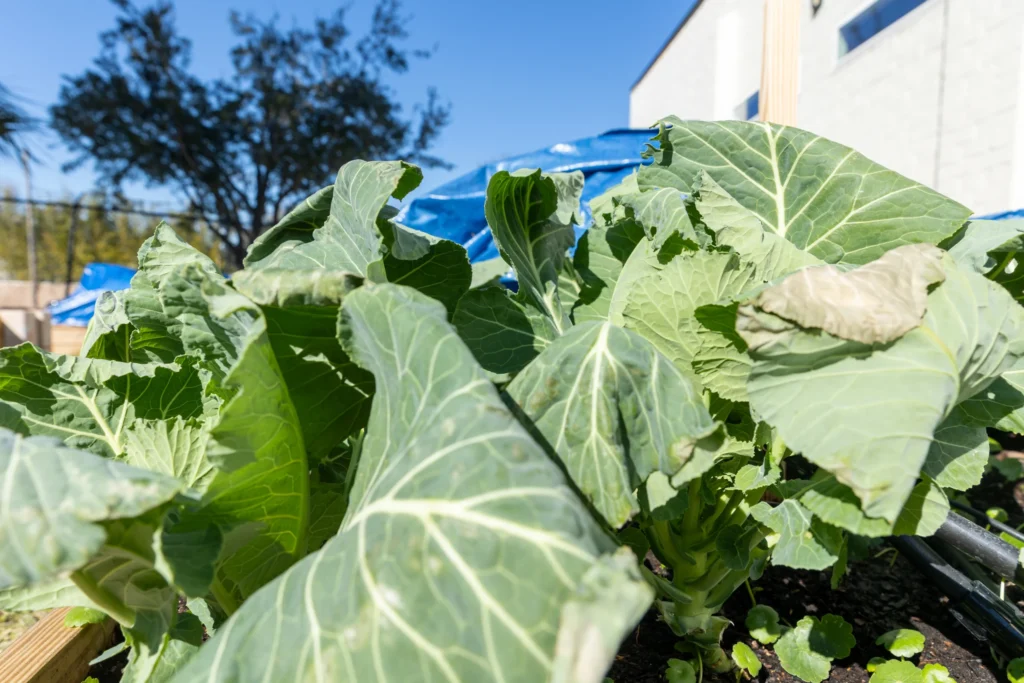
Q: One of the things that you and your team mentioned (when Blue Zones Jacksonville was launched in 2022) was making the right choice, making the healthy choice. That is not always as easy when grocery prices are rising. So, how do you communicate resisting the temptation — for lack of a better way of saying it — of continuing to make the healthy choices when sometimes that fried food or that process food is a little bit cheaper?
A: Grocery store prices are high because of logistics. If we go back to your previous question, when we can keep food local, we can lower prices and we’ve seen that happen.
One of the stories we’ve worked with is Durkeeville & Co and we’ve worked with Eartha’s Farm and Market to grow that produce locally, take it down the street and sell it to the community at a price where everyone’s making a profit; but, it’s not pulling on the purse strings of the consumer.
If you think about all the steps that it takes to get food into the store, then into your home, when you reduce that supply chain, you’re better able to reduce your pricing. It also gives an opportunity for community to inform what they actually want to see within their story.
Sometimes, we often approach food as “this is what’s good for you, you should have it.” We also need to engage in the conversation around education. If you stock up with eggplant and no one knows what to do with that, it doesn’t matter.
When we’re talking about easy and accessible, we’re talking about education, knowledge and empowerment as well. That’s the reason why we do cooking demonstrations and bring community in with us and say: This is what you could do with beans, collards and sweet potatoes.
Food is cultural, and it’s deeply personal. To invite people in their culture and their community and say “this is accessible to you at a decent price that you can afford” those two things working together make an impact.
Q: Speaking of food … late last year when the federal government shut down (that) impacted whether (Supplemental Nutrition Assistance Program) benefits would be distributed. There are 160,000 people in Jacksonville who rely on SNAP benefits. Some of the ZIP codes with the highest number of SNAP recipients are ZIP codes where Blue Zones Jacksonville works. How did that pause in SNAP benefits, and the uncertainty there, inform your work and give you an understanding of just how much hunger there is in Jacksonville?
A: If we start from the consumer, we know that was already difficult and we saw it. St. Mary’s Episcopal saw a 30% increase in their food pantry — as in people coming to the food pantry to gather food.
Let’s turn that on its head of who actually takes (electronic benefits transfers). … Now, you have a storm where the highest SNAP recipients in the community are only able to leverage those benefits at certain places.
Another thing we’ve been trying to do is work with some of these local businesses and get them into the federal system to accept SNAP and WIC. There are technology barriers; there are governmental barriers where they just need a little bit of extra support to navigate (the process) and we’re there to support them in doing that.
From a consumer standpoint, you talked about making the healthy choice, the easy choice
Access to food is already hard, period. Then, we’re talking about making the healthy choice, which is even harder. Also, the infrastructure of how do I do that?
That’s why we’re committed at Durkeeville & Co to keeping those prices so reasonable. We know that, unfortunately, at this point in time they’re not able to take SNAP or (electronic benefits transfers). But, it’s also navigating community that places that do, such as Eartha’s Farm and Market, that has their Saturday produce market, does take SNAP, has double bucks and fresh access bucks and other opportunities.
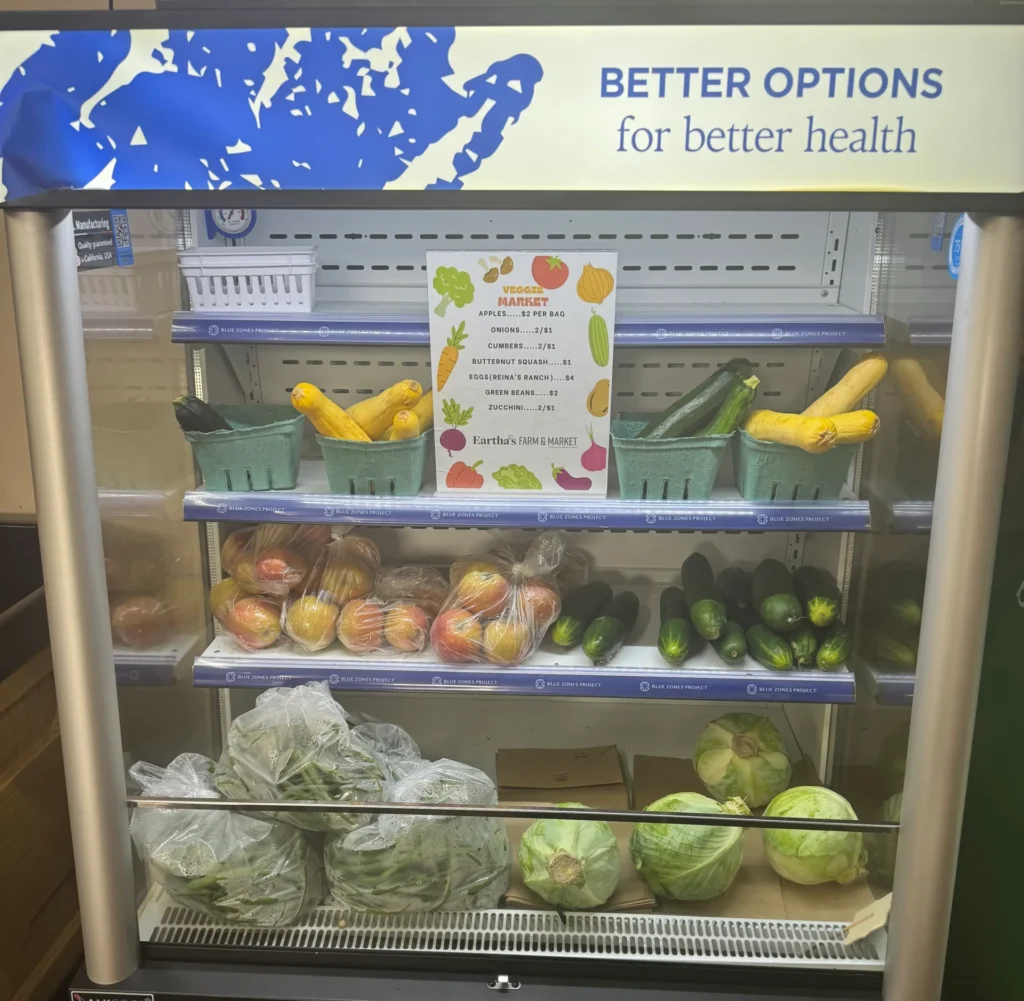
It’s definitely something we are aware of and really want to work with government and public partnerships to make easier. We want to work with those businesses in the neighborhoods so they are able to take SNAP and WIC benefits.
(Writer’s note: This spring, Blue Zones Jacksonville will work with additional small businesses to accept SNAP and electronic benefits transfers.)
Q: Describe how the partnerships allow you all to expand and extend what you’re doing, specifically in terms of providing refrigeration, because that’s not exactly something that is easy to obtain quickly.
A: One of the things that we’re committed to is being transparent about our work and, hopefully, giving people a small guide of what sustainable changes look like and can be in community.
Thanks to a $10,000 grant from Baptist Health, we were able to not just purchase refrigeration, but also freezer space. When we’re talking about stability — that freezer has Blue Zones meals in it. It takes it all the way back to your original point of “I’m coming home from work and I’m really tired. I might just stop by Durkeeville & Co, grab a couple of these things and head out the door.”
I want to give respect where respect is due. We know that we are following in the footsteps like (The Corner at Deb’s on the Eastside). We are not able to do full renovations to that extent.
But, we can take small partnerships — and Community First Credit Union has been an essential partner in this project — of helping business owners understand business finance. It’s really important that partnerships exist not just financially, but also in education and knowledge, but also awareness.
Doing events where we bring out Wellness on Wheels and the UF Health screening bus, all of those are going to be critically important to this well-rounded model for how people can live well and live better.