

The Daytona 500 track. | U.S. Air Force
Published on February 13, 2026 at 10:09 am
Free local news and info, in your inbox at 6 a.m. M-F. Sign up for the Jacksonville Today newsletter.
Spectators heading to the 68th running of the Daytona 500 will have to pay close attention to the weather forecast, as mid-February often produces volatile weather across the Sunshine State.
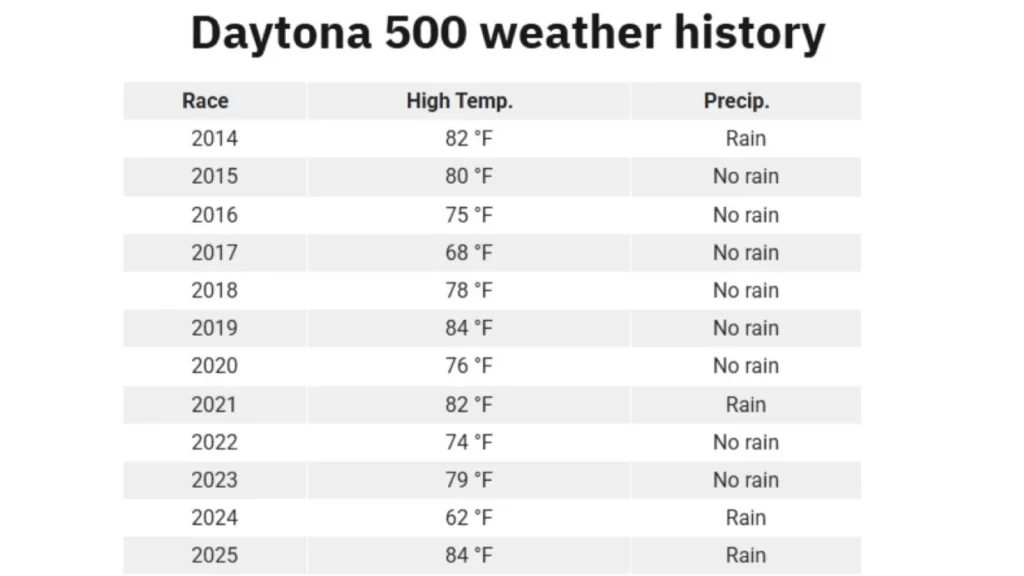
The Daytona 500 is scheduled to begin at 2:30 p.m. Sunday and if Mother Nature were to interrupt the festivities with rain, it would mark the third consecutive year that weather has disrupted the race.
Jacksonville Today thanks our sponsors. Become one.
Despite the annual event being held during Florida’s dry season, the Daytona 500 has historically been unlucky when it comes to rainfall.
Around a third of all races have been affected in some way by rain, which underscores the challenges of hosting a major outdoor event in the state’s ever-changing weather.
On average, east-central Florida receives about 51.5 inches of rain every year, with most of the precipitation occurring during the wet season from May through October.



Jacksonville Today thanks our sponsors. Become one.
NASCAR officials say any amount of rainfall on the 2.5-mile track results in delays due to the hazards it poses to cars traveling at some 200 mph.
To battle the moisture, the Daytona International Speedway is equipped with a series of systems designated to enhance the drying process, which can take anywhere from 90 minutes to a few hours.
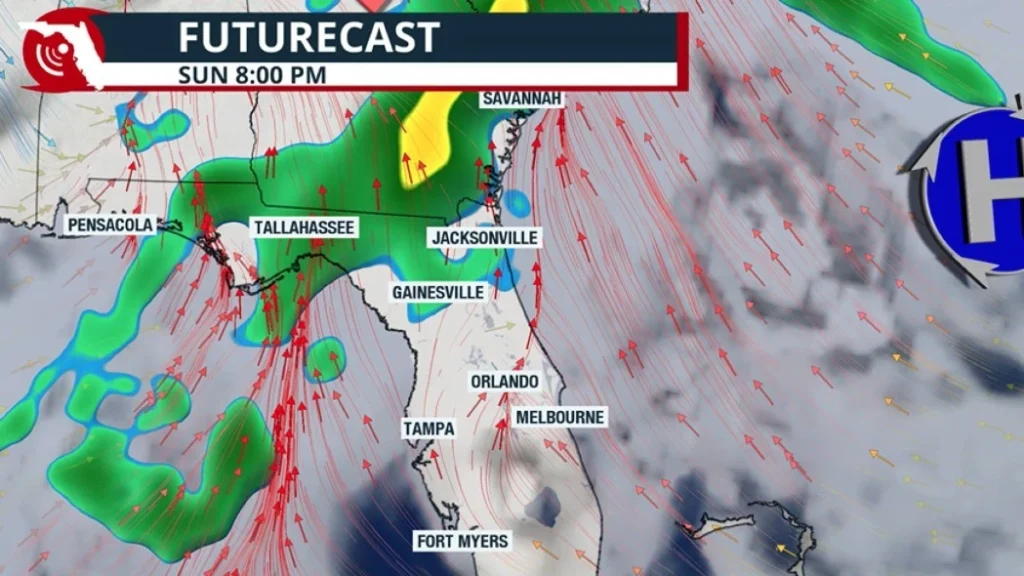
Beyond precipitation, temperatures and winds can also play an important role in conditions for the 200-lap race.
While these factors do not cause races to be postponed or canceled, they can affect how cars handle the track and increase hazards that drivers face.
The warmest Daytona 500 on record occurred in 1975, when the high temperature reached 85 degrees. At the other end of the scale, the coldest race took place in 1967, when the air temperature was just 48 degrees.
Any type of heat wave can cause the temperature inside a car to climb well above 120 degrees — meaning that hydration becomes critical for driver safety.
Extreme heat is relatively uncommon for the Daytona 500 in February, with the average race-day temperature of 70 degrees, based on observations since 1959.
Daytona 500 fans
NASCAR has what it calls a “Weather Protection Program” in place for when an event is postponed and rescheduled due to inclement weather.
Race organizers say fans are able to exchange their tickets for a future NASCAR race.
After a race has been postponed or canceled, ticket holders are advised to contact the Daytona International Speedway ticket office at 1-800-748-7467 for additional information.
If the race is temporarily delayed by rain, there are designated areas where fans can wait out the weather.
The most widely accessible shelters are the grandstand concourses, but with over 100,000 spectators, these areas can become crowded, so fanzones or infield vehicles may be the closest available options.