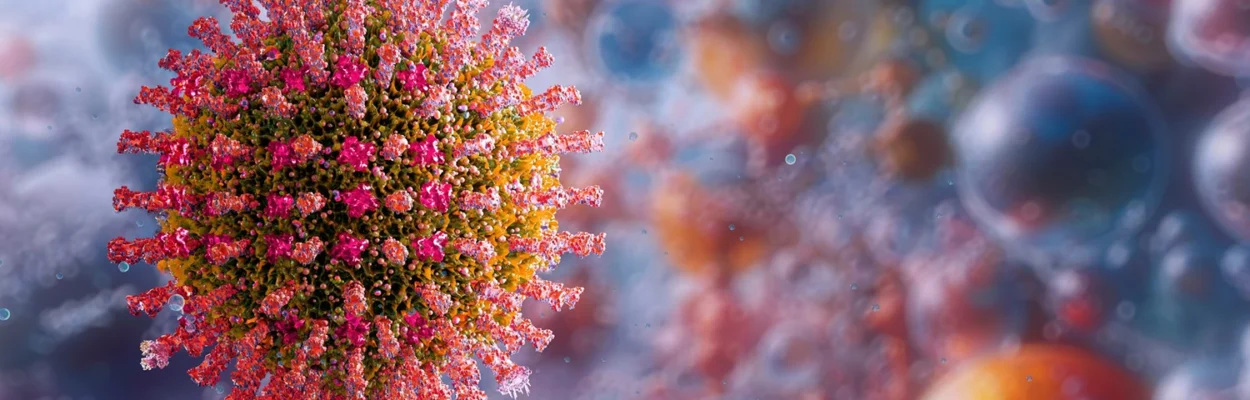
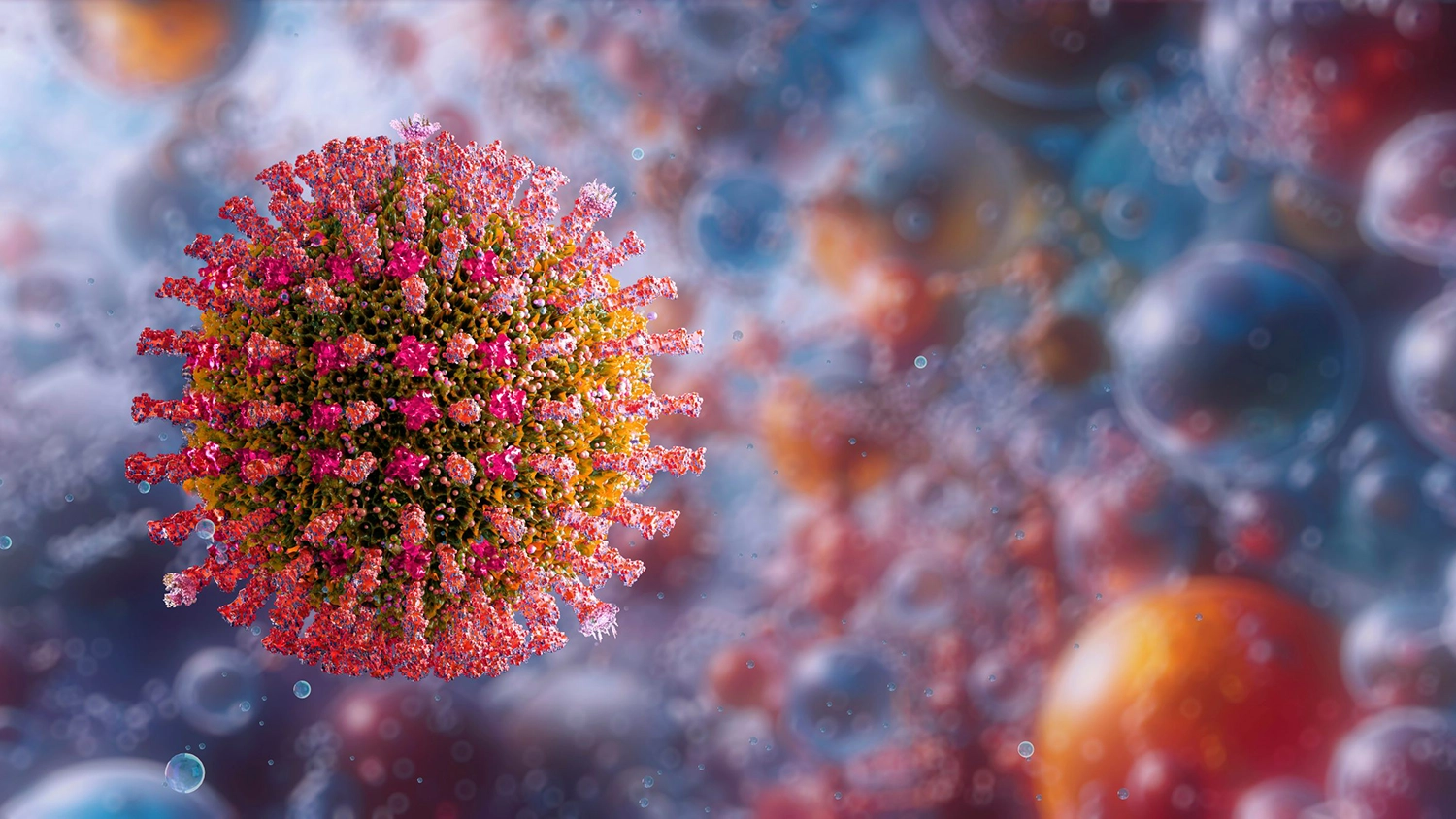
The virus that causes measles is highly contagious. | Centers for Disease Control and Prevention
Published on January 30, 2026 at 1:32 pm
Free local news and info, in your inbox at 6 a.m. M-F. Sign up for the Jacksonville Today newsletter.
Nine cases of measles, a disease once considered nearly eradicated in the United States, have been reported in Florida since the start of the new year, three of them in Northeast Florida.
Florida is one of 17 states to report measles cases, which now total 588 nationwide, including 467 in South Carolina, according to data released Friday by the Centers for Disease Control and Prevention.
Jacksonville Today thanks our sponsors. Become one.
Medical professionals are encouraging parents to get accurate information about the illness and immunization at a time when the growth of measles is fueling a national debate about vaccinations and parents’ rights.
Fewer than 10 cases may not sound like many, but Dr. Mark Toney says it’s not normal.
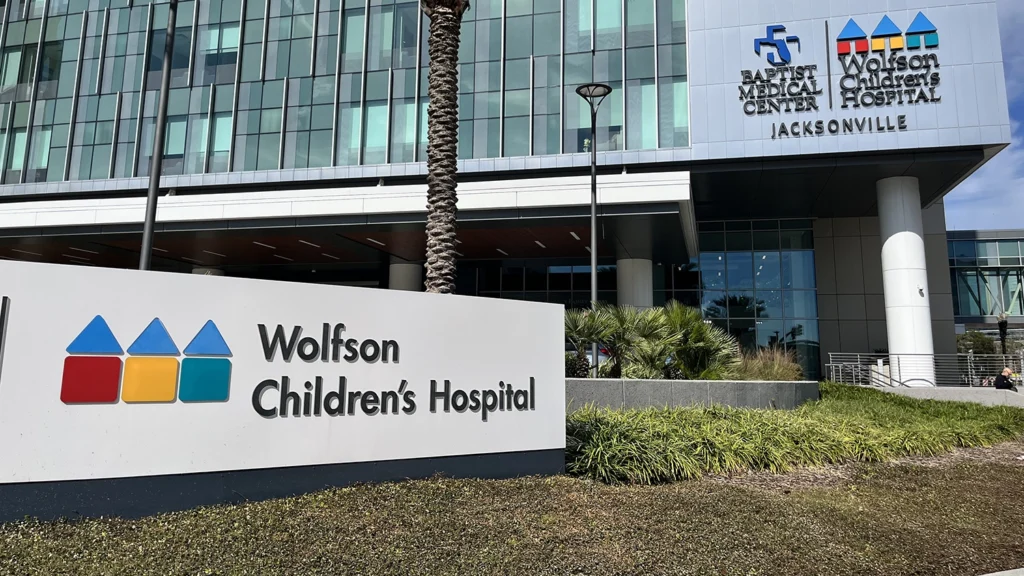
Toney, a licensed pediatrician, serves as Wolfson Children’s Hospital’s vice president of medical affairs.

Jacksonville Today thanks our sponsors. Become one.
“It is unusual to have cases of measles, period,” Toney says. “For us to have little pockets like this is even more unusual.”
In Jacksonville, Baptist Health reported that two children from the same household were hospitalized with measles earlier this month. South of Jacksonville in St. Johns County, the state of Florida identified another case in an individual in their 20s.
Cases of the measles are much more common in children, Toney says, but it’s not impossible for adults to catch the virus that causes measles.
“The patient … likely came in contact with someone who exposed them to the virus, and that will occur again during those unique events where the person might have traveled to another country where the measles is a little more endemic, or they were exposed to someone with it,” Toney explains. “But that happens less frequently because the majority of the population, although not quite at levels of herd immunity, is immunized.”
The fight against measles
Measles has been around for centuries, and the virus that causes the disease is highly contagious.
According to the CDC, “if one person has it, up to nine out of 10 people nearby will become infected if they are not protected.”
Immunizations against measles were first developed in the 1950s, and the vaccine that is widely administered to children in the U.S. today was introduced in the 1970s.
Over the years, people have speculated about the safety of the measles, mumps and rubella vaccine, notably in a medical journal that later retracted supposed findings linking the vaccine to autism in children.
Toney says that since the vaccine for measles has been around as long as it has, its safety and efficacy is well demonstrated.
“Prior to the distribution of the vaccine, there were hundreds of thousands of cases of measles a year with several hundred deaths,” Toney says. “It has been a very effective population health intervention.”
But statewide and nationally, vaccination rates are on the decline.
In Florida, according to the CDC, the number of children enrolled in kindergarten classes who have received their full vaccination against measles, mumps and rubella has dropped in recent years.
While the state’s population has risen, the percentage of kindergarteners who had received their MMR vaccine went from 93.3% in the 2014-15 school year to 88.8% in the 2024-25 school year.
Speaking with News4Jax, a Jacksonville Today news partner, Jacksonville’s Chief Health Officer Dr. Sunil Joshi said declining vaccination rates are to blame for more measles cases locally, and Dr. Toney agrees.
“The most effective way of stopping the spread of measles is to have a high vaccination rate in the community and the population,” Toney says. “And the most effective way to protect yourself from getting measles is to be vaccinated.”
State opposition to vaccinations
Many doctors, the CDC and the American Medical Association all agree that vaccinations against the measles are safe and effective. However, officials at the state and federal level have claimed otherwise.
U.S. Health and Human Services Secretary Robert F. Kennedy Jr. posted on social media last year that the MMR vaccine is the “most effective way to stop the spread of measles,” but he also has called the safety and efficacy of the vaccine into question, going against decades of peer-reviewed research.
In Florida, Surgeon General Joseph Ladapo has equated vaccine mandates for children to slavery, and called for the state to eliminate all vaccination mandates.
Asked during a CNN interview about the proposal, Ladapo said analysis of how that might lead to an increase in cases of preventable diseases was not a factor.
“Ultimately,” Ladapo told CNN’s Jake Tapper, “this is an issue, very clearly, of parents’ rights.”
Although doctors and lawmakers on both sides of the aisle has opposed that move, a bill that softens vaccine requirements is working its way through the Florida Legislature.
Sen. Clay Yarborough, a Republican who represents parts of Duval and Nassau counties, is sponsoring a bill, SB 1756, that would create a new exemption for parents seeking to avoid required immunizations for their school-aged children.
Speaking with News4Jax earlier this week, Yarborough said the bill would not ban or remove any existing vaccine mandates; it would simply give parents an opportunity, other than for religious reasons, to skip vaccinations like the one for measles.
“We’re just giving parents the option. Maybe they’re compelled by something other than a religious belief, but they don’t have any other avenue where they could, you know, truthfully file an objection,” Yarborough said. “This conscience-based objection part of the bill would allow them to be able to do that in good faith and register that with the state.”
Asked about the recent measles cases in Northeast Florida, Yarborough said he does not believe that additional exemptions lead to more cases of the disease.
Checking in with medical professionals
Dr. Toney agrees that it is up to parents to decide what is best for their children’s health.
“No matter where your personal beliefs are, just make sure you are reaching out for factual content and truly having the shared decision making with your partner in your child’s health, who is your pediatrician,” Toney says. ”My recommendation is always, have the conversation with your pediatrician if you have any concerns, and if you are concerned that your child does have measles, call your pediatrician, explain the symptoms and let them guide you from there.”
In Jacksonville, a pop-up event this weekend will offer people a no-cost opportunity to get up-to-date on their immunizations for measles, mumps and rubella, as well as influenza and hepatitis A.
The event will run from 9 a.m. to noon at the Regency Library at 9300 Regency Square Blvd.
Outside of the event, immunization appointments are available during the week at health departments around the state. More information is available on the Florida Department of Health’s website.