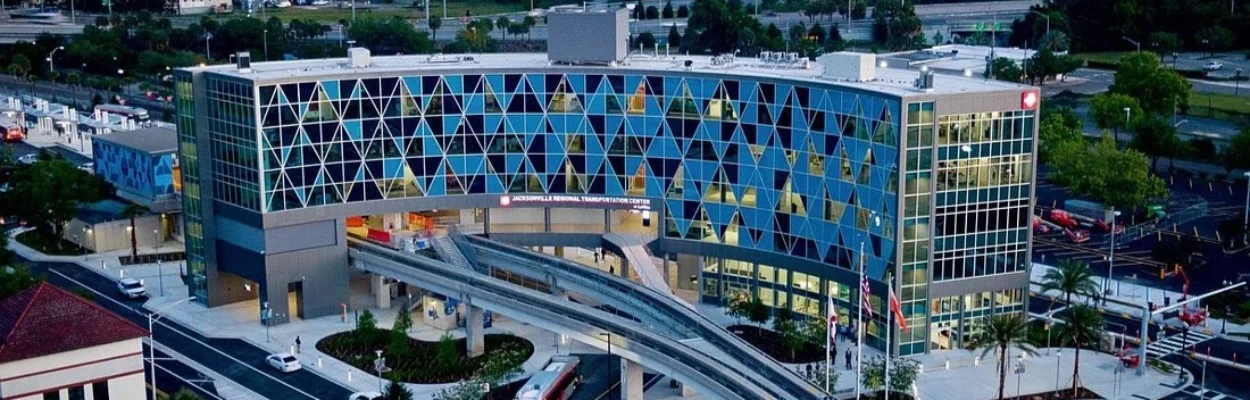
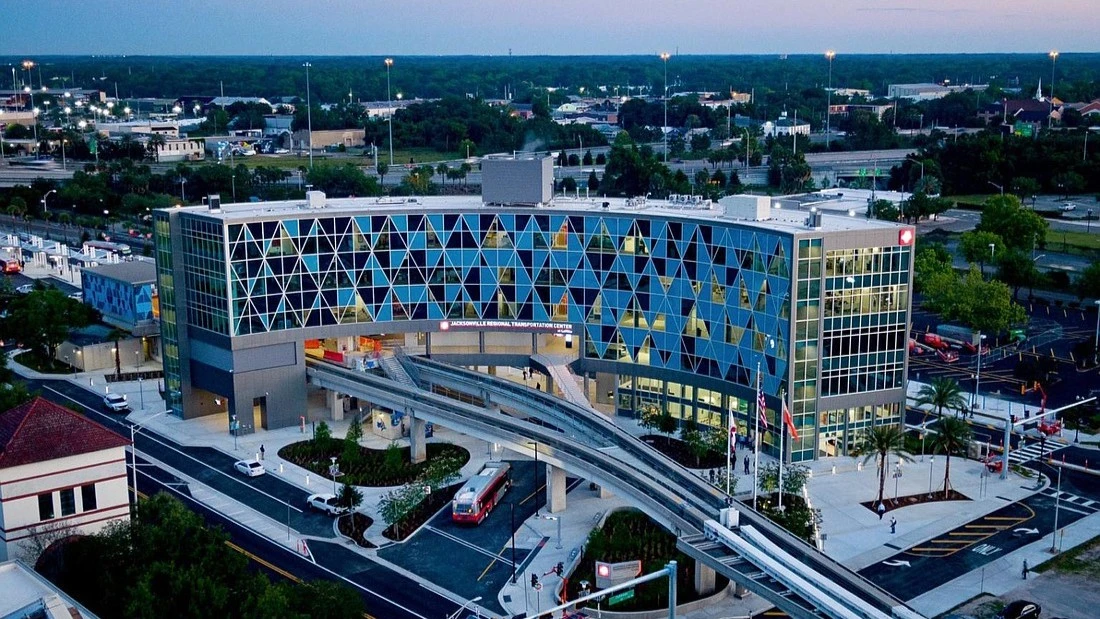
The JTA headquarters and regional transportation center.
Published on September 28, 2026 at 12:54 pm
Jacksonville Today seeks to include a diverse set of perspectives that add context or unique insight to the news of the day. Regular opinion columnists are independent contractors who are not involved in news decisions. Want to submit your own column on a matter of public interest? Email pitches to jessica@jaxtoday.org.
The Jacksonville Transportation Authority is cutting up to 194 positions, reducing weekday bus service largely to Saturday schedules, mothballing the Skyway and halting its autonomous NAVI shuttles to close a $39 million hole. The people overseeing JTA owe Jacksonville more than concern. They owe us an explanation.
A board earns its keep by challenging management before cash runs short. It tests assumptions, demands reliable numbers and intervenes when performance deteriorates. Jacksonville is entitled to ask whether JTA’s directors understood the difference between supporting a CEO and supervising one.
Jacksonville Today thanks our sponsors. Become one.
The warnings of the current financial calamity weren’t subtle. In April, an internal FDOT document described shortcomings in the $65 million NAVI program, burning about $1 million monthly. Ridership was roughly 76 passengers daily against a projection of 280.
By August, JTA had obtained a $40 million line of credit to cover shortfalls and more than $22 million in unpaid bills. Among the causes cited: improper budgeting for employee costs.
Improper budgeting for employee costs. At a transportation agency.
Payroll is among the most basic expenses a board should understand. An agency unable to budget reliably for its employees has no business asking taxpayers to trust its projections for transportation’s future. City Council member Mike Gay called this “red flags of a failing business.” Why did council have to say what the board should have been confronting?


Jacksonville Today thanks our sponsors. Become one.
The mayor’s office offered an extraordinary explanation: The board “was not previously aware of the dire nature of the agency’s financial situation.”
That is an admission of failure. Directors cannot claim authority to approve budgets while disclaiming responsibility for knowing whether the bills can be paid. The explanation also clashes with leadership’s assurances. In December, Chair Aundra Wallace called JTA “an efficiently run organization.” In July, outgoing CEO Nathaniel Ford pronounced it “operationally strong and well-positioned for the future.”
If management withheld information from the board, identify what, by whom and for how long. If reassuring reports proved unreliable, release them. If warnings appeared in board materials, explain why they failed to produce effective action. Show Jacksonville the record.
NAVI warrants particular scrutiny. Interim CEO Cleveland Ferguson III says service stops in January when its software license expires. Developer Oxa is withdrawing support; operator Beep has no replacement. Suspension saves approximately $487,000 monthly.
Jacksonville’s transportation future apparently came with an expiration date.
Who examined that dependency? Who demanded a contingency plan? What protections were negotiated before committing public money? These are elementary investment questions.
Ford, the CEO who drove this strategy, is not here to answer for it. Ford took the top job at Dallas Area Rapid Transit and moved up his departure to October rather than staying through January. He leaves with a national reputation intact and a farewell address crediting the board for the agency’s progress. Jacksonville is left with the bill. His departure cannot become the board’s escape hatch.
JTA now wants flexibility to spend gas-tax money reserved for capital projects on severance and debt — money meant to build Jacksonville’s future, paying for the retreat from promises already made.
Before granting any new flexibility, council should require Wallace and the directors responsible for the financial failures at JTA to appear publicly with forecasts, reports and meeting records. When did they see the shortfall developing? When did they learn of unpaid bills? What corrective action did they demand? What justified continued autonomous spending after ridership results arrived? Answers should come with dates and documents.
General assurances have exhausted their value. Directors unable to demonstrate meaningful oversight should step aside.
The next CEO will inherit this crisis. Before choosing that person, the board must explain how its oversight will change and why the public should trust it. Employees facing dismissal are bearing the cost of failure. Directors responsible for oversight should explain why keeping their own seats serves the public interest.