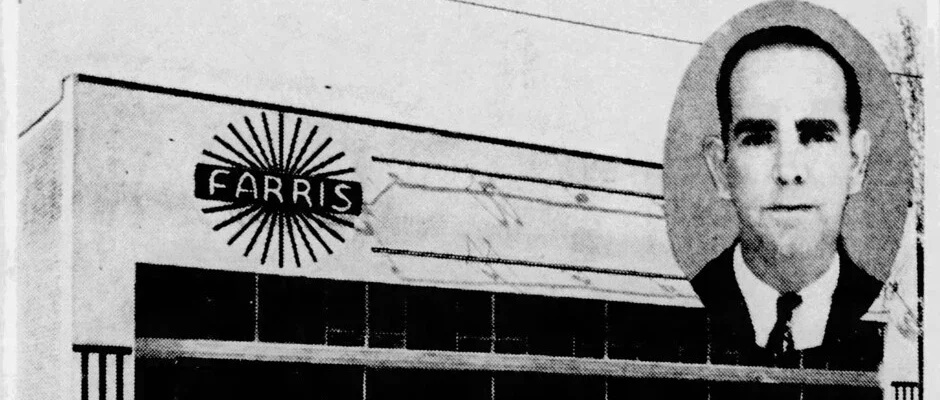
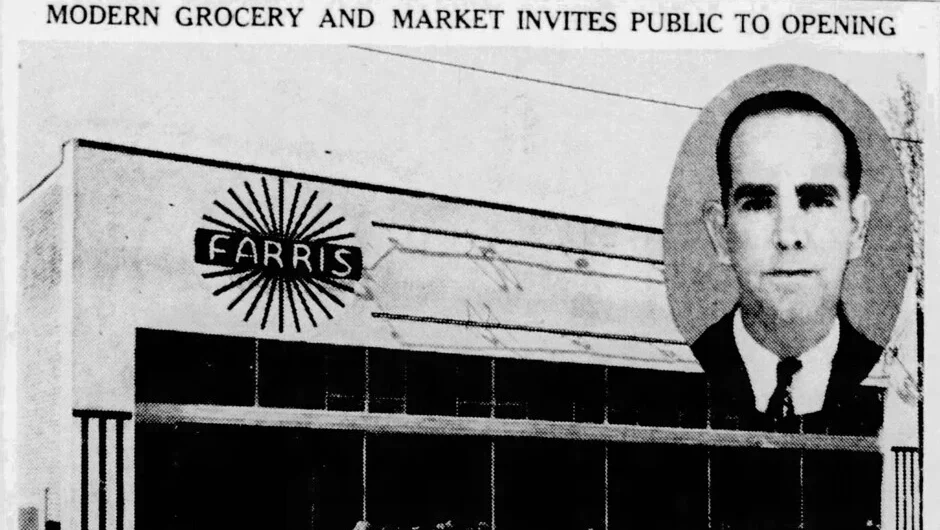
An old newspaper advertisement for the Farris grocery store
Published on April 22, 2026 at 11:24 am
Free local news and info, in your inbox at 6 a.m. M-F. Sign up for the Jacksonville Today newsletter.
In honor of National Arab American Heritage Month, The Jaxson highlights the Farris family and the rise of a Syrian immigrant livestock enterprise in Jacksonville
Farris family: Arrival from Ottoman Syria

At the turn of the 20th century, a growing colony of immigrants from Ottoman Syria established themselves along Jefferson Street and nearby commercial corridors in Jacksonville’s Ward 7. Among these newcomers were the Farris brothers, Joseph R. Farris, Richard Esau Farris and Ralph Abraham Farris, who arrived in the city during the early years of the Levantine migration wave that reshaped Jacksonville’s neighborhood retail economy.
Jacksonville Today thanks our sponsors. Become one.
Beginning as neighborhood grocers, they leveraged kinship partnerships, rail access, and participation in agricultural exchange networks to move steadily into wholesale distribution and livestock infrastructure. Within a single generation they advanced from LaVilla dry goods and grocery merchants to operators of a rail-connected packing plant and Beaver Street stockyard facilities, helping connect rural cattle producers with urban markets and contributing to the development of Jacksonville’s role as a regional agricultural gateway city.
By 1910 the brothers were working as grocery merchants “on their own account,” living within an extended family household that included older relatives Najeeb and Eva Farris, along Jefferson Street, part of Jacksonville’s early Syrian merchant settlement zone.
Their household structure reflected the kinship-based commercial strategies common among Syrian immigrant families in the city. Newly arrived relatives pooled labor, shared capital and operated small grocery enterprises that served both neighborhood customers and itinerant trade networks. Such arrangements allowed families like the Farrises to move rapidly from subsistence-level commerce into stable mercantile partnerships.
Jacksonville Today thanks our sponsors. Become one.
Within a decade, the family had shifted their residence and business activity westward toward Davis Street, one of early 20th century LaVilla’s primary thoroughfares. World War I draft registrations for Richard Esau Farris and Ralph Abraham Farris confirm their residence at 404 Davis St. between 1917 and 1918, placing them near the intersection of Duval and Davis streets.
Farris & Co. and the meatpacking industry

The transformation of the Farris enterprise became unmistakable in 1921, when the family incorporated as Farris & Co. with a capital stock of $100,000 and began construction of a substantial meatpacking plant between Enterprise Avenue and the Seaboard Air Line Railroad tracks. Contemporary newspaper coverage reported the facility, designed by Moultrie, Georgia-based C.L. Brooks Engineering Co., would include slaughtering operations, cold-storage space, smokehouses, rendering equipment and rail shipping access, placing the enterprise firmly within Jacksonville’s industrial meat-processing sector.
Incorporation documents confirm the family structure of the enterprise: Najeeb served as president, Richard as vice president and Ralph as secretary-treasurer. Additional reporting that year described the company’s business scope as including the buying, selling, importing and exporting of livestock, poultry, and agricultural products, indicating the firm’s intention from its earliest stage to operate within regional supply chains rather than strictly local markets.
The facility represented one of the clearest examples of Syrian immigrant advancement from retail grocery commerce into industrial food processing in early 20th century Jacksonville. By the mid-1920s, Farris & Co. had become active participants in Duval County agricultural exhibitions and livestock-improvement initiatives associated with civic development programs and the Jacksonville Chamber of Commerce. The company was part of a network of merchants helping to modernize Florida’s cattle industry through improved breeding stock and cooperative agricultural promotion.
Such activity demonstrates the firm was not merely processing livestock but participating in the development of regional agricultural standards. These programs connected urban commission merchants with rural producers and reinforced Jacksonville’s emerging role as a livestock gateway for North Florida.
The presence of the Farris family in civic-support networks further illustrates their integration into Jacksonville’s commercial life. A public acknowledgment published in connection with Boy Scout Troop 5 activities listed J. Newman Farris among local merchant contributors supporting youth programs in the city. Participation in these donation networks reflects the broader pattern by which Syrian merchants established themselves as recognized members of Jacksonville’s business community during the interwar years.
Farris expansion during the Great Depression

During the 1930s, Farris & Co. emerged as a recognized livestock commission firm operating within Jacksonville’s stockyard exchange system. Market reports in local newspapers identified the firm as a source for daily pricing information on hogs, steers, cows, bulls and feeder cattle.
Additional livestock-market reporting confirmed the firm’s continued participation in this exchange network and its involvement in the pricing structure that connected producers with urban buyers. Such responsibilities placed the company within the infrastructure layer of Jacksonville’s livestock economy rather than its retail margins.
Farris & Co. also appeared among buyers participating in livestock-improvement initiatives supported by the Jacksonville Chamber of Commerce during the mid-1930s. These programs included the purchase of high-quality steers intended to strengthen breeding standards and support youth agricultural demonstration projects such as 4-H livestock training.
By the late 1930s, the company had expanded significantly to become one of the leading meatpacking plants in the Southeast. Reports from 1940 described nearly 300 steers being held in the Farris & Co. yards on West Beaver Street in preparation for statewide livestock exhibitions, confirming the firm’s operation of substantial holding facilities within Jacksonville’s principal livestock distribution corridor.
Advertising from the same period further identified Farris & Co. as slaughterers, manufacturers and distributors of federally inspected meats, confirming the firm participated in interstate meat distribution markets. And the company continued participating in statewide cattle-quality improvement programs.
Operating holding yards along Beaver Street placed the Farris family within the infrastructure backbone of Jacksonville’s agricultural exchange system, linking rail transportation, packing houses, and regional cattle producers into a single commercial network.
Farris family legacy lives on

The Farris plant’s ultimate demise came as a result of fire in 1958. | Tim Gilmore
In 1958, Emmett Farris, company president at the time, was informed by phone that the family’s plant was on fire. As a result of a burglary attempt, the fire destroyed the plant’s offices, much of its interior and meat products. Unable to fulfill contracts with Armour and Hormel, Farris & Co. was forced to close the business that year.
The rise of the Farris family reflected the broader trajectory followed by many Syrian immigrant families in Jacksonville during the early 20th century. While the company ceased operation 68 years ago, its impact, such as being the first to transport refrigerated meat by truck, still lives on today.