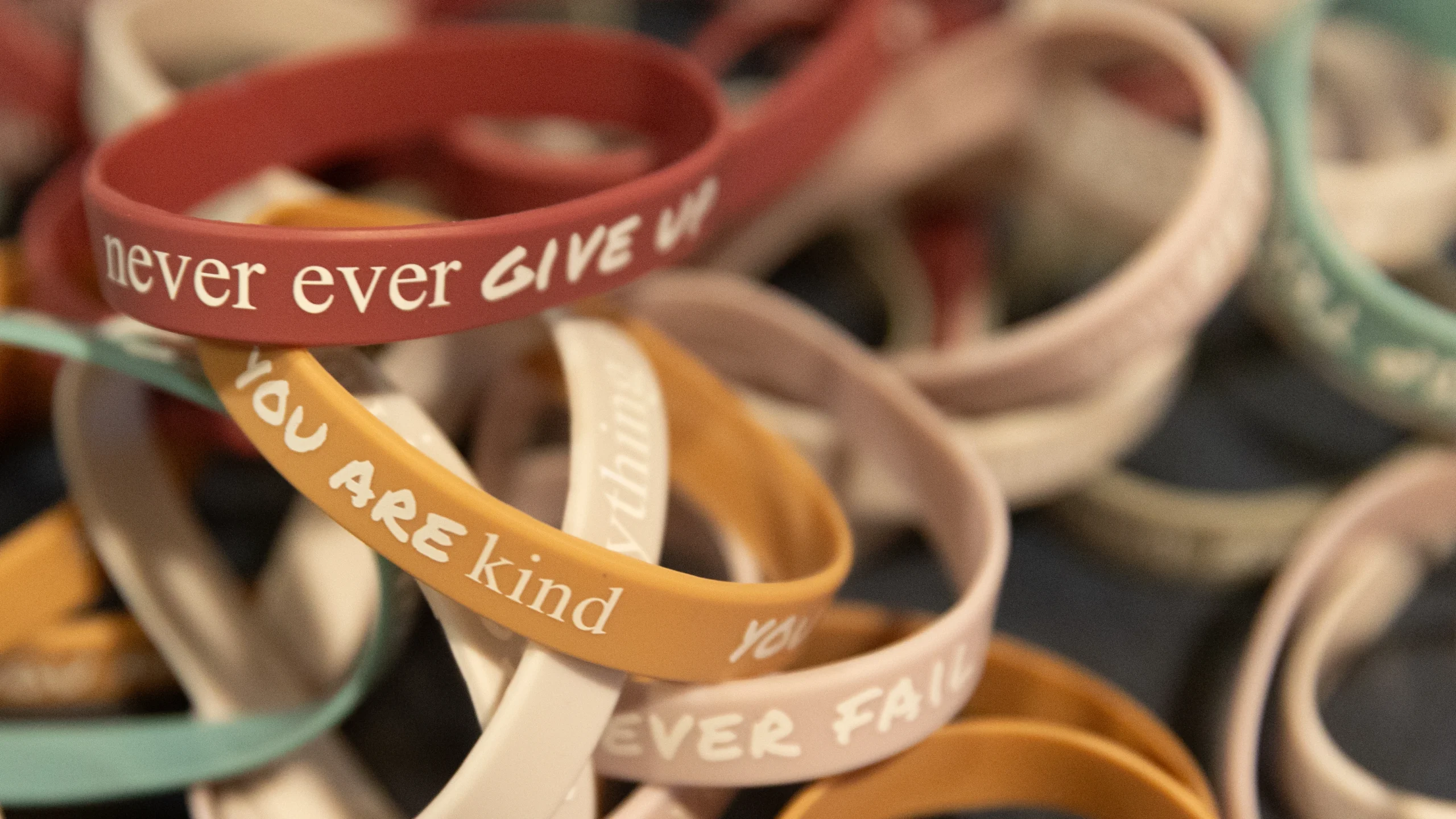
The 2026 Student Mental Health Conference gave nearly 500 Duval County Public Schools students a chance to share specificity about their mental health programming needs. | Will Brown, Jacksonville Today
Published on April 21, 2026 at 2:50 pm
Free local news and info, in your inbox at 6 a.m. M-F. Sign up for the Jacksonville Today newsletter.
Public service announcements and speakers at school forums may say “It’s OK to not be OK.”
While that may be the case, it can be something else entirely for Black and Latino teens to seek help — in Jacksonville and across the country.
Jacksonville Today thanks our sponsors. Become one.
When Duval County Public Schools held its 11th Annual Student Mental Health Conference last week, it provided an opportunity for teens from across Duval County to provide specificity about the programming they needed with mental health providers, the district’s mental health counselors and child-centered organizations.
“I think sometimes we have to realize that there is a stigma around mental health that we have to currently try to combat,” says De’Avian Byrd, a junior at Douglas Anderson School of the Arts. “I think conferences like this, and conversations about mental health, help people realize that it’s more normal than we even realize.”
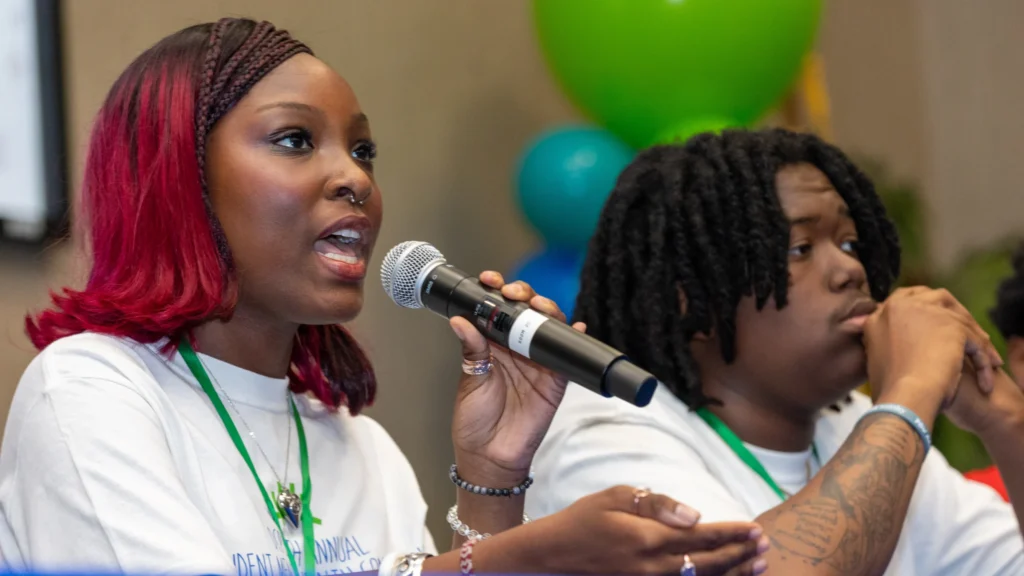
Mental health professionals, nonprofits, student organizations and Duval County Public Schools are among the entities that increased their connection to teens since the onset of the COVID-19 pandemic. Collectively, their aim is to encourage mental wellness and save lives.

Jacksonville Today thanks our sponsors. Become one.
Their work does not exclude white children. However, there is a local understanding, backed up by national research, that mental health awareness is not as prevalent among minorities.
The Kaiser Family Foundation’s 2023 Survey of Racism, Discrimination, and Health found Black, Hispanic and Asian parents were less likely than white parents to say their child received mental health services in the last three years.
That survey found Asian and Black adults were more likely to report difficulty finding a provider than whites. It also concluded that Hispanic adults were far more likely to state they “were afraid or embarrassed to seek care” than whites.
Seeking help
De’Avian is a member of two vocal ensembles as well as Generation WOW — an initiative that elevates women and trains them for leadership. She mentors underclassmen, serves as a Joe Berg scholar, is a member of multiple honor societies … and works part time at a restaurant.
Nevertheless, she says discussing her mental health challenges was one of the most difficult things she’s ever done.
“I do find that I feel better because it feels nice to know that somebody cares,” De’Avian says. “That’s something we have to understand about a lot of people with mental health struggles. They just want to know that somebody actually cares about what they’re going through.”
The importance of discussing teenage mental health was brought into focus during last week’s districtwide mental health conference.
District leaders implored the students to pay attention to their peers with their ears, their eyes and their hearts.
As 500 students from more than a dozen high schools attended seminars and workshops inside the Schultz Center, the murmurs inside the room lowered.
A moment of silence was requested for a Duval Schools student who had recently died by suicide.
She was 17. And, she was loved.
Sharing is caring
De’Avian was among the five students who served on a panel discussion at last week’s mental health summit.
The other students included a Stanton College Prep senior who is on the Mayor’s Young Leaders Advisory Council; a Stanton sophomore who helped create an app to encourage teen mental health awareness; and a co-captain of the Andrew Jackson High School volleyball team who is headed to the University of Florida next year to study biology.
Rachel Mendoza-Vargas says adults are not fully cognizant of the pressures today’s teens face. She added that teens may want to do it all, but must set boundaries to protect their mental health.
“Because we are students doesn’t mean we don’t have a lot of things and stressors,” Rachel said during the panel discussion. “Social media made it harder. It’s simple to say ‘Don’t worry about it.’ But, it’s not easy.”
Jennifer Arevalo, a behavioral health prevention coordinator for Wolfson Children’s Hospital, says it’s imperative that today’s parents do not inadvertently minimize a child’s issues — even if they don’t understand them. The best course, Arevalo says, is for a child and caregiver to work together to find a professional.
Last year, Wolfson Children’s Hospital launched Common Thread, a child-centered mental health initiative. It focuses on going into the community and meeting children and young adults where they are, in order to share the benefits of implementing coping skills, checking in with peers, communicating stressful situations to trusted adults and more.
Arevalo has devoted nearly 20 years as a school counselor or social worker. She says proactive, in-person connections and conversations about mental health are more likely to be received than reactive ones that may occur after a crash out.
“Seeing people, being around people and letting them know they are loved is important for young people and their mental health,” Arevalo says.
School growth
Duval County Public Schools has placed therapists inside its high schools for the past 35 years.
In recent years, the district has created GROW clubs. These are student-led groups that encourage conversations about student mental health and increase awareness of available services for students who need it.
GROW stands for Gaining Resilience Obtaining Wellness.
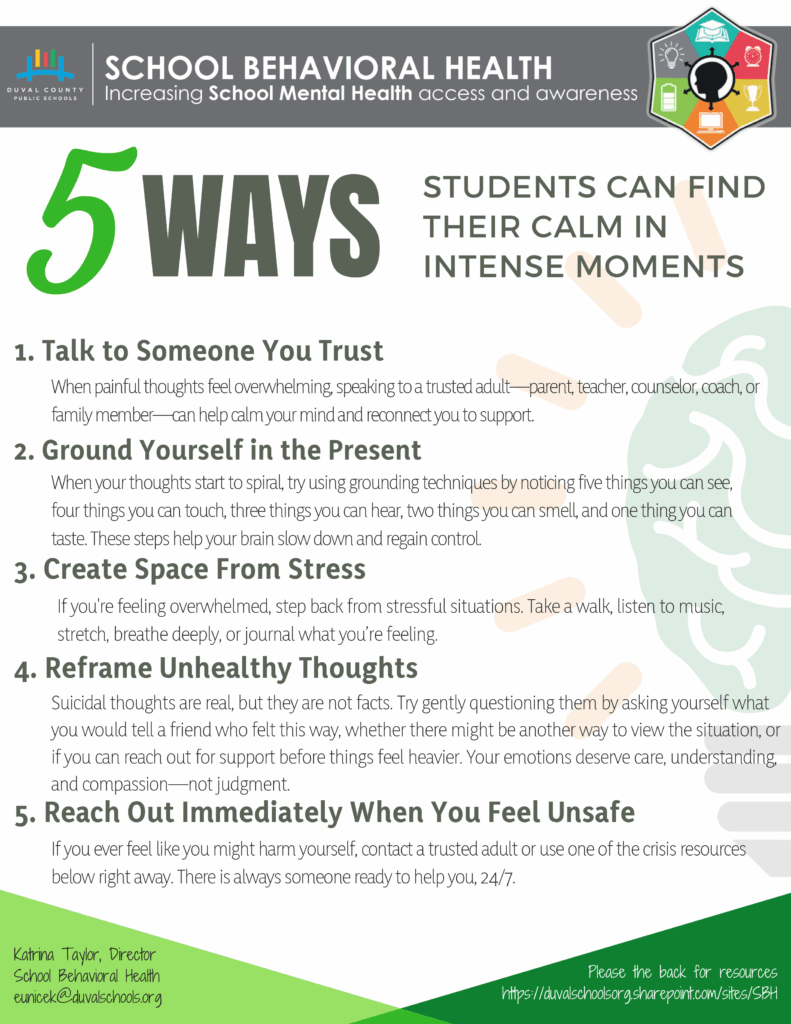
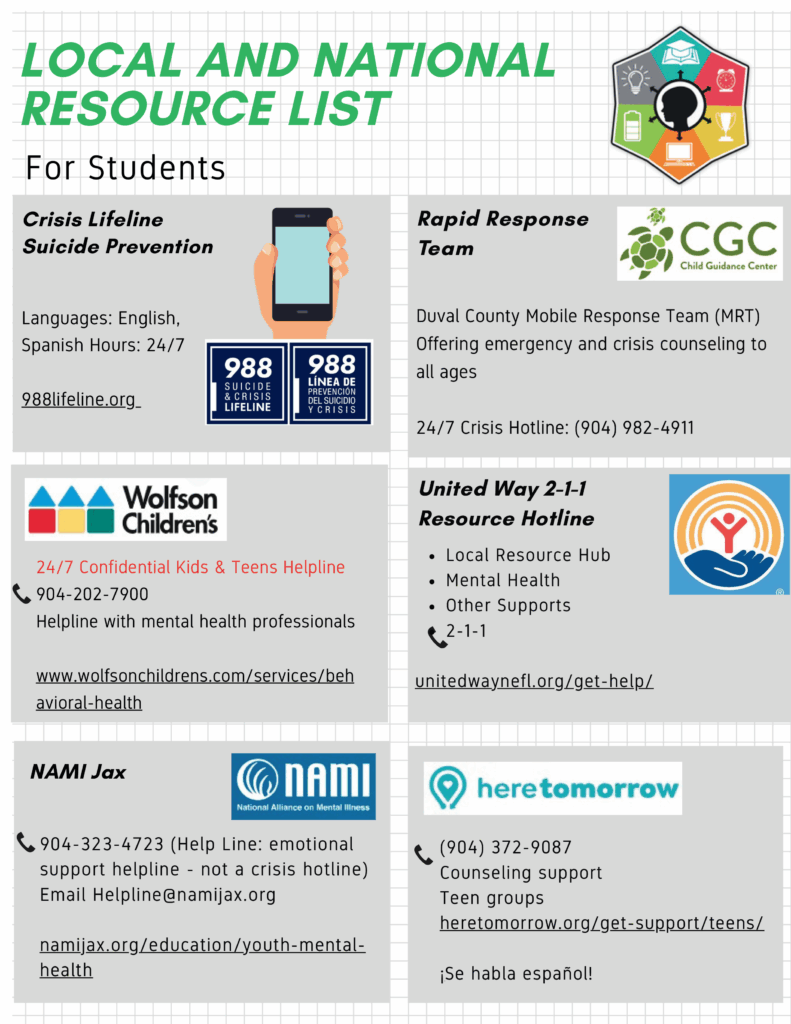
This academic year, GROW clubs were started at three high schools — Englewood, Westside and Paxon. The district also expanded its GROW clubs into seven middle schools — Dupont, Lake Shore, Twin Lakes, Springfield, Kernan, LaVilla and Landon.
Duval’s investment in student mental health is what researchers from Tennessee State University argue needs to take place in more districts.
In a commentary published in Health Affairs Scholar in April 2025, Charles Brown and N’Daisha K. Carrington noted that school districts are uniquely positioned to address the growing mental health needs of students and can connect them with mental health resources.
Brown and Carrington encouraged districts “to provide professional development training for school staff, focusing on enhancing their ability to recognize mental health issues among students and understanding when to notify the mental health staff.”
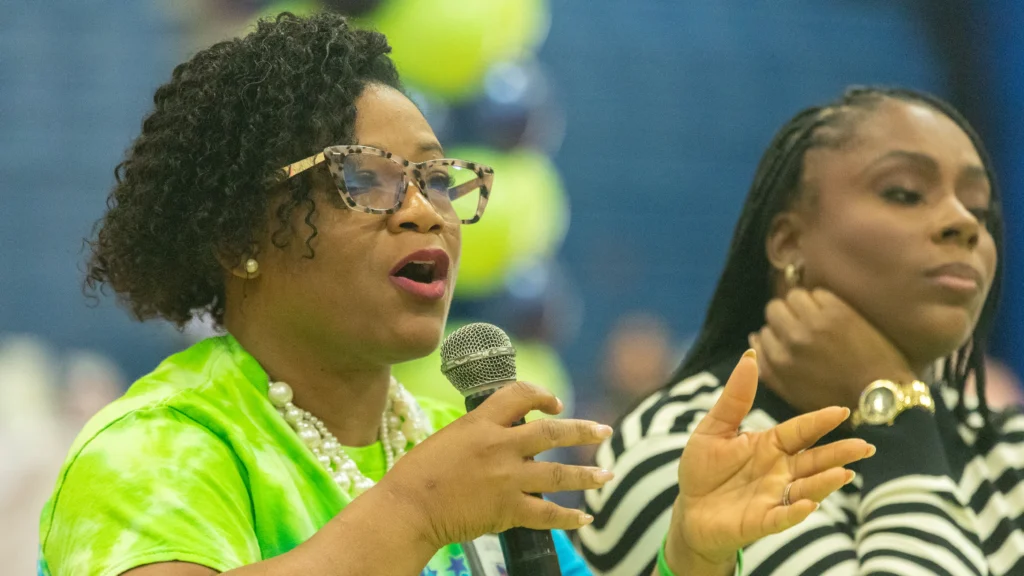
Katrina Taylor, director of behavioral services for the district, says more than 7,000 students from all racial backgrounds were referred for mental health services in the 2024-25 academic year.
“Post-pandemic, the students learned a lot about themselves being home,” Taylor says. “So, we found that through (mental health summits) a lot of our students — whether Black, white, Latina — they are saying that they’re struggling. They are more vocal about their struggles. The bigger issue is educating the parents. The students are fine with it. If they are struggling, they are accepting of that and they know where to go.”
Taylor is a Black woman who grew up in Jacksonville. She attended Duval County Public Schools throughout her academic journey. Through her lived experience as a Jaxson, and a licensed therapist with two decades of experience, Taylor knows there are entities like pastors and community elders, that actively discourage racial minorities from seeking mental health support.
According to the federal Official of Minority Health, Black adults were 36% less likely than whites to receive mental health treatment and Hispanic adults were 28% less likely than whites to receive mental health treatment in 2024.
Taylor says community leaders can play a big role in eradicating previous mental health stigmas.
“Those students see themselves in me,” Taylor says. “Being an African American woman that’s in an urban school district, I think its important for me to be in this leadership position so they can see themselves and the potential they can be one day.”
Mindful meetings with students
Taylor helped orchestrate the April 15 student mental health summit. In March, she participated in a panel discussion at Riverside High during a student-led mental health summit.
Taylor was joined by DCPS mental health counselor Hannah Bowling as well as Nigeria McHellon, a Jacksonville-based licensed therapist whose practice focuses on minority youth.
Students peppered them with questions:
- How do you move on after a breakup?
- How do you suggest coping with anger?
- How do you join a mental health club?
- What is one thing every student should know about their mental health?
There were few easy answers.
When it comes to teen mental health, there rarely are.
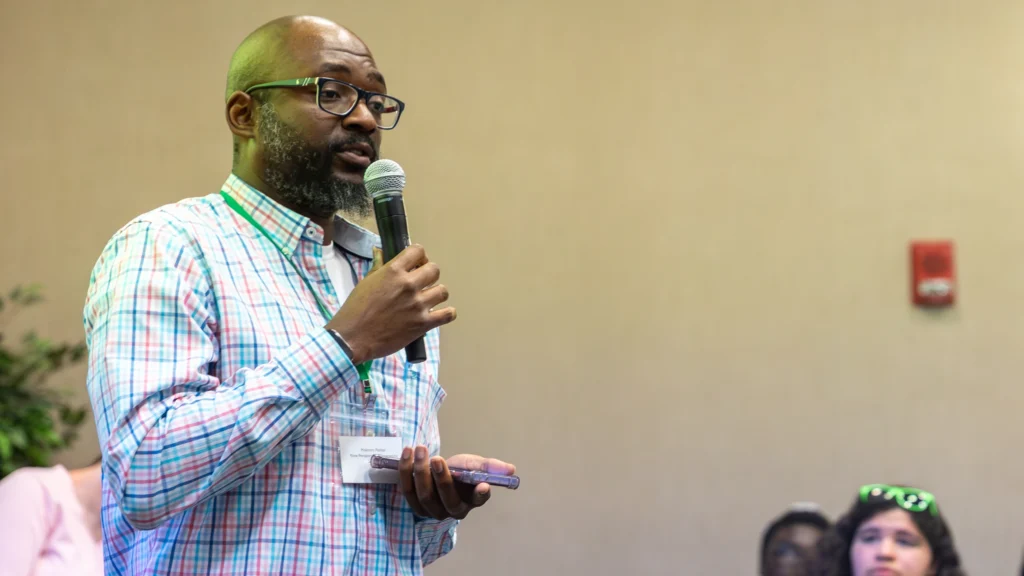
“They have to see persons who look like them speak,” says Malcolm Parker, an intern with New Perspective Therapeutic Services who is completing his master’s degree in social work. “If they have that perspective to listen to understand, they can not only share their story, but be someone others can share their story with.”
Parker led a conversation at the April 15 mental health summit that helped students identify potential causes of stress and the physical manifestations of stress — including muscle tension, stomach pain and trouble sleeping.
Parker reminded the students that stress itself is not a problem. Stress becomes a problem when it’s ignored.