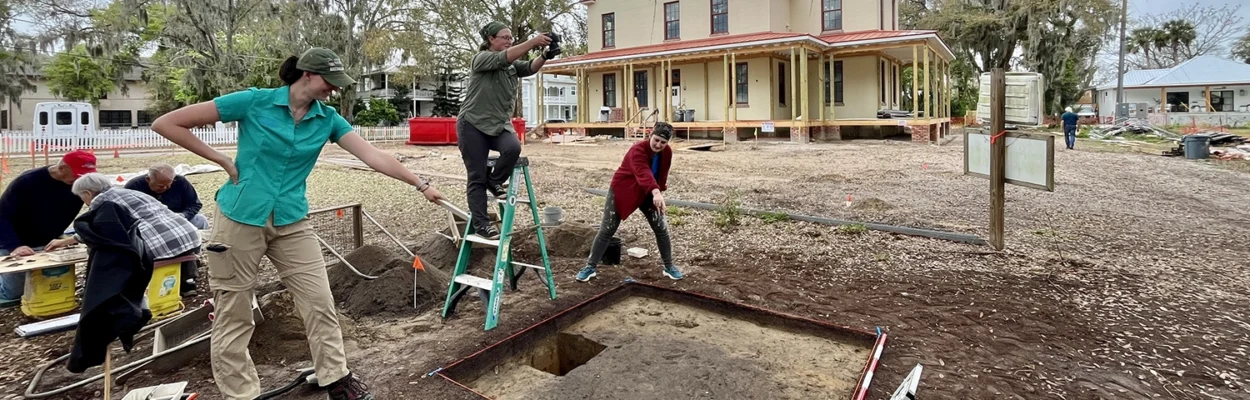
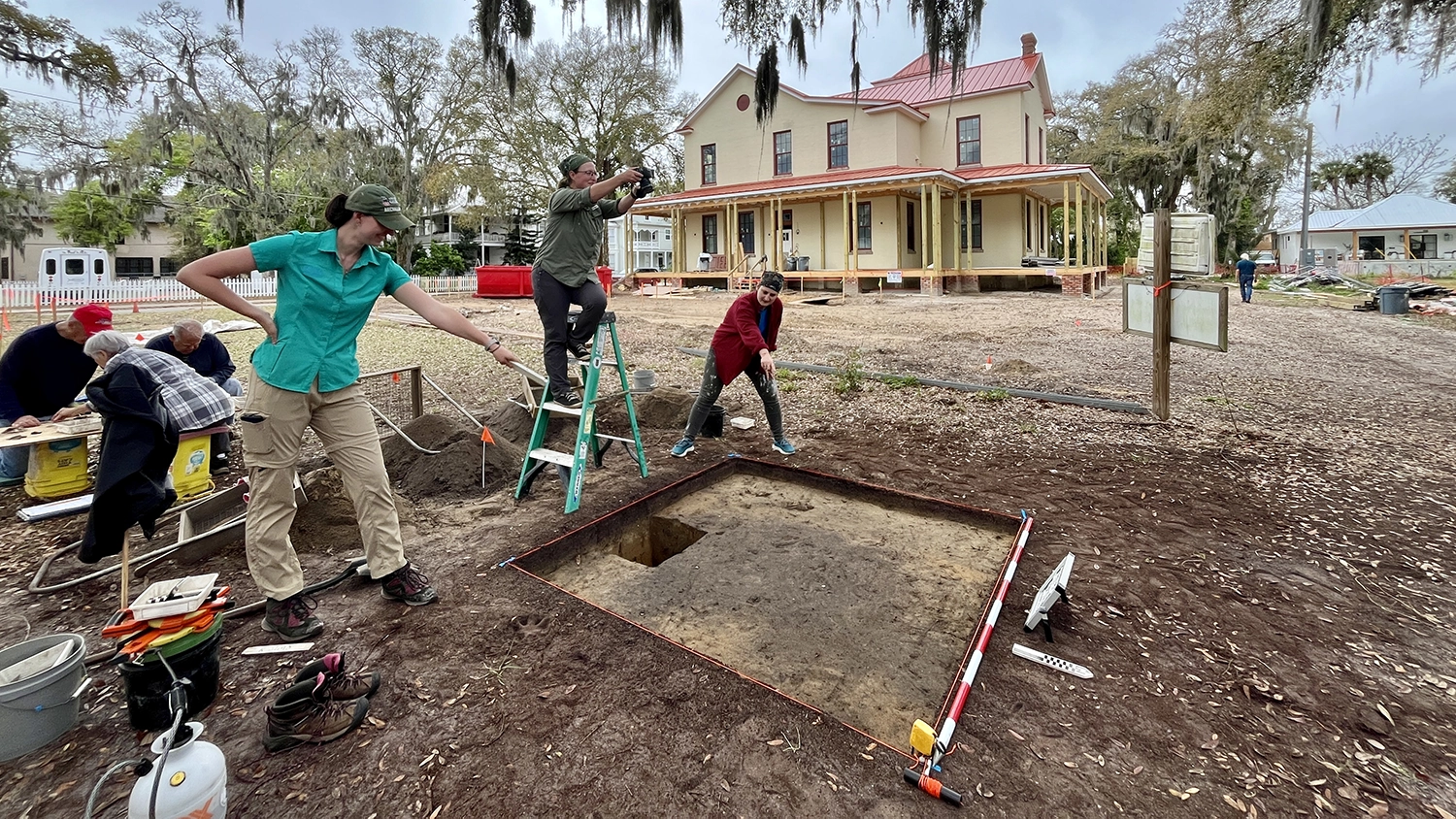
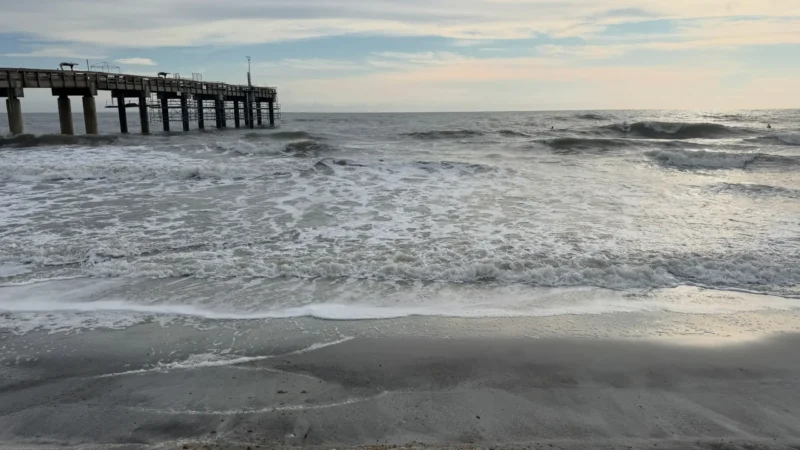
St. Augustine archaeology crews are hard at work, including this site at the St. Benedict the Moor school. | City of St. Augustine
Published on April 16, 2026 at 12:22 pm
Free local news and info, in your inbox at 6 a.m. M-F. Sign up for the Jacksonville Today newsletter.
St. Augustine’s city archaeologists will hold a community meeting Monday to discuss how best to highlight artifacts unearthed from the sites of former segregated schools in Lincolnville, the city’s historically Black neighborhood.
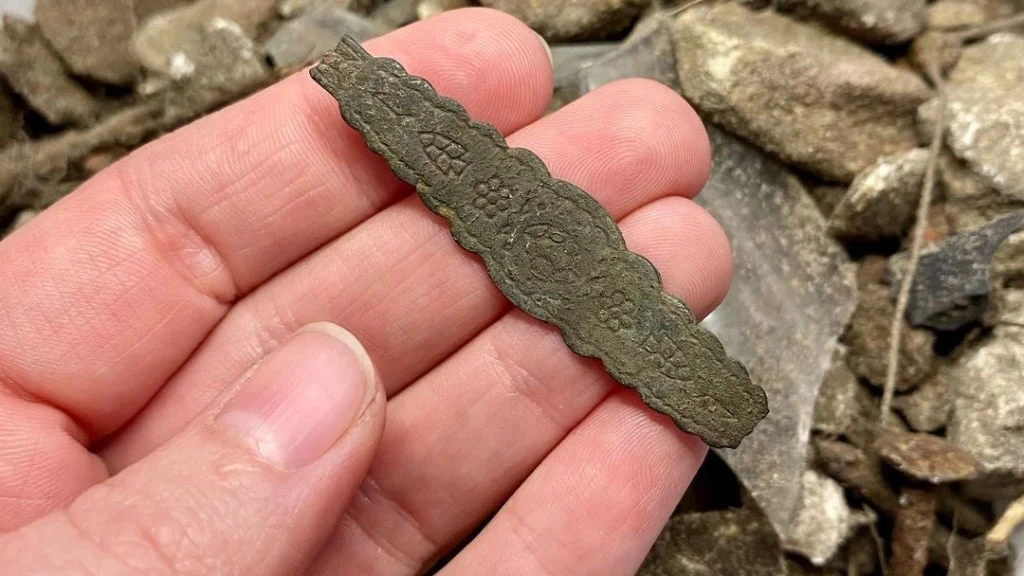
Katherine Sims, the city’s research and collections archaeologist, says the goal is to get feedback on how excavated items like slates, chalk, toys and hair clips could be displayed in a traveling museum exhibit.
Jacksonville Today thanks our sponsors. Become one.
Teams found these artifacts at sites including the St. Benedict the Moor school and Lincolnville’s first public school for Black students, referred to as “School No. 2.”
“School No. 2, that school was established in 1898, so we’re only one to two generations removed from emancipation,” Sims says. “So these sites take us through that first and second generation of Black Americans all the way through the first and second World War to the Civil Rights Movement and everything in between.”
Once it became clear just how much crews had found from the school sites, the city applied for a grant through the state’s division of historical resources. The extra funding will help the city fund an exhibit that combines archival research and oral history with findings from the digs at the schools.

Jacksonville Today thanks our sponsors. Become one.
Sims says she hopes an exhibit could be an opportunity to highlight Lincolnville’s history as an educational hub for Black residents of St. Augustine.
“It’s such an important aspect of St. Augustine’s history to preserve,” Sims says, “because that neighborhood has been disappearing in more recent years between gentrification and development and devastating floods. A lot of that Black community that started Lincolnville has been pushed out of that neighborhood.”
READ MORE: Flagler archaeology students dig into St. Augustine artifacts
Gayle Phillips, the head of the Lincolnville Museum Cultural Center, agrees. She is very familiar with the history of St. Augustine’s segregated schools — the building the museum calls home was once Excelsior High School, the successor to School No. 2.
“Nearly every Black person in the core of St. Johns County came through here at some point,” Phillips says. “People from as far away as Elkton and Armstrong.”
The city encourages members of the community, especially people with stories to share about segregated St. Augustine, to attend the meeting and give feedback on the future museum exhibit.
An exhibit, with its accompanying online component, is scheduled to open this fall. A location has not yet been decided.
The community meeting will begin at 5 p.m. Monday at the Willie Galimore Center, 399 Riberia St.