
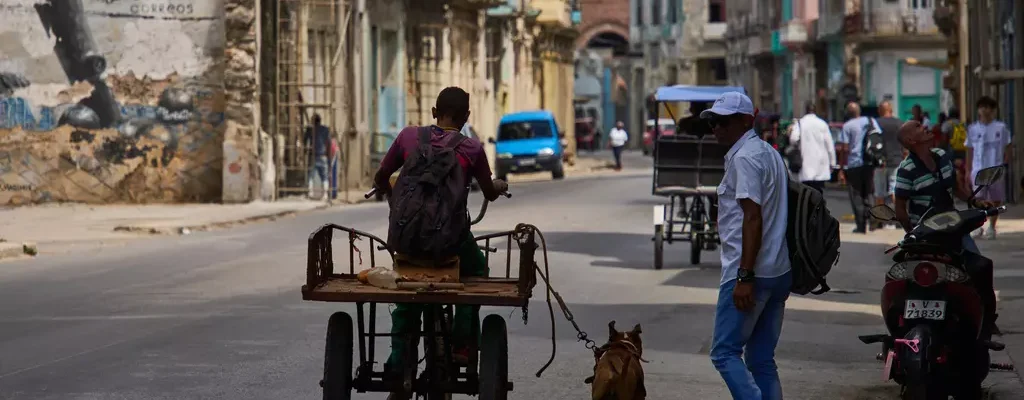
A man rides a tricycle with his leashed dog running alongside him during a blackout in Havana, Cuba, Monday, March 16, 2026.
Published on March 19, 2026 at 11:20 am
Free local news and info, in your inbox at 6 a.m. M-F. Sign up for the Jacksonville Today newsletter.
After U.S. actions against Venezuela and Iran, there are a lot of questions about how the Trump administration might handle its opposition to Cuba’s communist-led government.
Florida lawmakers are preparing in case there’s a leadership change.
Jacksonville Today thanks our sponsors. Become one.
“We want to make sure that Florida is ready and able to take on the task when we liberate the island,” said Rep. Juan Carlos Porras, R-Miami, who comes from a family of Cuban exiles.
During the recent session, the Legislature passed a bill, HB 905, that they say is meant to help open up business with the country if there’s new leadership.
Designed to be in “support for a free and independent Cuba,” it would allow Florida officials to ease various state restrictions if the federal government changes its strict diplomatic stance on the country.


Jacksonville Today thanks our sponsors. Become one.
President Donald Trump is taking a tough stance with Cuba’s communist government, even saying he can do whatever he wants with the country.
ALSO READ: What Cuban Americans think about Trump’s comments about ‘taking’ Cuba
The bill still needs Gov. Ron DeSantis’ signature, but here’s how it would work:
With an executive order, Florida’s governor could temporarily pause state laws that limit business or other interactions with the island. That pause would last only until the end of the following legislative session, giving lawmakers a say in how to move forward.
The governor also would have to submit Cuban policy recommendations to legislative leadership.
Another part of the legislation tightens rules against companies doing business with Cuba in violation of federal law.
It also has multiple other provisions related to curbing “foreign influence.” That includes new restrictions on sister city partnerships, college programs, and some adoption and surrogacy arrangements involving Cuba and other “foreign countries of concern.”
If you have any questions about state government or the legislative process, you can ask the Your Florida team by clicking here.
This story was produced by WUSF as part of a statewide journalism initiative funded by the Corporation for Public Broadcasting.
Copyright © 2026 WUSF 89.7