The Florida Legislature is considering the elimination of property taxes, and a majority of voters support it, a UNF poll found.
Published on March 4, 2026 at 12:31 pm
Free local news and info, in your inbox at 6 a.m. M-F. Sign up for the Jacksonville Today newsletter.
People in Florida are most concerned about the cost of living, and a majority would eliminate the property tax as the governor has proposed, a new poll from the University of North Florida shows.
A proposed amendment to the state Constitution — pushed by Gov. Ron DeSantis — would phase out taxes on homestead property, other than those directed to schools. The Florida House passed a bill to eliminate most homestead property taxes last month, and the Florida Senate is considering its own measure.
Jacksonville Today thanks our sponsors. Become one.
The UNF poll, released Wednesday, showed that 56% of people expressed support for the idea, with 35% opposed. Support for the amendment was much higher among Republicans (76%) than Democrats (27%) or Independents (56%).
Constitutional amendments in Florida must be approved by 60% of voters to pass.
The poll also found a difference of opinion between homeowners and renters. A majority of homeowners, 58%, supported the elimination of property taxes, compared with 47% of renters.

Jacksonville Today thanks our sponsors. Become one.
The poll from UNF’s Public Opinion Research Lab consisted of a random sample of 786 likely Florida midterm voters. It ,was conducted Feb. 21 through March 2 using both telephone interviews and web surveys distributed via text message. The overall margin of sampling error was +/- 4.4 percentage points.
Other poll topics
Besides property taxes, the poll surveyed Floridians on a variety of issues:
FLORIDA’S BIGGEST PROBLEM: The most important problem facing Florida is affordability and cost of living, according to 50% of respondents. Twelve percent said political division and polarization was the most important issue, while 8% indicated immigration.
Affordability was the top choice across partisan and demographic groups. But concern over immigration and education was higher among Republicans (14%), while Democrats and Independents were more concerned with political division (12% and 17%, respectively).
POLITICIANS: One question asked people their opinion of various politicians. Donald Trump received a 45% favorable rating, with 48% finding the president unfavorable. Fifty-seven percent of Independents found Trump unfavorable, with 31% favorable. Among those who said that they voted for Trump in the 2024 election, 90% found him favorable and 8% unfavorable.
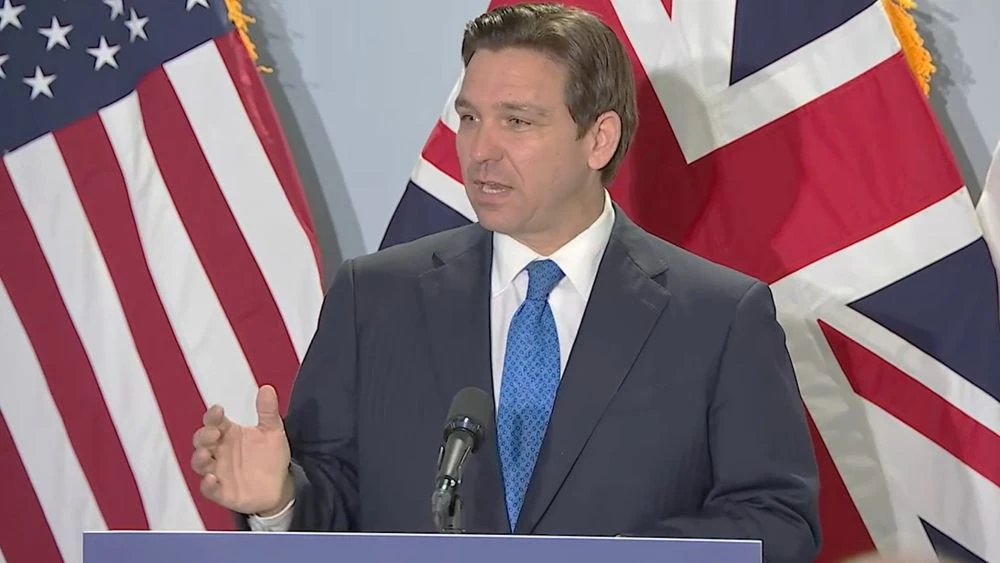
DeSantis fared better than the president, with 52% indicating a favorable opinion and 42% unfavorable. Favorability among Republicans was somewhat higher for DeSantis, with 87% favorable and 7% unfavorable, compared to Trump with 83% favorable and 15% unfavorable.
“While Trump’s favorable and unfavorable numbers are roughly equal in Florida, his net approval among Independents is -26%,” PORL director Sean Freeder said in a news release. “Given presidential approval strongly predicts House and Senate outcomes, this constitutes early evidence that Congressional Republicans may struggle in November.”
IMMIGRATION: Forty-nine percent of respondents said they disapprove of the way the Trump administration is handling immigration, either strongly (41%) or somewhat (8%). Forty-eight percent said they strongly or somewhat approve. A majority of respondents (55%) disapprove of the job Immigration and Customs Enforcement (ICE) is doing, with a total of 42% approving. Forty-eight percent of respondents said they strongly disapprove of ICE.
While Trump’s overall favorability is highest among his 2024 voters, 9% of them expressed disapproval of his immigration policies and 14% disapproved of ICE. An even greater percentage of all Republicans in the sample expressed disapproval — 14% disapproving of immigration policy and 19% disapproving of ICE.
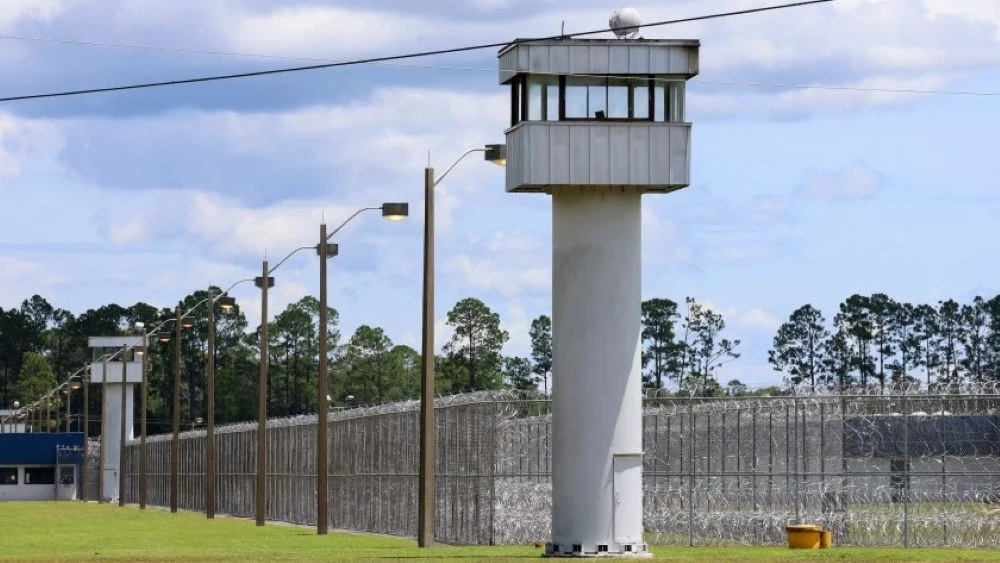
When asked if they support or oppose building more immigration detention facilities in Florida, possibly in the Panhandle and Central Florida, a majority of respondents (57%) expressed opposition, with 48% strongly opposed and 9% somewhat opposed. Thirty-nine percent of respondents said they support building new facilities, either strongly (23%) or somewhat (16%). Support is highest among Republicans, with 71%, while 25% are opposed.
“Floridians seem more willing to direct their dissatisfaction with immigration policy to ICE than Trump,” Freeder commented. “Building detention facilities in Florida is particularly unpopular, which may give pause to state officials who wish to partner with the federal government in their efforts.”
FIREARMS: Support for the state of Florida prohibiting firearms at protests and demonstrations is also consistently high across the political spectrum, with the greatest support among independents, at 66%. Republican support for such a policy (64%) is roughly equal to Democrats, with 63% supporting.
MARIJUANA: Asked whether they would support or oppose allowing adults in Florida aged 21 and older to legally possess small amounts of marijuana for recreational use, 66% of all respondents expressed support, either strongly or somewhat. Thirty percent said they would oppose the policy.
ELECTION CANDIDATES: Florida’s primary election is set for Aug. 18, with the general election on Nov. 3. In the governor’s race, the poll found Republican Rep. Byron Donalds to be up by 6 percentage points over attorney and former U.S. Rep. David Jolly, a Democrat, and 7 points against Orange County Mayor Jerry Demings, also a Democrat.
In the U.S. Senate primary, incumbent Republican Ashley Moody is up by 8 points against Democrat Alexander Vindman, former director of European Affairs for the National Security Council,
and 7 against state Rep. Angie Nixon of Jacksonville, also a Democrat.
“At least at this stage in these races, vote choice is much more about partisanship than candidate identity,” said Freeder, a professor of political science. “Republicans still enjoy a clear advantage with Florida voters, but it doesn’t yet appear as strong as in previous years, perhaps unsurprising given that the party of the President usually struggles more in midterm elections.”