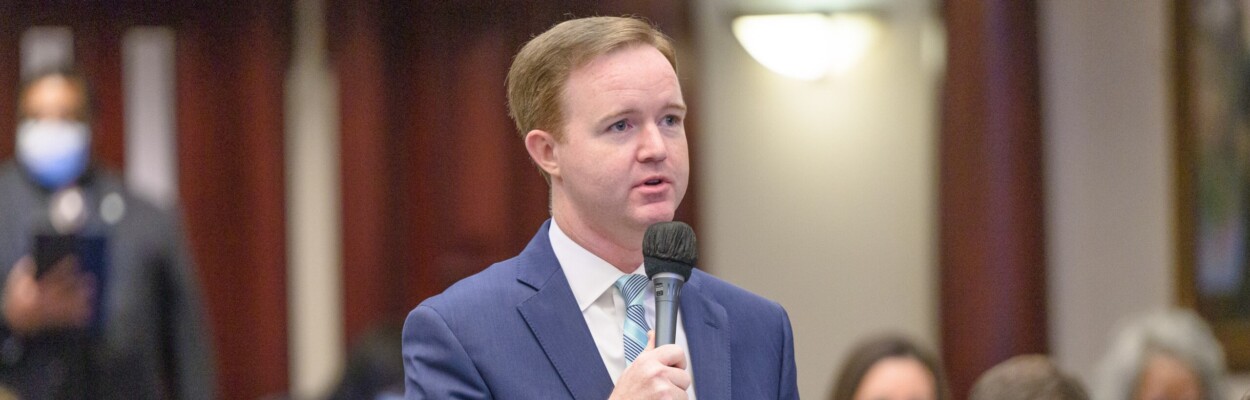
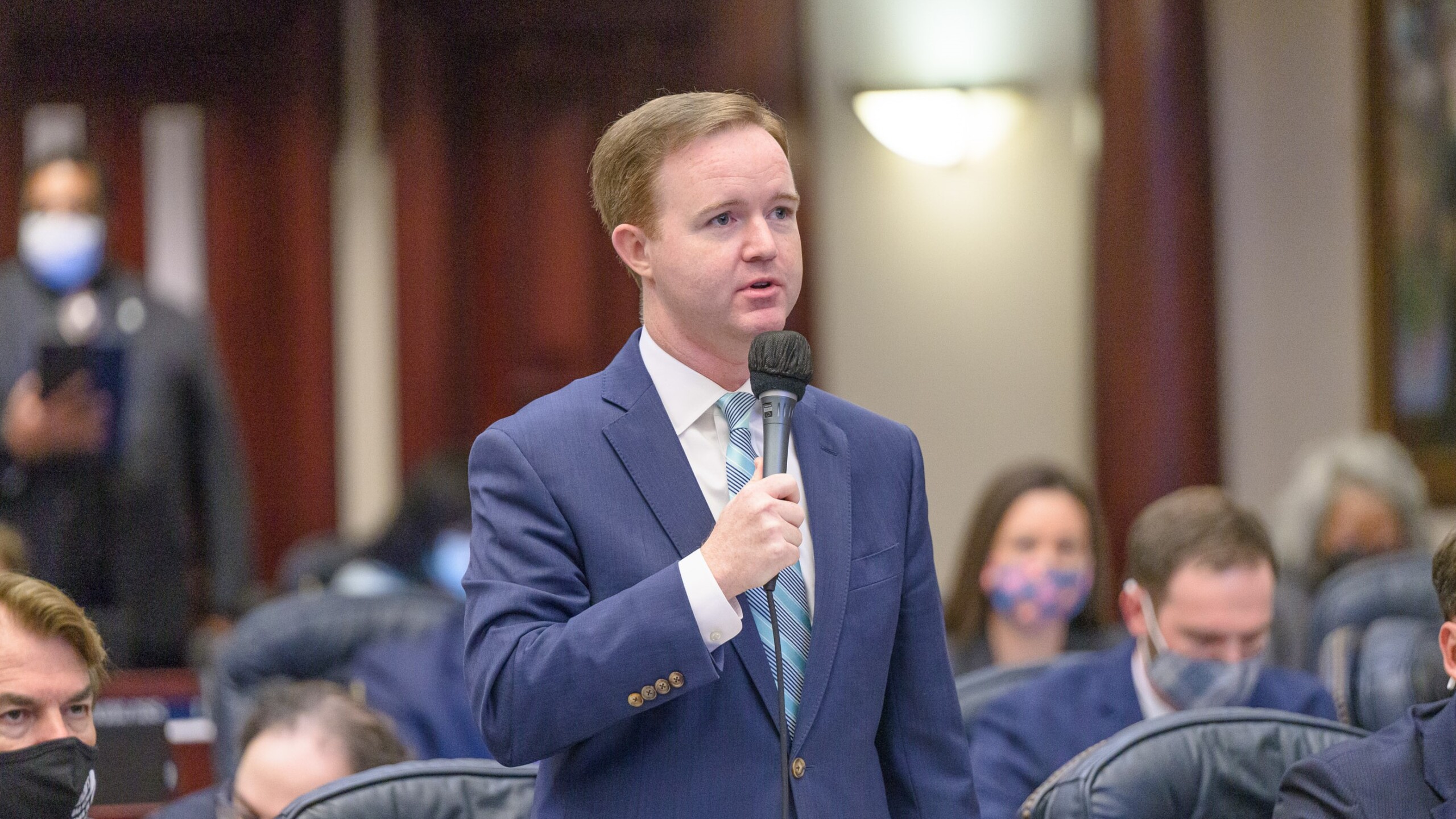
Sen. Clay Yarborough (seen here as a member of the Florida House of Representatives), is sponsoring a "medical freedom" bill in 2026. | Florida House
Published on March 1, 2026 at 1:56 pm
Jacksonville Today seeks to include a diverse set of perspectives that add context or unique insight to the news of the day. Regular opinion columnists are independent contractors who are not involved in news decisions. Want to submit your own column on a matter of public interest? Email pitches to jessica@jaxtoday.org.
Trends come and go. Readers of a certain age will have lived through parachute pants, Hypercolor shirts, Ed Hardy everything, emo bangs, Bettie Page bangs, disco, dubstep, and millennial gray.
Politics is the same. Trends come and go, ranging from the “watch what you say” forced patriotism post-9/11 to the “Yes We Can” Obama era.
Jacksonville Today thanks our sponsors. Become one.
And along those lines, vaccine backlash is all but complete, at least in Florida.
A cynic would note that the intense skepticism about shots began during the pandemic, right around the time Joe Biden got sworn into office. That administration is gone and almost forgotten now, and with it seems to be the Republican rallying against inoculations.
We’ve come a long way from when Gov. DeSantis would devote time in every other press conference to fuming about Fauci and the jab, and this year’s legislative session in Tallahassee seems to show a changing of focus, at the expense of a priority for Sen. Clay Yarborough, R-Jacksonville: Senate Bill 1756, the “medical freedom bill.”


Jacksonville Today thanks our sponsors. Become one.
Yarborough’s bill would ban officials from mandating shots during public health emergencies and open the door for parents to object to giving kids shots for diseases like measles, which is back as if it never left, on the basis of “conscience” in addition to religious conviction. It would also make ivermectin available without a prescription, albeit behind the pharmacy counter.
The bill is moving, but that seems to be more out of appreciation for Yarborough’s conviviality and the major GOP advantage in the Senate than due to its merits. In the House, meanwhile, the measure is dead, a casualty of the cold war between the speaker and the Senate president.
So this is essentially an intellectual exercise.
Some Republicans have voted no, expressing concerns that the measure would hamper herd immunity – the very thing that makes vaccines effective in terms of avoiding epidemics. Others pointed out that children may not get the shots they need.
Even a yes voter, Dr. Ralph Massullo, suggested “peer pressure” drove the ivermectin window in the bill.
No need to litigate ivermectin here, but vaccine resistance, of course, predates this decade. One of the early Andy Griffith Show episodes saw the sheriff and county nurse hazard gunfire to ensure some backwoods bumpkin got a shot for something or other.
But as the fever abates on the overheated dualistic politics of the COVID epoch, it seems people are starting to realize that medical science isn’t perfect, but it’s better than hoping you can pray the polio away.
The trends are moving to concern about other things, meanwhile.
For example, former First Coast Living host Casey DeSantis, now the state’s First Lady, is warning about issues like weed killer in commercially available bread and heavy metals in baby formula.
The poisons in the food supply come as no surprise to those of us who have the budgets and convenience to eat whole foods and organics, even as many of those who rely on Dollar Generals and the like for their groceries may not have much recourse when it comes to checking the label.
Casey DeSantis is still apparently considering a run for governor as the “I’m not Byron Donalds” candidate, and there clearly is a calculation that her MAHA mom era will help people forget about that little matter of $10M from a Medicaid settlement being routed through the Hope Florida Foundation to anti-weed political ads, prioritizing enriching political consultants and corporate media over the health and welfare of the needy.
Jesus said the poor will always be with us. Perhaps he should have advised them on the finer points of a 30-second spot. They wouldn’t be poor for long if they knew how to do an attack spot.
Gov. DeSantis is also moving on, with his recent focus being on the dangers posed by artificial intelligence – everything from the technology supplanting human thought to the impacts of data centers. That certainly has nothing at all to do with Big Tech preferring J.D. Vance and the governor’s 2028 aspirations, though.
Yarborough’s medical freedom bill – something he sincerely believes in, it should be said — would have been on the move in a previous session.
But the thing about American politics, on both sides of the aisle, is that manufactured manias move the masses. When the music stops, though, the dance is over, almost as if it didn’t matter much to begin with.