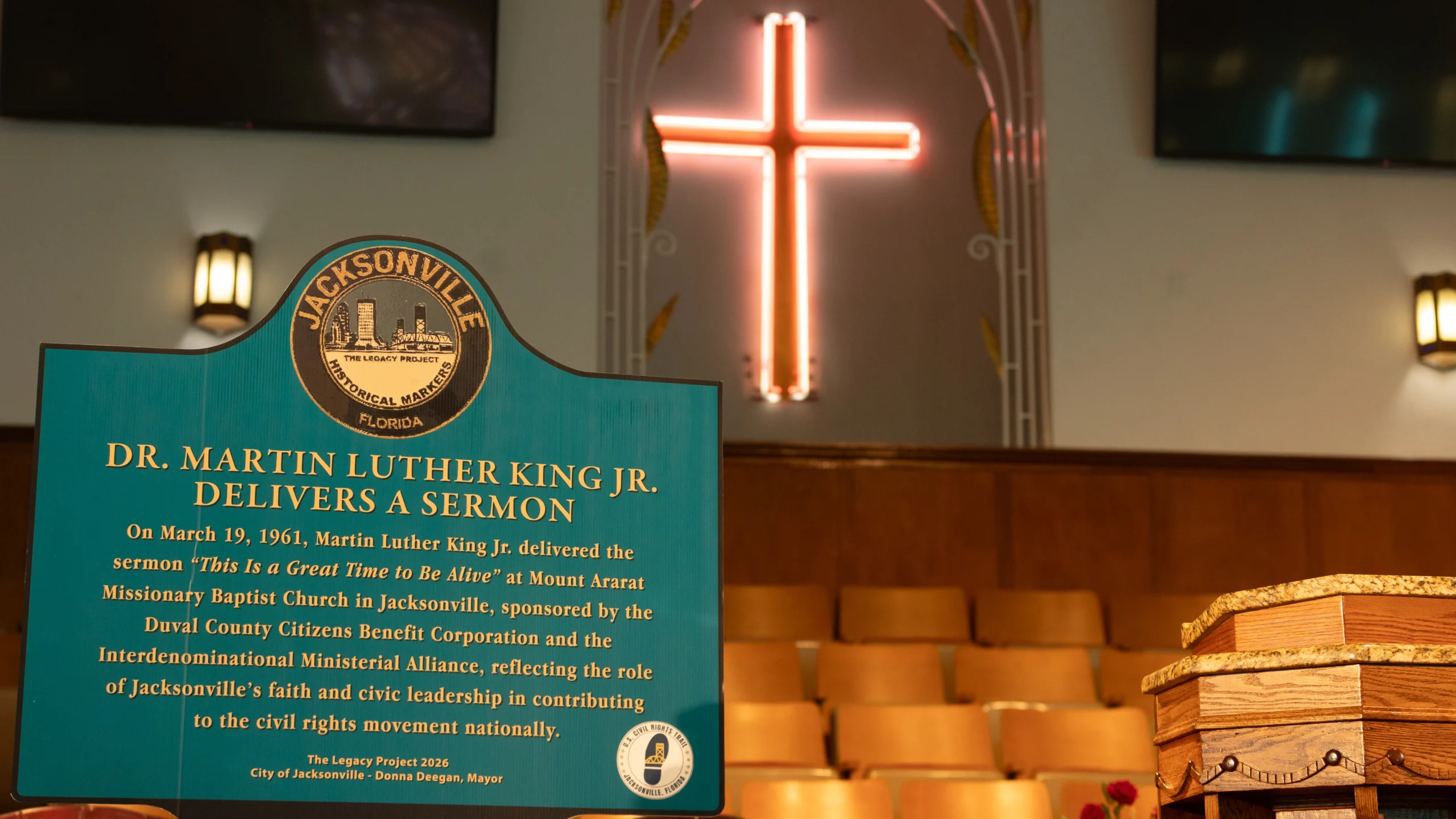
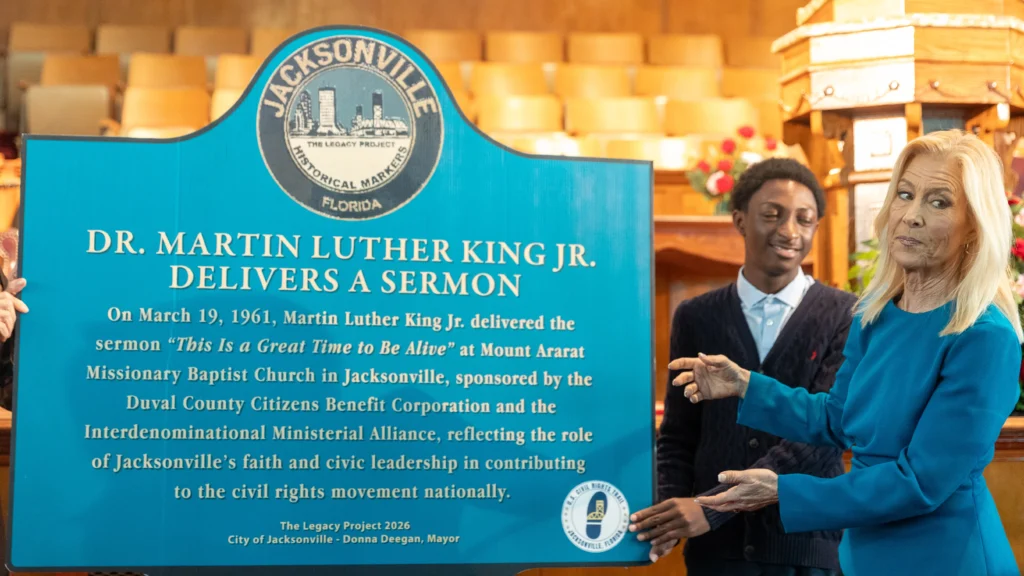
Jacksonville will erect 40 markers as part of its inclusion on the U.S. Civil Rights Trail. The first was unveiled inside Mount Ararat Missionary Baptist Church because the Rev. Martin Luther King Jr. spoke there in March 1961. | Will Brown, Jacksonville Today
Published on February 26, 2026 at 11:48 am
Free local news and info, in your inbox at 6 a.m. M-F. Sign up for the Jacksonville Today newsletter.
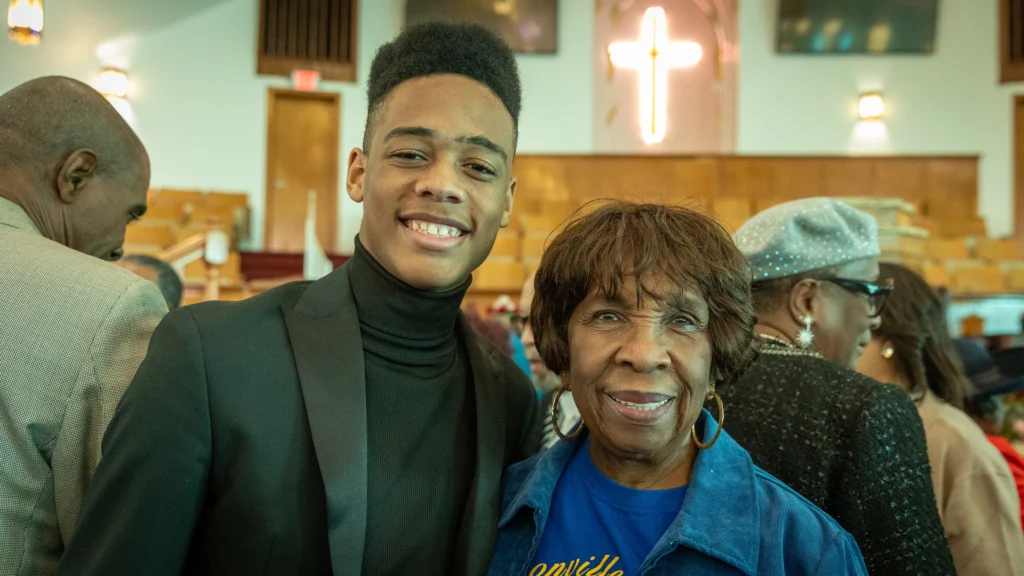
Janie Scott Griffin and LaTonya Lattimore sat in a red pew in the third row of a venerable old church in Durkeeville on Wednesday afternoon and listened as the stories of Jacksonville’s civil rights history were shared with a new generation.
The city of Jacksonville unveiled a replica of the historical marker that will stand outside Mount Ararat Missionary Baptist Church. It’s part of the city’s inclusion on the U.S. Civil Rights Trail.
Jacksonville Today thanks our sponsors. Become one.
In the coming months, more than three dozen markers will be erected throughout Jacksonville.
They will stand at Edward Waters University, Florida’s oldest historically Black university; outside the home of Mary Singleton, one of the first Black women on the City Council; outside J.P. Small Park, the Durkeeville ballpark where both baseball Hall of Famers Buck O’Neil and Henry Aaron once played; the old Stanton High School building in LaVilla; and more.
Mount Ararat was selected because the Rev. Martin Luther King Jr. spoke there in March 1961.


Jacksonville Today thanks our sponsors. Become one.
Griffin, now 85, says she was there.
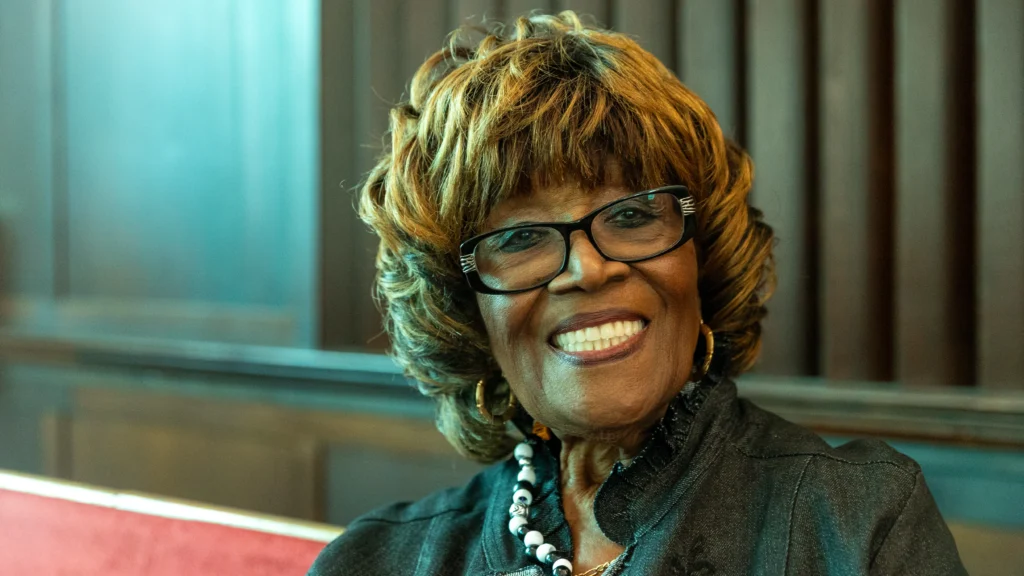
“He was a man of all me,” Griffin recalled about King’s speech while sitting in the back pew of her church. “He was just so friendly. He didn’t ignore anybody. He made sure to talk to anybody that talked to him and didn’t talk to him. He was such a pleasure to be around. An outstanding man. God, thank you!”
She compared her brief interaction with King to the New Testament passage where a woman was healed by touching the hem of Jesus’ cloak.
Griffin says the recognition of Jacksonville’s civil rights history is overdue. Jacksonville Mayor Donna Deegan agrees.
“Here is Jacksonville, the movement unfolded across our neighborhoods, our churches, our schools, our parks, our courtrooms and along the streets where history was lived and where citizens chose boldly to stand for change,” Deegan said.
“Students organized peaceful demonstrations. Faith leaders opened their doors for planning and prayer. Workers stood for dignity and fairness. Families risked safety to demand equal treatment under the law.”
Equal treatment before the law has been at the forefront at Mount Ararat for more than 80 years.
In 1945, its pastor, the Rev. Dallas Graham challenged the local law and custom that prohibited Black voters from registering to join the Democratic Party. Graham’s attorney, Daniel W. Perkins, helped him win the case.
The Democratic Party appealed, but the initial decision was upheld. In May 1945, Graham and 13 others were the first Black voters in Duval County to register as Democrats.
Wednesday’s event featured elected officials from both major parties. The audience inside Mount Ararat spanned races, ethnicities and generations.
As Douglas Anderson student Isaiah Mack sang Ain’t Gonna Let Nobody Turn Me ‘Round, Alton Yates sat in the second row and clapped on beat.
Yates was a military veteran who was beaten on Ax Handle Saturday in August 1960 as he and others demanded racial equality in public restaurants and facilities.
There were others in the audience who championed equality and equity through blood, sweat, tears, toils and snares.
Ax Handle Saturday survivors as well as the family of the late Johnnie Mae Chappell both rose in applause and appreciation as high school student Ashwin Venkatesh stated the courage, sacrifice and unity that were on display during the Civil Rights Movement should never be forgotten.
“This trail is more than just 40 markers,” Ashwin said. “It’s a bridge between generations. It’s a reminder that courage does not happen overnight. It happens when ordinary people choose to do extraordinary things together.”