
Published on February 23, 2026 at 6:39 pm
BLACKSONVILLE 100 | Local champions of the quest for a more perfect union.
Rodney Hurst
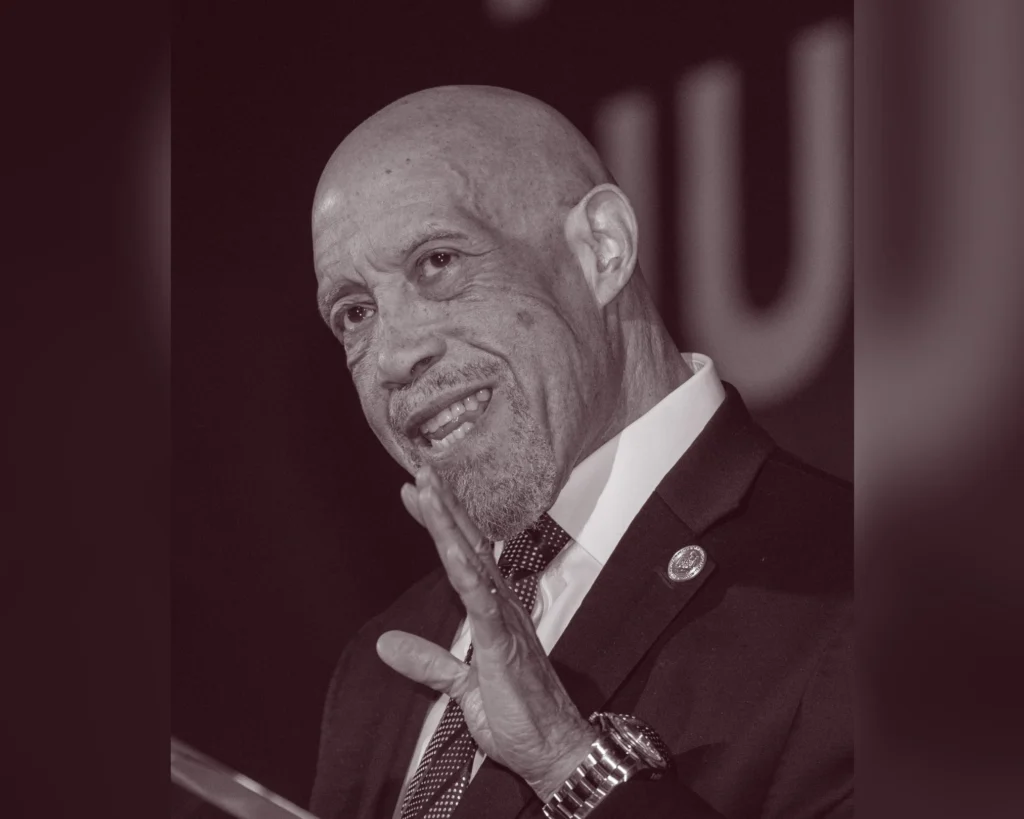
Activist, historian | Jacksonville native Rodney Hurst served as president of the Jacksonville NAACP Youth Council when it organized sit-ins and demonstrations in August 1960 to protest discrimination in public accommodations. They bubbled over into the Ax Handle Saturday, when adults attacked the teenagers over their persistence for equity and equality. Among his many accomplishments, Hurst served on the Jacksonville City Council between 1975 and 1983. He also authored the books It Was Never About a Hot Dog and a Coke! and Unless WE Tell it…It Never Gets Told! and he co-authored Never Forget Who You Are: Conversations about Racism and Identity Development with Rudy F. Jamison Jr.
Jacksonville Today thanks our sponsors. Become one.
(Photo by Will Brown, Jacksonville Today)
Andrew Patterson (1878-1951)
Activist, plaintiff | On July 19, 1905, Andrew Patterson, who was an AME minister, boarded a streetcar operated by the North Jacksonville Street Railway Town Improvement Co. near the intersection of Clay and Bay streets in LaVilla. After his arrest for refusing to sit in the back of the car, Patterson challenged Florida’s legal segregation of streetcars, claiming it violated his 14th Amendment rights to due process and equal protection. Patterson was released by Judge R.M. Call, who declared the arrest unconstitutional. On July 30, 1905, the Florida Supreme Court struck down Florida’s streetcar law in Patterson’s case. But the victory was brief. Jacksonville passed its own streetcar segregation law in response, and the state Supreme Court upheld it. Patterson died in Jacksonville in 1951.
Rutledge Pearson (1929-1967)
Activist, educator, athlete | Jacksonville native Rutledge Pearson was raised in Durkeeville and graduated from Stanton High School in 1947. He earned a baseball scholarship to Huston-Tillotson College in Austin, Texas, and earned his degree from there in 1951. Pearson played professional baseball for the Birmingham Black Barons and other organizations. His pro ball career ended when the Jacksonville Beach Seabirds elected to close their park before letting the infielder take the field. Pearson was a teacher in Duval County Public Schools for 14 years. He served as head of the Social Studies Department at Darnell-Cookman School, baseball coach at the new Stanton High School, and was vice president of the Social Studies Teachers’ Council of Duval County. He was also a member of Alpha Phi Alpha Fraternity. Pearson served as an advisor to the NAACP Youth Council members who participated in demonstrations in Downtown Jacksonville in 1960. In 1961 he was named president of the Jacksonville NAACP. Pearson was inducted into the Florida Civil Rights Hall of Fame in 2016. In 2017, the post office at 1100 Kings Road, less than two miles away from his family home, was renamed the Rutledge Pearson Post Office. He died at age 37.
(Photo courtesy University of North Florida, Eartha M. M. White Collection)
Eartha Mary Magdalene White (1876-1974)
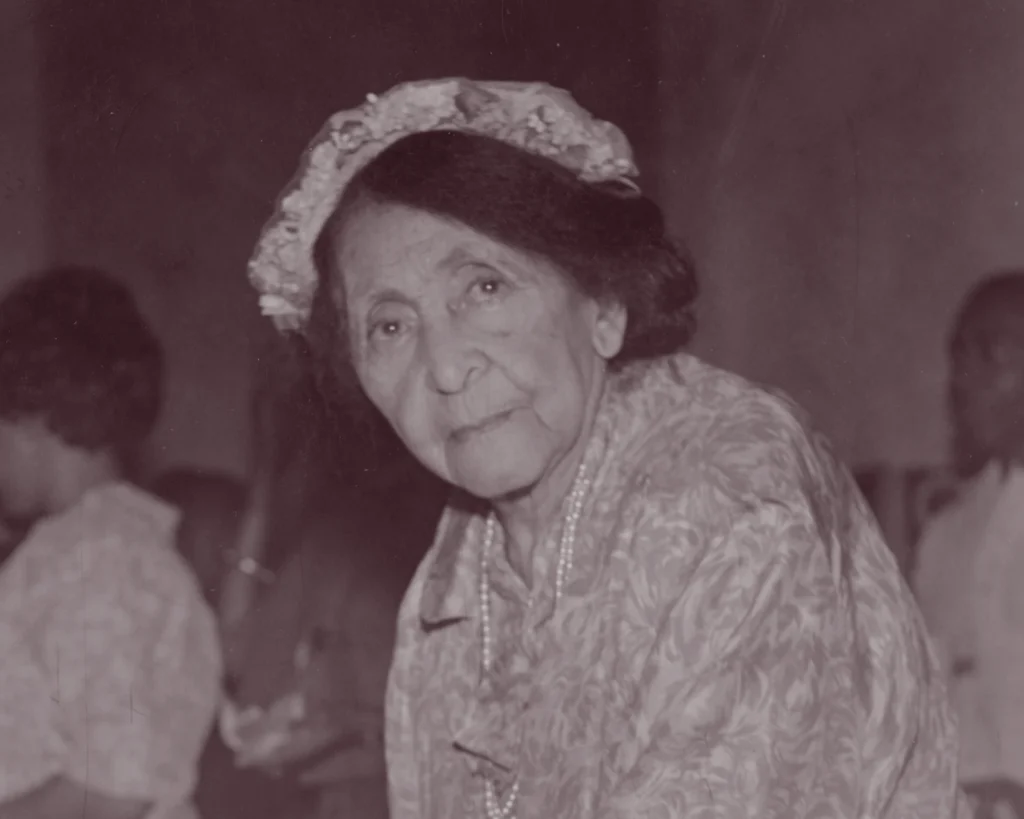
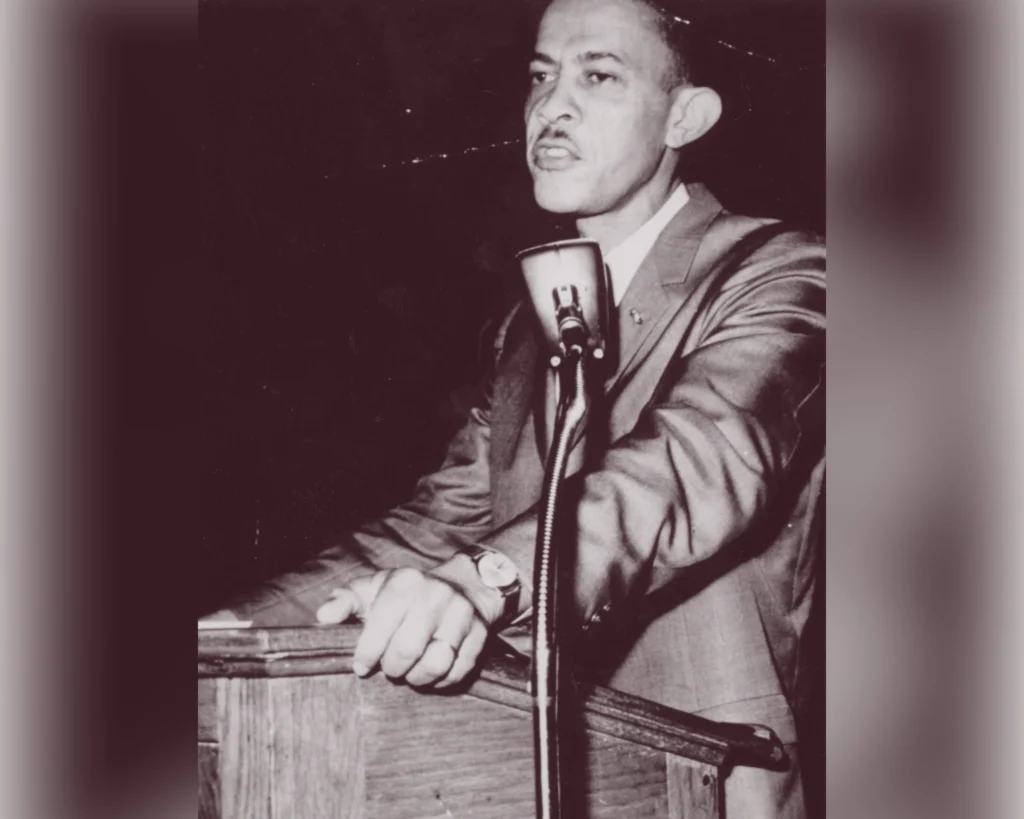
Philanthropist, humanitarian | Jacksonville native Eartha Mary Magdalene White attended the Stanton School. She left Jacksonville in 1883 to escape a Yellow Fever epidemic but returned in 1896. White graduated from Florida Baptist Academy, which is now known as Florida Memorial University. She served as an educator for more than a decade. She also operated a laundry business in LaVilla as well as other entrepreneurial ventures. White was a charter member of the National Negro Business League in 1900. Later, she founded the Clara White Mission to serve Jacksonville residents in poverty in 1928. It was named after her adoptive mother. She died in January 1974 at age 97.
(Photo courtesy University of North Florida, Eartha M. M. White Collection)
Asa Philip Randolph
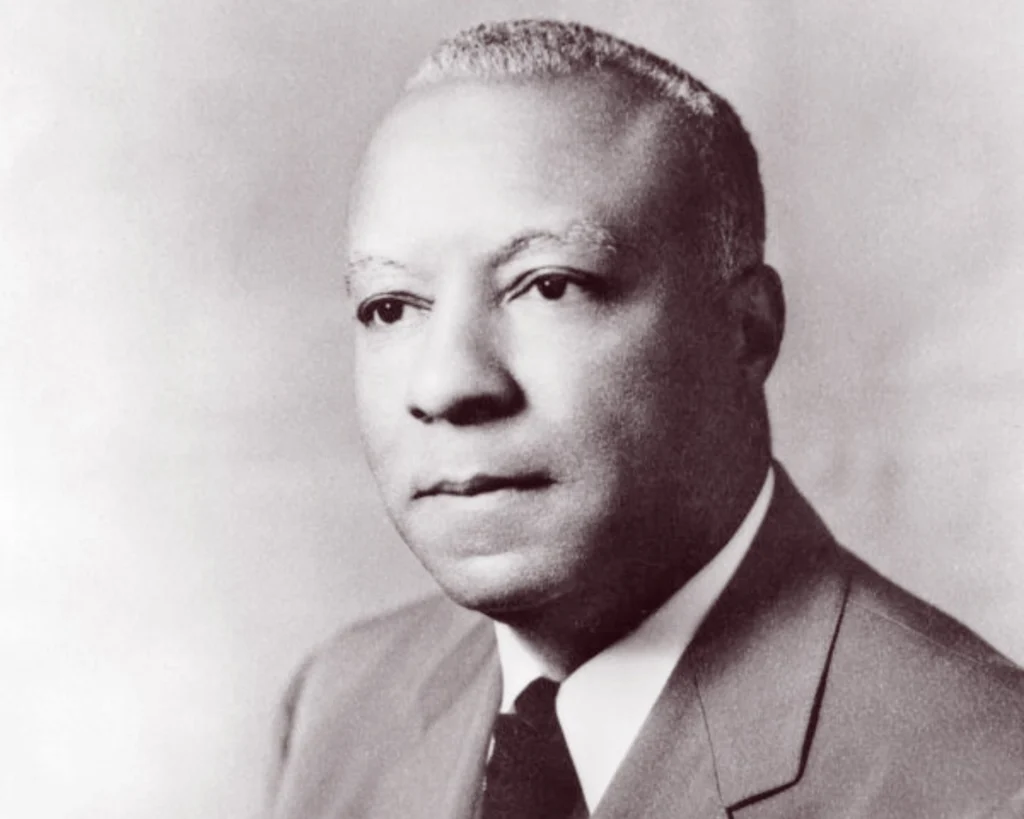
Organizer, activist | He grew up in Jacksonville and was the 1907 valedictorian of the Cookman Institute. He moved to Harlem in 1911 and started a socialist newspaper in New York City in 1917. In 1925, Randolph helped organize the first predominantly Black labor union, the Brotherhood of Sleeping Car Porters. Randolph’s threats to hold a March on Washington in the 1940s led President Franklin Roosevelt’s administration to remove discrimination from federal defense contracts. Later advocacy led to the Truman Administration’s desegregating the military. Randolph was a lead organizer for the March on Washington for Jobs and Freedom in 1963. In his remarks in August 1963, Randolph reminded more than 200,000 people the Civil Rights Movement was an ongoing quest for equity, equality and well-paying jobs. “The March on Washington is not the climax of our struggle, but a new beginning not only for the Negro but for all Americans who thirst for freedom and a better life. Look for the enemies of Medicare, of higher minimum wages, of Social Security, of federal aid to education, and there you will find the enemy of the Negro…” Randolph stated. Randolph died in May 1979 in New York City. He was 90.
(Photo: The Associated Press)
Dallas Graham
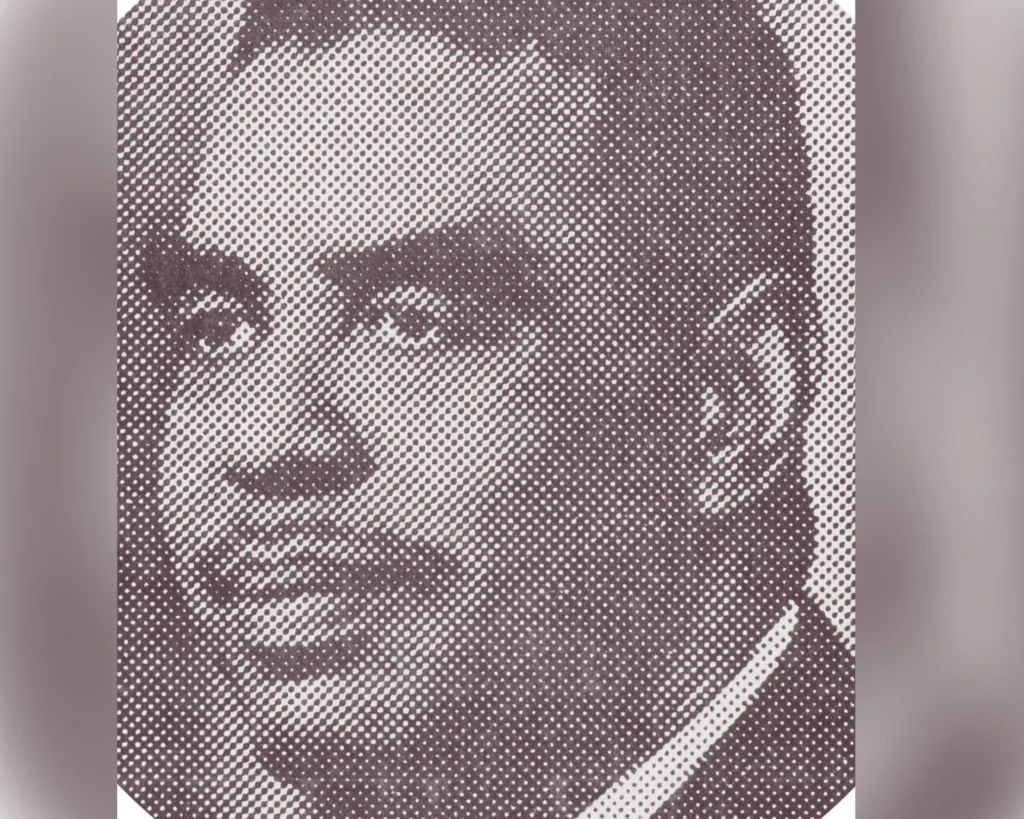
Pastor | Kentucky native Dallas Graham grew up in Jacksonville and graduated from Stanton High School. He was the longtime pastor at Mount Ararat Baptist Church in Durkeeville and shepherded the congregation through multiple moves until it established permanent residence along Myrtle Avenue in Durkeeville. Congregants loved his principled leadership. In 1945, Graham challenged the local law and custom that prohibited Black voters from registering to join the Democratic Party. Graham’s attorney, Daniel W. Perkins, helped him win the case. The Democratic Party appealed, but the initial decision was upheld. In May 1945, Graham and 13 others were the first Black voters in Duval County to register as Democrats. Graham also operated a mortuary as well as an ambulance service to serve Black families ignored by those services elsewhere in Jacksonville. Graham died in April 1976 at age 72. In 1977, the Jacksonville Public Library branch at the corner of 13th Street and Myrtle Avenue was renamed in his honor.
(Photo via Jacksonville Public Library, Black History Month Calendar)
Alton Yates
Activist, military | Jacksonville native Alton Yates grew up in LaVilla. He enlisted in the U.S. Air Force in June 1955, shortly after he graduated from Stanton High School. His service in the Air Force’s Aeromedical Field Laboratory in New Mexico in the 1950s helped advance the country’s space exploration. His experience facing racism during his return trip to Jacksonville after his service concluded in 1959 motivated Yates “to do everything in my power to change those conditions.” Yates joined the NAACP when he returned. In August of 1960, he and other members of the NAACP Youth Council helped organize sit-ins and demonstrations at Downtown Jacksonville lunch counters. Yates was demonstrating peacefully on what became Ax Handle Saturday, and he suffered a blow to the back of the head. Yates retired as a lieutenant colonel from the Florida Air National Guard in 1994. He also earned an undergraduate degree from Florida International University and a master’s from Occidental University. His life is the subject of the children’s book Moving Forward.
(Photo via Jacksonville Public Library, Black History Month Calendar)
Lloyd Pearson (1921-2023)
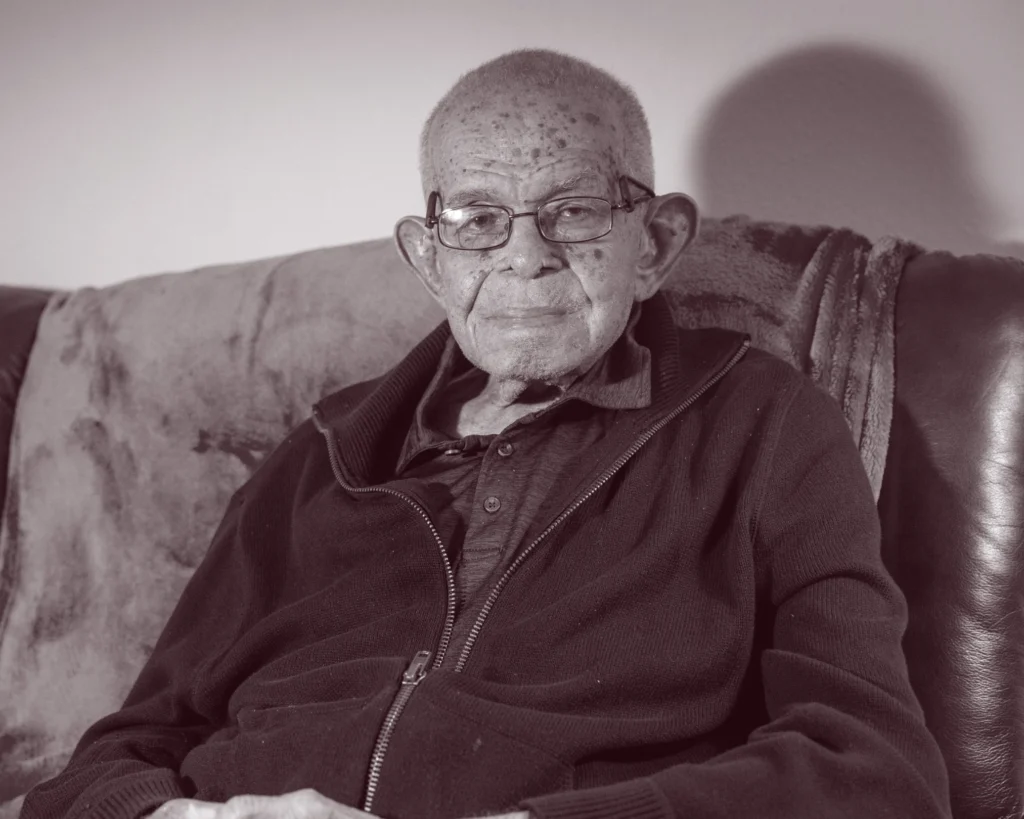
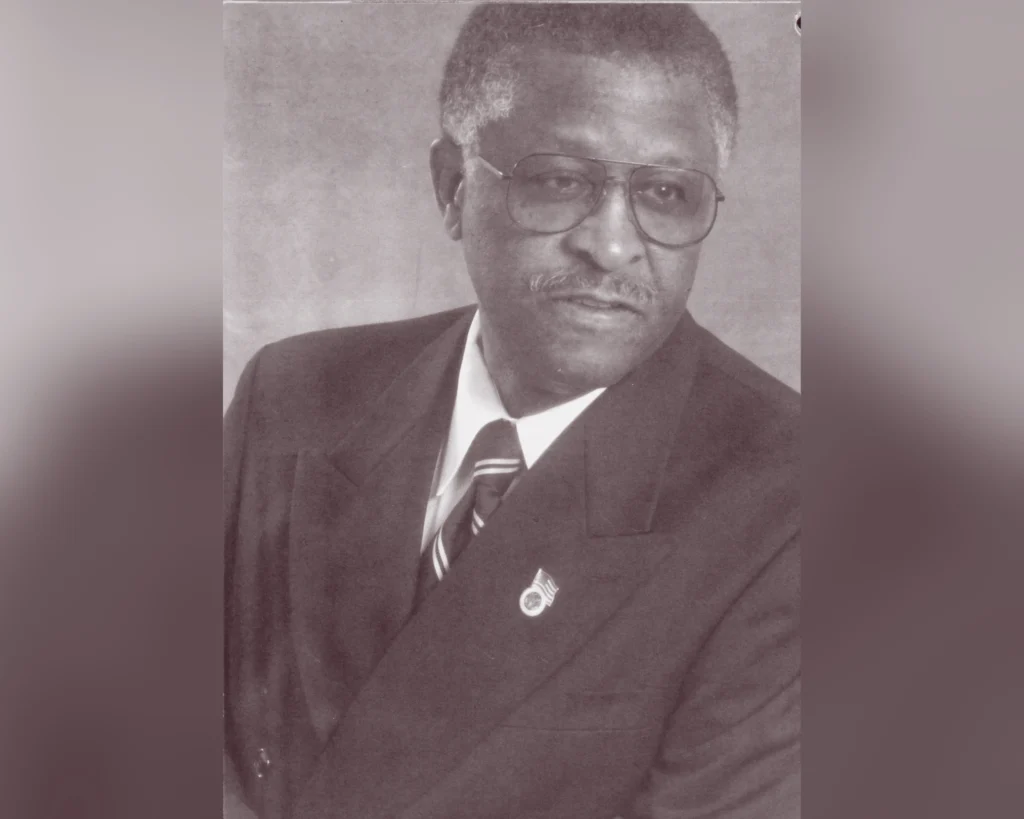
Activist, postal worker | Lloyd Pearson, the oldest child of Lloyd and Hattie Pearson, was born in Durkeeville. “I didn’t realize the effects of segregation until I was almost in high school. We had a Black neighborhood,” Pearson said in an interview shortly before his 2023 death at age 102. “My father kept us in a way that I didn’t know the effects of that.” Pearson graduated from Stanton High School in 1939. J.P. Small was his high school basketball coach. Pearson says his activism started in the 1940s when he heard local officials use the N-word in their political campaigns. Throughout his life, Pearson helped thousands of Duval County residents register to vote. He was among the nearly three dozen Jacksonville residents who attended the 1963 March on Washington for Jobs and Freedom. Pearson left Edward Waters College during his sophomore year to work. After a stint with the Railway Mail Service, he spent about two years working in the Jacksonville Shipyards before returning to the post office, eventually retiring in 1977.
(Photo by Will Brown, Jacksonville Today)
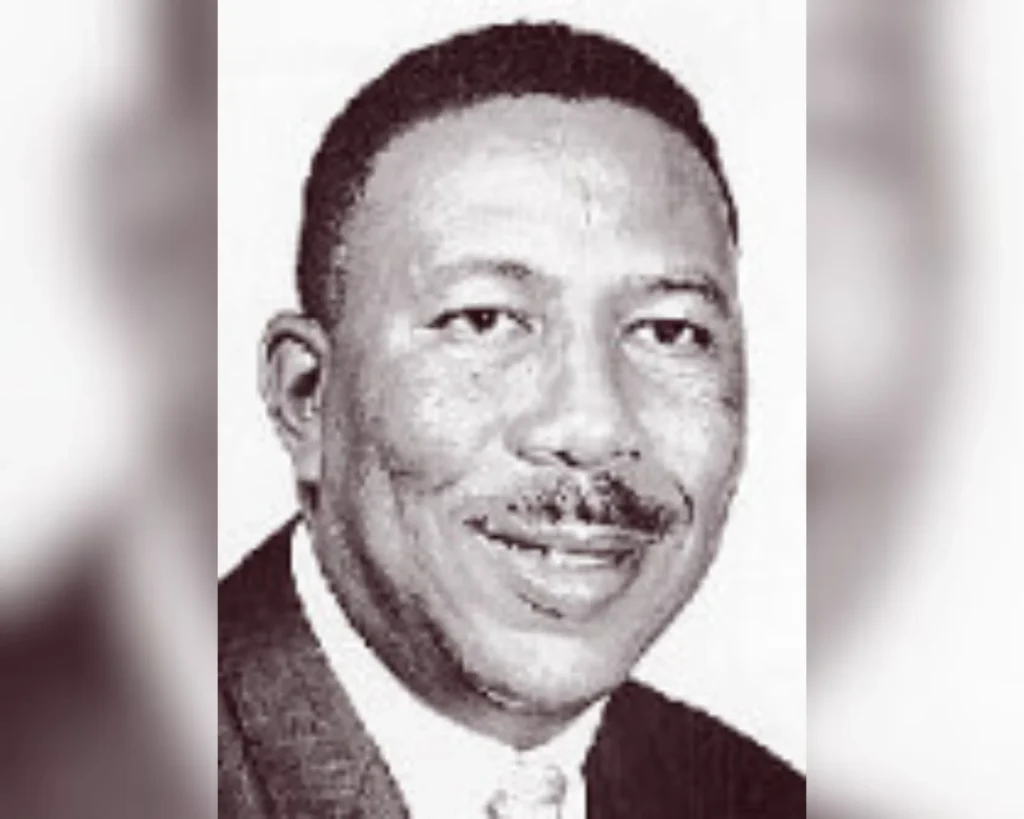
Frank Hampton Sr., Edward Norman, Charles Brown, Davoye Brown
Activists, golfers | Four Black men filed suit over access to two city-owned golf courses, Brentwood Golf Club and Hyde Park Golf Club, in July 1958. At the time, Black golfers were restricted to playing at Brentwood on Mondays and Hyde Park on Fridays. The PGA Tour also had a Caucasians-only clause in effect at the time. The men sued for the right to access public courses on any day. On April 1, 1959, a federal judge ruled both courses should be accessible to players – regardless of race – effective April 7. The city of Jacksonville closed both Brentwood and Hyde Park on April 6, 1959, and sold them to following year. In 1960, Hampton filed suit against the city to force the desegregation of public facilities including local beaches, auditoriums, stadiums and the zoo. To avoid the lawsuit, county commissioners agreed to desegregate those facilities. In 1962, the U.S. Supreme Court ruled that excluding Black golfers from public golf courses violated the 14th Amendment. Hampton (pictured) also broke barriers as one of the first Black people in the 20th century to work for the Jacksonville Police Department in 1955, died in 2011 at age 88.
Harry T. Moore
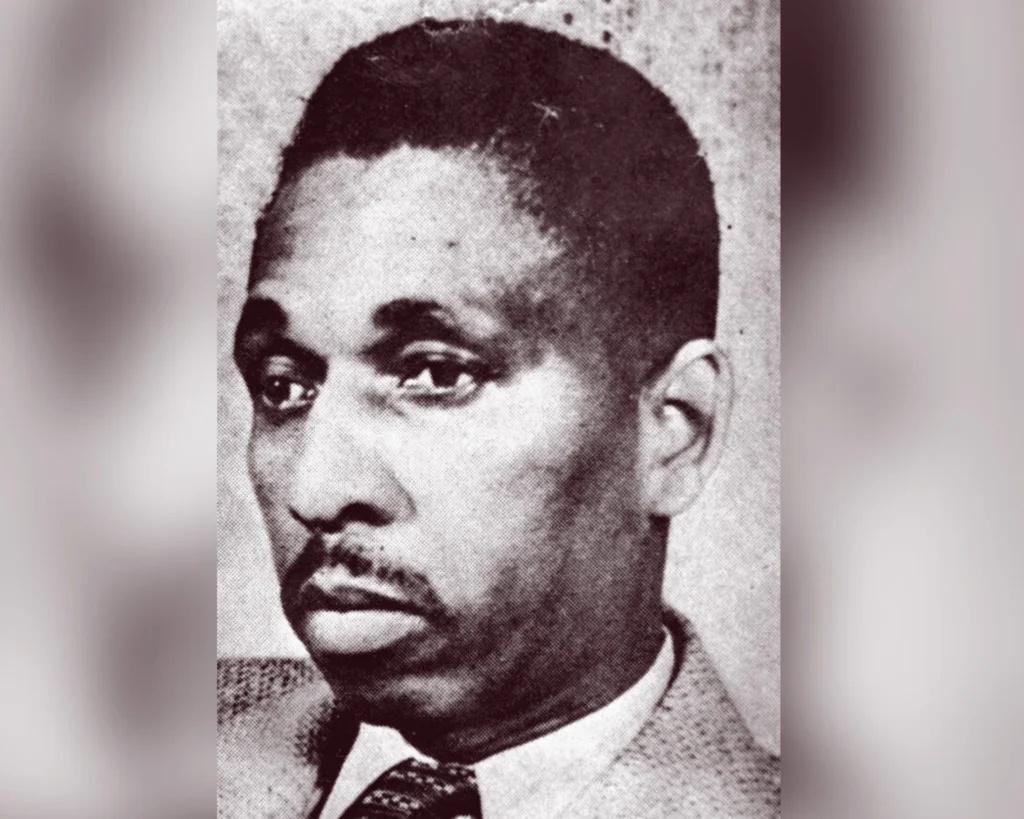
Educator, activist | Harry T. Moore was a leader of Florida Conference of the NAACP who investigated lynching and fought for equal pay for Black and white teachers in Florida. He spent three years of his childhood in Jacksonville and attended Stanton High School. He later served as an educator in Brevard County, Florida, and created the Brevard NAACP in 1934. By the mid-1940s, the Florida NAACP had more than 10,000 members. Moore was killed alongside his wife, Harriette, in a bombing in their Brevard County home on Christmas 1951. Harriette Moore, also an educator and NAACP activist, grew up in Mims, Florida, and did not spend much time in Jacksonville.
(Photo courtesy Florida Memory)
Rometa Graham Porter
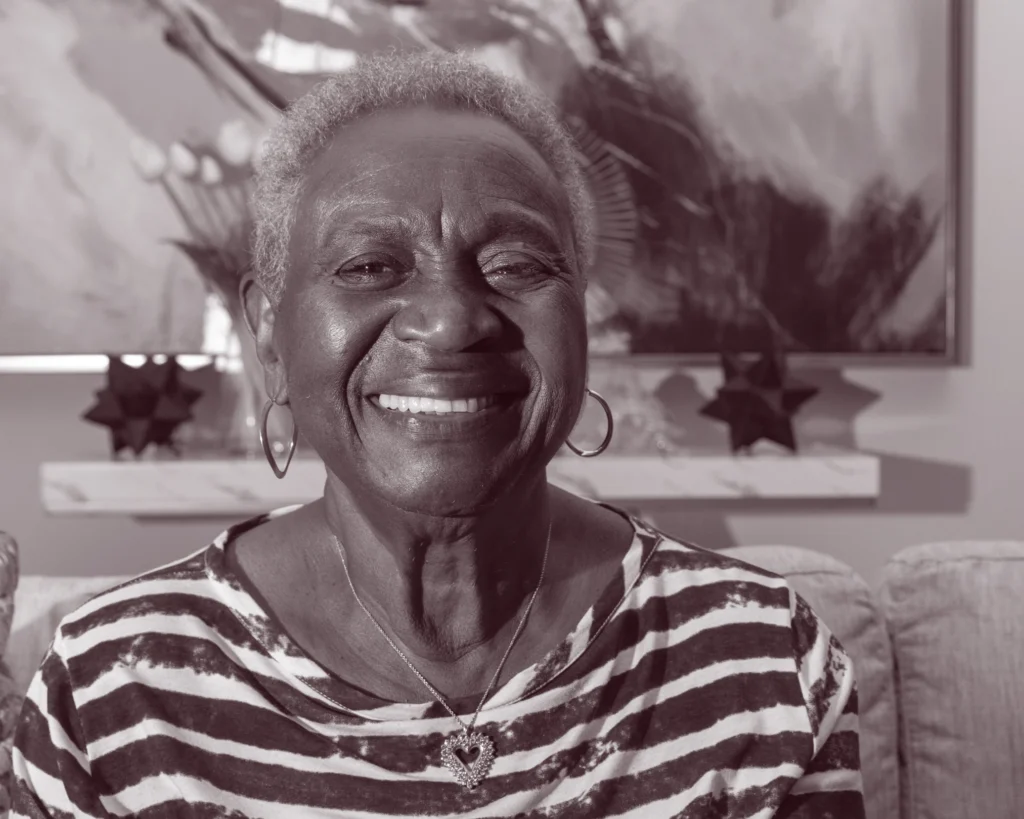
Activist | Jacksonville native and Stanton High School graduate Rometa Graham Porter was a member of the NAACP Youth Council who demonstrated at Downtown Jacksonville lunch counters in August 1960. “I didn’t like the segregation issues. Working hard and doing the things that I needed to do, and yet, being treated as though I was still a slave or lower than other people,” Graham Porter says. “…The way I was living prior to integration was ridiculous. You work, you live, and yet you could not go where you wanted to go. You had to pay the same taxes, or more.”
(Photo by Will Brown, Jacksonville Today)
Eddie Mae Steward
Activist | Duval County native Eddie Mae Steward graduated from Douglas Anderson High School and what is now known as Edward Waters University. In 1971 she filed a federal lawsuit that, eventually, helped desegregate Duval County Public Schools. She was the first woman to serve as Jacksonville NAACP President. During her three terms, between 1972 and 1978, she fought against systemic discrimination within city government as well as inside the Jacksonville Fire Rescue Department and the Jacksonville Sheriff’s Office. Jacksonville NAACP membership grew to 2,500 during her tenure. Steward died in March 2001 at age 61.
Laura Adorkur Kofi
Activist | Ghanaian native Laura Adorkur Kofi emigrated to Central America, then arrived in Jacksonville in the early 1920s. In Jacksonville, she joined the Black Nationalist movement that focused on educational opportunities, industrial opportunities and racial uplift. She started the African Universal Church and created the Jacksonville chapter of the Universal Negro Improvement Association. In that era, the UNIA and Garveyism were just as popular if not more popular champions for Black advancement than the NAACP or the Urban League. Kofi delivered speeches the South, encouraging Black residents to leave the systemic discrimination of the U.S. and return to Africa. She was assassinated in March 1928 in Miami while giving a speech. Kofi is buried in Jacksonville at Evergreen Cemetery.
This entry is part of Jacksonville Today’s BLACKSONVILLE 100, a list of influential people with ties to Jacksonville, compiled on the centennial of Negro History Week. See the whole list.