Published on February 11, 2026 at 9:51 am
Free local news and info, in your inbox at 6 a.m. M-F. Sign up for the Jacksonville Today newsletter.
In honor of Black History Month, here are 11 historic Black cultural heritage destinations in Jacksonville to visit.
1. Cedar Point Preserve
7222 Cedar Point Road

The ruins of the Fitzpatrick Plantation at Cedar Point are near the southern tip of Black Hammock Island. Built in the late 1700s, land was originally granted to Samuel Mills and later acquired by the Fitzpatrick family. Enslaved African laborers were forced to produce salt by boiling seawater. The plantation was destroyed by Union forces during the Civil War. Today, Cedar Point is a part of the National Park Service’s Timucuan Ecological and Historic Preserve.
Jacksonville Today thanks our sponsors. Become one.
2. Dr. Eartha M.M. White Historical Museum
613 W. Ashley St.

The Clara White Mission was dedicated in 1947 at 613 W. Ashley St. in LaVilla, the Eartha M.M. White Historical Museum celebrates the legacy of Dr. Eartha Mary Magdalene White, Florida’s first Black female millionaire. This second-floor museum features photos, artifacts and stories highlighting her remarkable life and connections to figures like Booker T. Washington, Dr. Martin Luther King, Jr. Dr. Mary McLeod Bethune, Ray Charles and Eleanor Roosevelt.
3. Fort Caroline National Memorial
12751 Fort Caroline Road

The Fort Caroline National Memorial at 12713 Fort Caroline Road commemorates the 1564 French settlement led by René Goulaine de Laudonnière, which included free African Moors. In 1565, the Spanish from St. Augustine captured the fort, ending the French presence. Though its true site remains lost, a replica now stands within the 50,000-acre Timucuan Ecological and Historic Preserve, which includes the Timucuan Preserve Visitor Center pictured above.
4. Henry L. Aaron Field at James P. Small Memorial Stadium
1701 Myrtle Ave. N.

Built in 1912 at 1701 Myrtle Avenue, Durkee Field was home to the Negro League’s Jacksonville Red Caps, Florida’s first Major League team. Baseball greats like Babe Ruth, Lou Gehrig, and Henry Aaron once played here. Now known as Hank L. Aaron Field at James P. Small Memorial Stadium, the ballpark’s baseball museum and children’s playground capture the rich history of the sport in Jacksonville and the surrounding Durkeeville neighborhood. The museum is managed by the Durkeeville Historical Society which also operates a small museum at 1293 W. 19th St.
Jacksonville Today thanks our sponsors. Become one.
5. Kingsley Plantation
11676 Palmetto Ave.

Established in 1793 by South Carolinian John McQueen with 300 enslaved Africans, Kingsley Plantation changed hands several times before Zephaniah Kingsley, Jr. acquired it in 1817. Kingsley, known as one of Florida’s most controversial enslavers, married Anna Madgigine Jai, a Wolof woman from present-day Senegal, who managed the plantation in his absence cultivating sea island cotton, rice and citrus. After Kingsley’s death, in 1843, Anna successfully defended her inheritance in an 1846 Duval County court, a rare legal victory for a Black woman in the antebellum South. With many of its structures still surviving on an isolated sea island, the property was acquired by the National Park Service, becoming a part of the Timucuan Ecological and Historic Preserve in 1991.
6. Lift Ev’ry Voice and Sing Park
120 Lee St.

Lift Ev’ry Voice and Sing Park in LaVilla stands on the historic site where brothers James Weldon and John Rosamond Johnson wrote the iconic anthem in 1900. First performed by students at the Stanton Institute, it became the NAACP’s official “Black National Anthem” in 1919. Completed in 2024, the park honors the Johnsons with landscaped grounds, exhibits, and markers celebrating LaVilla’s enduring legacy of Black culture, creativity and pride.
7. Mandarin Museum and Historical Society
11964 Mandarin Road

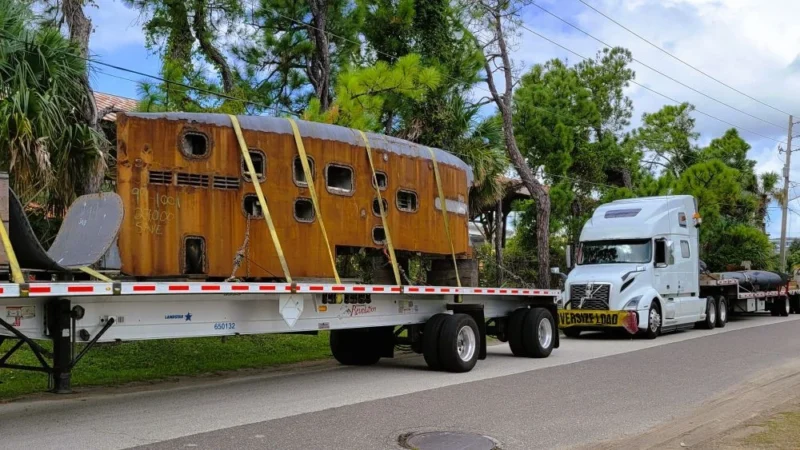
Since its 2004 opening at 11964 Mandarin Road, the Mandarin Museum and Historical Society has enhanced the original exhibits so visitors can explore some of the people and events that shaped the Mandarin community. Featured Gullah Geechee related exhibits include the wreck of the Civil War steamboat Maple Leaf, a 1898 St. Joseph’s Mission Schoolhouse for African American children, pictured above, and the Untold Story of Black Mandarin permanent exhibit.
8. Norman Studios
6337 Arlington Road

Located at 6337 Arlington Road, Norman Studios, originally the Norman Film Manufacturing Co., was founded by Richard Edward Norman and operated from 1919 to 1928, producing silent films with all-Black casts. Designated a National Historic Landmark, the site now serves as a museum celebrating early Black cinema and silent film history. Free public tours are offered on the first and third Saturday of each month.
9. Old City Cemetery
911 N. Washington St.

Old City Cemetery, located at 911 N. Washington St., was gifted to Jacksonville in 1852 by steamboat captain Charles Willey. It dates to 1827, and has segregated Black and white sections. It is known for its ornate ironwork and hand-carved tombstones. It contains graves of prominent 19th century citizens, freedmen, U.S. Colored Troops, Masons, and religious groups. Notable burials include Clara and Eartha White, Dr. Alexander Darnes, and Ghanaian minister Princess Laura Adorkor Kofi.
10. Reddie Point Preserve
4499 Yachtman Way

A popular fishing and hiking destination, Reddie Point Preserve’s history dates to the late 1700s, when Captain William Reddy operated an 800-acre plantation during Florida’s British period. After the Civil War, the Gullah Geechee community of Chaseville emerged as Samuel Chase employed former U.S. Colored Troops at his Reddy Point shipyard. In 2002, the 102 acres that make up Reddie Point Preserve were purchased by the city of Jacksonville.
11. Ritz Theatre & Museum
829 N. Davis St.

The Ritz Theatre and Museum, located at 829 N. Davis St., celebrates the city’s rich Black heritage and Gullah Geechee culture. Originally opened in 1929 as a movie theater for Black audiences, it closed in 1971. Reopened in 1999 as a 32,000-square-foot, 426-seat museum and performing arts venue, the Ritz preserves and showcases African American history and life in Northeast Florida and the broader African diaspora.
Coming Soon: Jacksonville’s Gullah Geechee Heritage
A Community Story. A Cultural Record. A Call to Remember.

Jacksonville’s Gullah Geechee history lives in the land, the water, the neighborhoods, and the memories passed down through generations. Jacksonville’s Gullah Geechee Heritage brings those stories forward, rooted in place, shaped by community, and preserved for the future.
Jacksonville’s Gullah Geechee Heritage, a new book by Ennis Davis and Adrienne Burke, will be released by Arcadia Publishing on April 28, 2026.
“Gullah Geechee is a foundational culture for the United States influencing everything from our foodways and music to the way we speak. It has a descendant community that numbers in the hundreds of thousands internationally. Many of them contributed greatly to the economic engine that has fueled Jacksonville’s growing metroplex since Reconstruction. However, there are no universities or colleges in Florida (or elsewhere in the Gullah Geechee Corridor) that consistently offer courses in Gullah Geechee studies and none that provide a major or degree in the field. Works of public history like Davis and Burke’s “Jacksonville’s Gullah Geechee Culture” that successfully mine Florida’s public archives, government records, oral histories and scholarly publications demonstrate that a foundation for a teachable canon and generative scholarship about the centuries-long history of the Gullah Geechee people of Northeast Florida exists — and should be endowed.”
— Heather L. Hodges, Former Executive Director, Gullah Geechee Cultural Heritage Corridor (2017-2020)
Order your signed copy today
Preorder your signed copy of Jacksonville’s Gullah Geechee Heritage, available in hard and soft cover.