

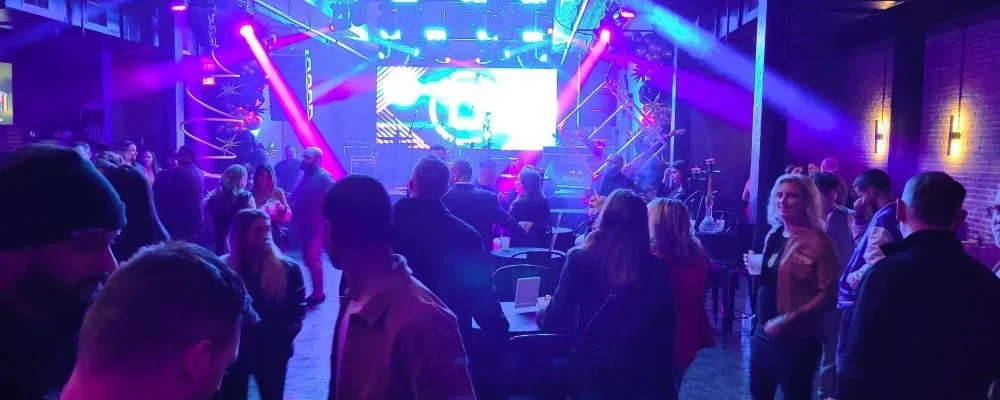
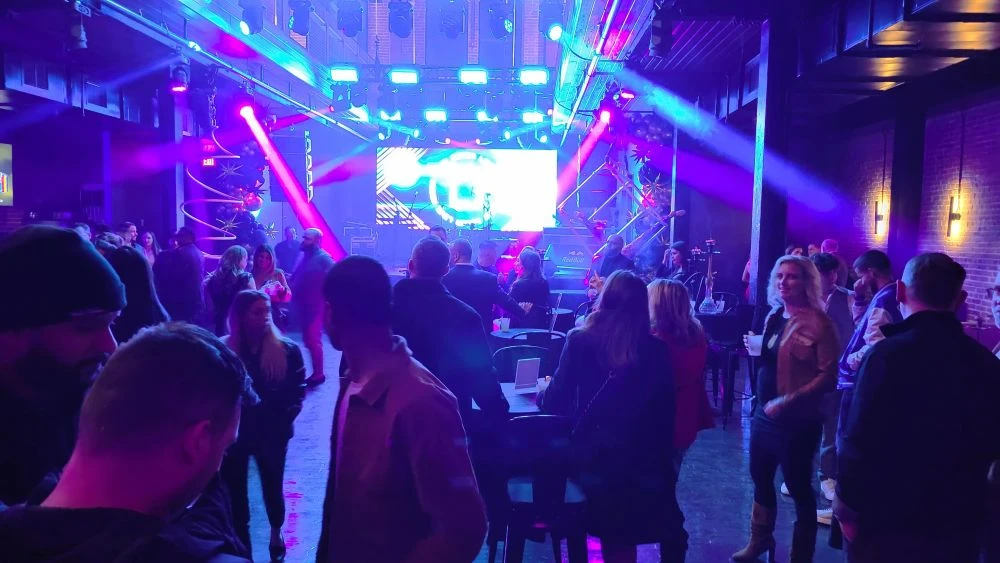
Downtown bars like Decca Live could serve for an extra hour under a proposal. | Dan Scanlan, Jacksonville Today
Published on February 1, 2026 at 1:12 pm
Jacksonville Today seeks to include a diverse set of perspectives that add context or unique insight to the news of the day. Regular opinion columnists are independent contractors who are not involved in news decisions. Want to submit your own column on a matter of public interest? Email pitches to jessica@jaxtoday.org.
Full disclosure: I haven’t drunk alcohol in five years or so, and I’m better off for it.
My skin is better, my endurance is greater, and I think more clearly.
Jacksonville Today thanks our sponsors. Become one.
I’m also not a night owl. I’m in bed by 10 p.m. and up by 5 a.m. usually to see what the premarket is doing and where my portfolio might dump on a given day.
And I don’t hold a liquor license.
In other words, I’m in no position to benefit personally from what likely is the most crowd-pleasing bill that will ever be filed by Raul Arias, a Republican on the Jacksonville City Council.
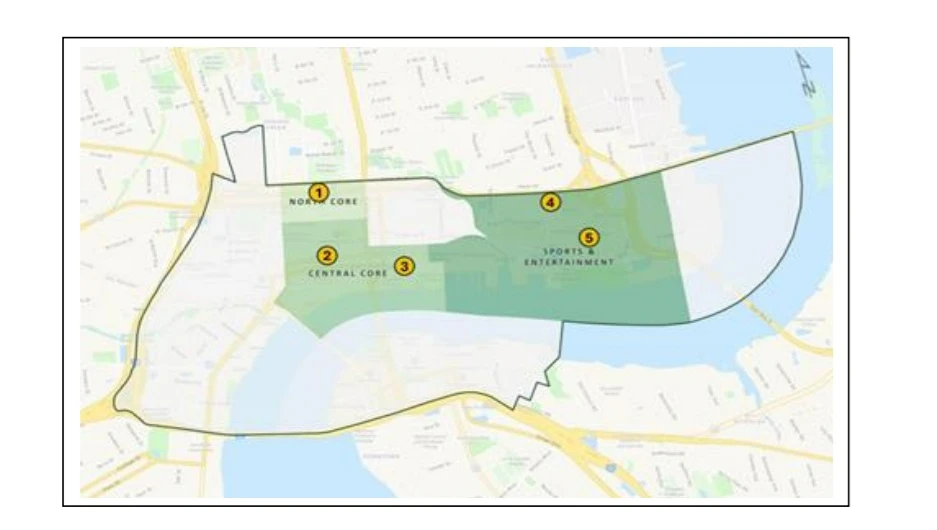
The proposal, 2026-63, would create a Downtown Entertainment District, allowing for Downtown bars and clubs to serve liquor for an extra hour, until 3 a.m., in the North Core, Central Core, and Sports and Entertainment districts.
Jacksonville Today thanks our sponsors. Become one.
As the councilman has explained it to the media, it’s what larger cities do – creating an incentive for business Downtown, giving a structural advantage by designating a destination area for revelry.
He’s right on with that.
What’s missed in most commentary on this proposal is what a radical shift this is from how business by Downtown bars has historically has been done, at least in recent decades.
As a club kid and fifth-rate DJ from decades gone by, a constant memory is that when a nightspot became too much of a destination, the city would find a way to kneecap it – raids or some other contrivance. And a big reason why was that First Baptist Church dominated Downtown, City Hall and public life in a way unimaginable in today’s era of the suburban megachurch.
Jacksonville leaders prided themselves on a willful cultural conservatism that was likely well-intended – protecting quality of life and all that. But it came at the expense of many other things.
Time was, for example, when Orlando and Tampa were peer cities. Now they are a level up in the eyes of most.
Time was, for example, when Jacksonville got more major concerts than today. Now it’s mostly oldies acts, groups touring second-tier towns and so on. Even when the good stuff does come to our area, it often comes to the St. Augustine Amphitheater. Which is swell if you want to drive an hour from Downtown but doesn’t do a lot for people in the urban core.
The effects of the Jacksonville’s nightlife scene’s falling-off are felt downstream as well. The old Milk Bar and Einstein A Go Go – the latter of which was an all-ages club that didn’t sell alcohol – used to draw more great acts in a few months than now come to our local scene in a given year.
And there was a time when we would get global DJs as well. Not so much these days.
So in that context, Arias’ bill is a winner … even if it probably won’t get him many votes in local elections because, after all, the average voter has, like your columnist, not just aged out of the scene but even out of the Old Guy In the Club demographic.
It also rips the Band-Aid off of what has been a glacial expansion, over the years, of drinking districts.
We’ve seen them shepherded through the legislative process, giving carve-outs to specific neighborhoods with regard to capacity limits and so on. Arias’ proposal is by far the most ambitious and most realistic possible in the legislative process, though it does leave one question unanswered.
Why, in the end, do we need last call at all? Not just Downtown, but anywhere?
There is a libertarian, free-market argument to be made that if bars stopped serving whenever they wanted, it would all sort itself out. All night spots would attract a certain clientele, different demographically than the Happy Hour haunts and the dive bars that pepper seemingly every neighborhood.
In that sense, this proposal falls short.
It picks winners and losers, albeit with a justifiable economic reason – to give dead old Downtown a shot at life by allowing bartenders a little more time to serve shots.
It’s not a perfect bill. But it’s progress toward a belated recognition that people have free will and that the government shouldn’t get in its way.