
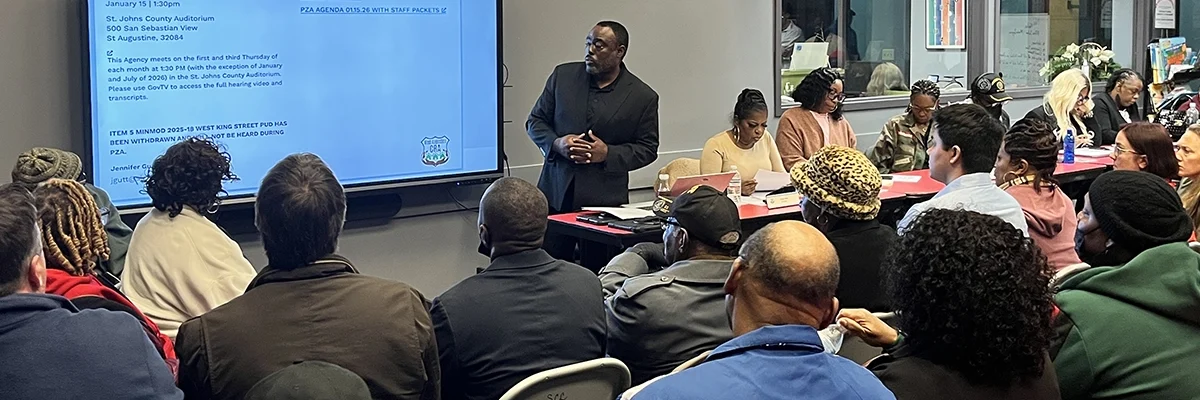
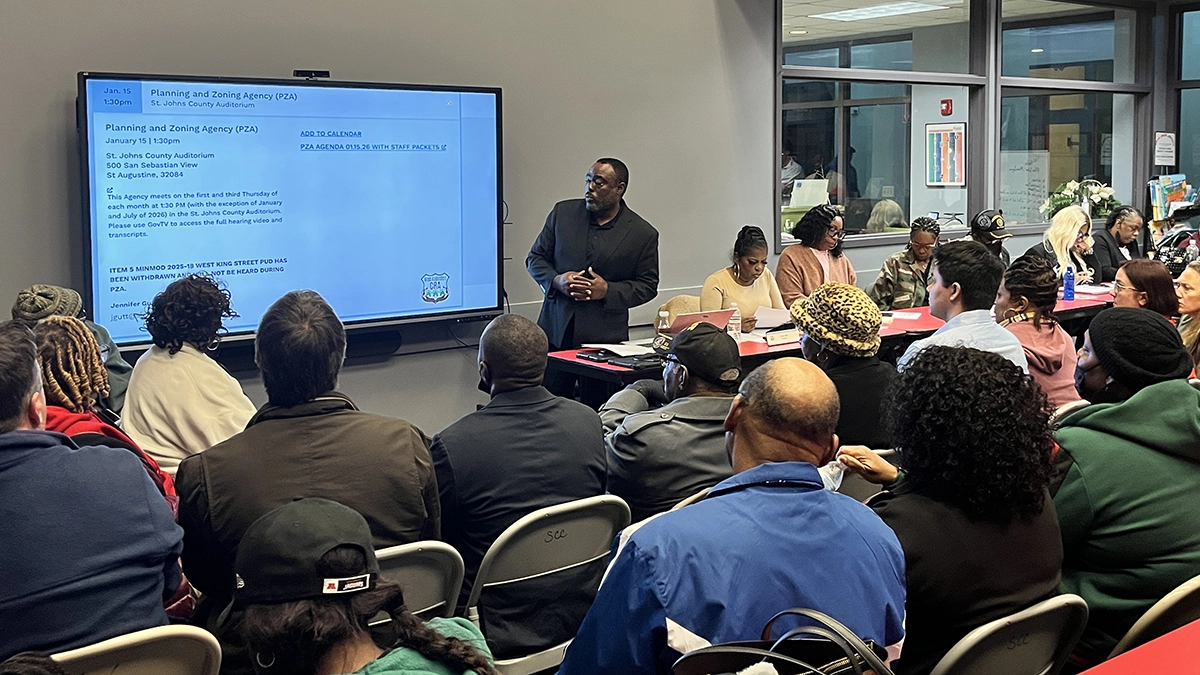
West Augustine Community Redevelopment Agency Chair Robert Nimmons shares information about an axed opioid treatment clinic to a packed house audience during a community meeting. | Noah Hertz, Jacksonville Today
Published on January 13, 2026 at 11:44 am
Free local news and info, in your inbox at 6 a.m. M-F. Sign up for the Jacksonville Today newsletter.
Plans for an opioid treatment clinic just outside of the St. Augustine city limits are off the table, and members of the West Augustine Community are calling it a win.
After members of the neighborhood reached out to the clinic’s owners and the St. Johns County government, and spread the news about the project on social media, it was announced that plans for the methadone clinic were axed.
Jacksonville Today thanks our sponsors. Become one.
The decision was met with applause at Monday night’s West Augustine Community Redevelopment Agency meeting.
“This is an example that we can come together,” Community Redevelopment Agency board member LaShawnda Pinkney said. “Together, we took a stand and there is no methadone clinic coming to West Augustine.”
While a representative from the clinic company New Season said he believes there is still a need for opioid addiction services in the area, the company will look for a location that isn’t on a main thoroughfare through West Augustine.

Jacksonville Today thanks our sponsors. Become one.
News spreads fast
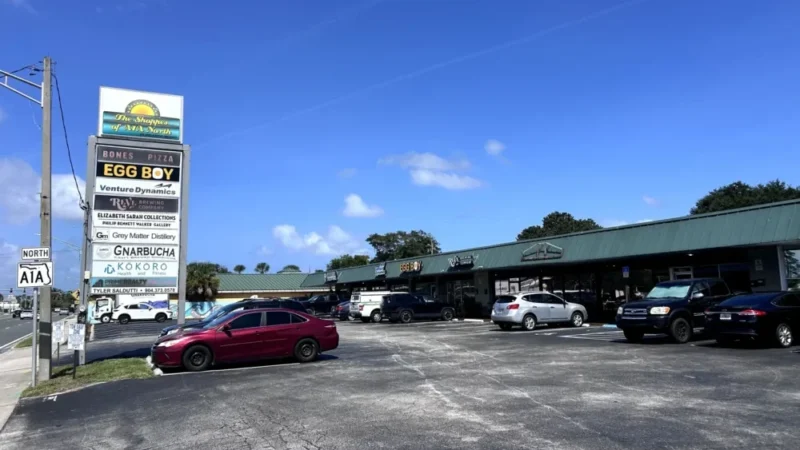
Word reached the community in recent weeks that New Season, which operates clinics combating opioid addiction, was eyeing the former Family Dollar site at 840 W. King St.
The clinic would have offered treatment in the form of methadone, a medication that has been used for decades to help people addicted to opioids like heroin. New Season operates another location in the St. Augustine area.
When the Garden family, who live across the street from the site, found out about the clinic, they weren’t happy. The couple worried that it could change the character of the historically underserved neighborhood, and they took to social media and the neighborhood to spread the word.
With a middle school and an elementary school less than a mile away from the clinic’s proposed location, Sandra Garden says her concerns were about the clinic’s potential clientele, and the young children who may walk by it to and from school.
That was a concern shared by other members of the neighborhood, including Community Redevelopment Agency Chair Robert Nimmons.
As chair of the CRA, Nimmons is tasked with running the entity created to bring new opportunities in the form of business, recreation and housing to the West Augustine community of around 7,000 people.
He says in a community that is considered a food desert, grocery stores and wellness centers are of higher priority than the opioid treatment clinic.
West Augustine is “too vulnerable” for a clinic like New Season, Nimmons says, and he believes more local mental health services would be a necessary addition before adding a clinic to support people fighting opioid addiction.
Compromise in the community
Shawn Parker, a St. Johns County resident, spoke at the community meeting as a representative of New Season.
He said the community’s concerns were “heard, taken seriously and thoughtfully considered.”
With years of experience working in behavioral health, Parker stressed that methadone treatment has been utilized for decades to treat opioid addiction. He also noted that the state has identified parts of St. Johns County as in need of services like those New Season offers.
Still, he thanked the community for making their voices heard, and he said New Season would go back to the drawing board and identify a new location for a clinic.
West Augustine coming up?
While the clinic project is off the table, another health resource is slated to open in West Augustine later this month.
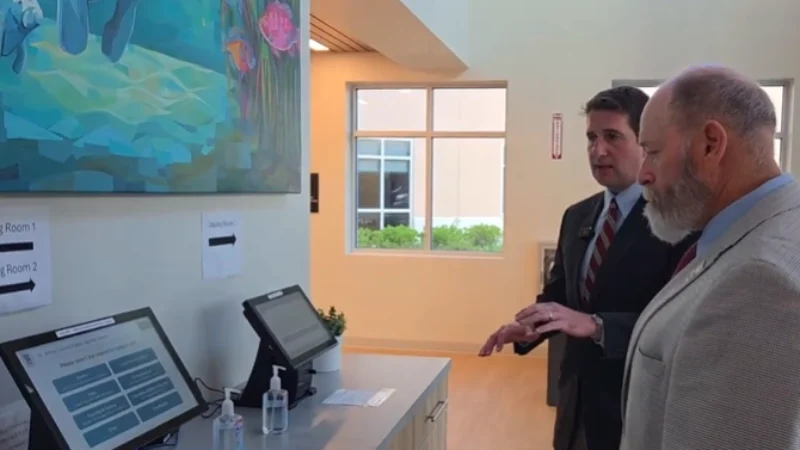
Community leaders broke ground on the West Augustine Health and Wellness Center in 2024, and the facility is scheduled to open its doors Friday, Jan. 23.
That project, a collaboration made possible by the work of local nonprofit organizations, along with county and state funding, will offer health services from UF Health and other groups like the YMCA.
A representative from the YMCA attended Monday night’s community meeting to share information about programming that will be available at the center, like classes to educate people about diabetes and monitoring their blood pressure.
The clinic isn’t the only recent addition to the community. In recent years, St. Augustine couple Lavardis and Dwala Anderson purchased a home once used by author Zora Neale Hurston and opened it up as a museum.