Published on December 22, 2025 at 10:04 am
Free local news and info, in your inbox at 6 a.m. M-F. Sign up for the Jacksonville Today newsletter.
Florida’s Atlantic coast will not be the place to be this week.
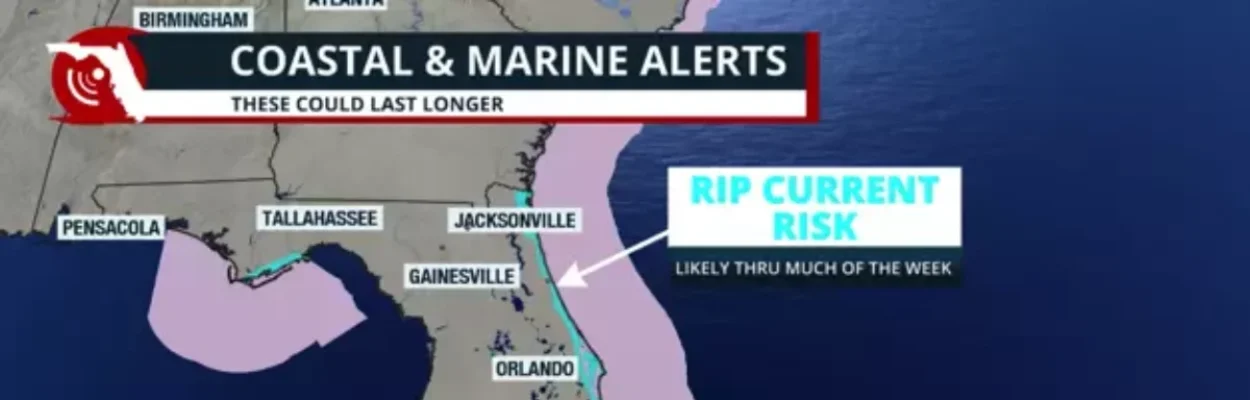
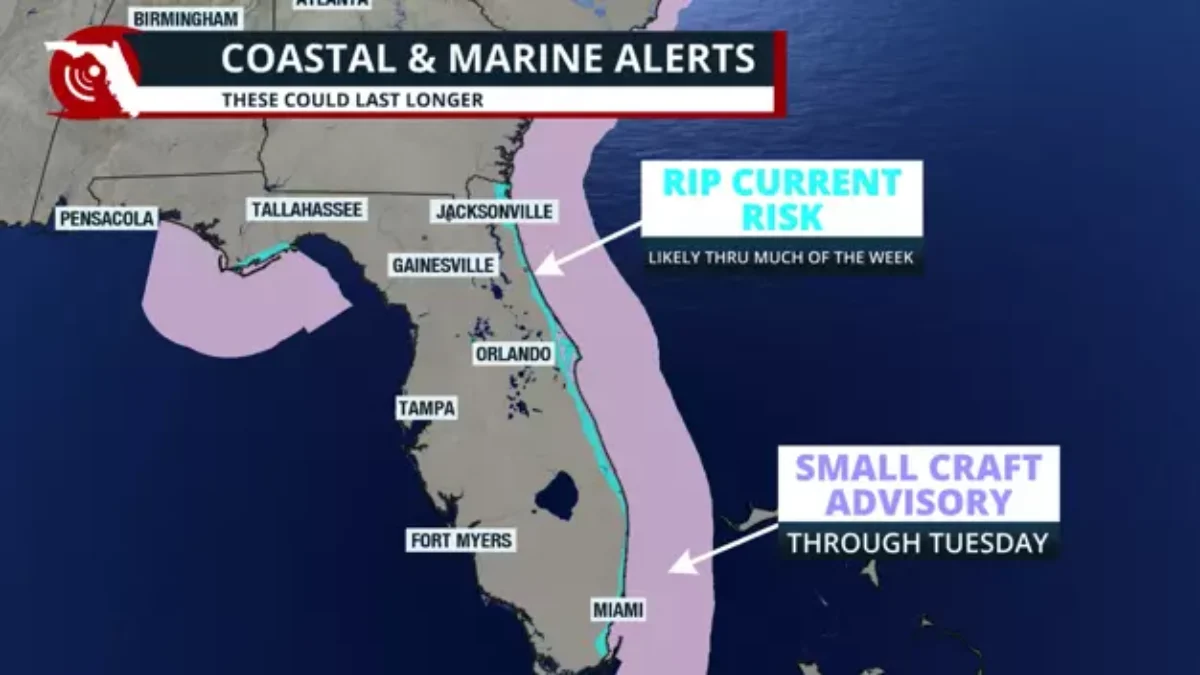
Swimmers are advised to stay out of the water due to a high risk of rip currents through at least Wednesday. There will be rough surf too.
Jacksonville Today thanks our sponsors. Become one.
In some areas, the seas could be higher than 11 feet, and that’s close to the coast, with higher seas in offshore waters.
The forecast for Christmas week calls for above-average temperatures for this time of year.
A cold front will push through Florida on Monday, but a cooldown is not expected. The cold front will reinforce dry air, and winds will increase, resulting in dangerous seas and surf.


Jacksonville Today thanks our sponsors. Become one.
Wind direction is key. It will be coming in strong from the northeast for at least the first half of the week, increasing the risk of rip currents.
Rip currents on the coast
Rip currents account for over 80% of rescues performed by surf beach lifeguards. They are known as the beaches’ silent killers. Rip currents are the leading cause of surf-related deaths.
The National Ocean Service estimates thousands of people are rescued from rip currents each year in the U.S. The United States Lifesaving Association estimates that the annual number of deaths due to rip currents on our nation’s beaches exceeds 100.
It is often believed that rip currents pull you underwater, but this is a misconception. Rip currents are fast-moving channels that can drag a swimmer away from shore and exhaust them as they try to fight their way back to safety. This is what often results in deaths.
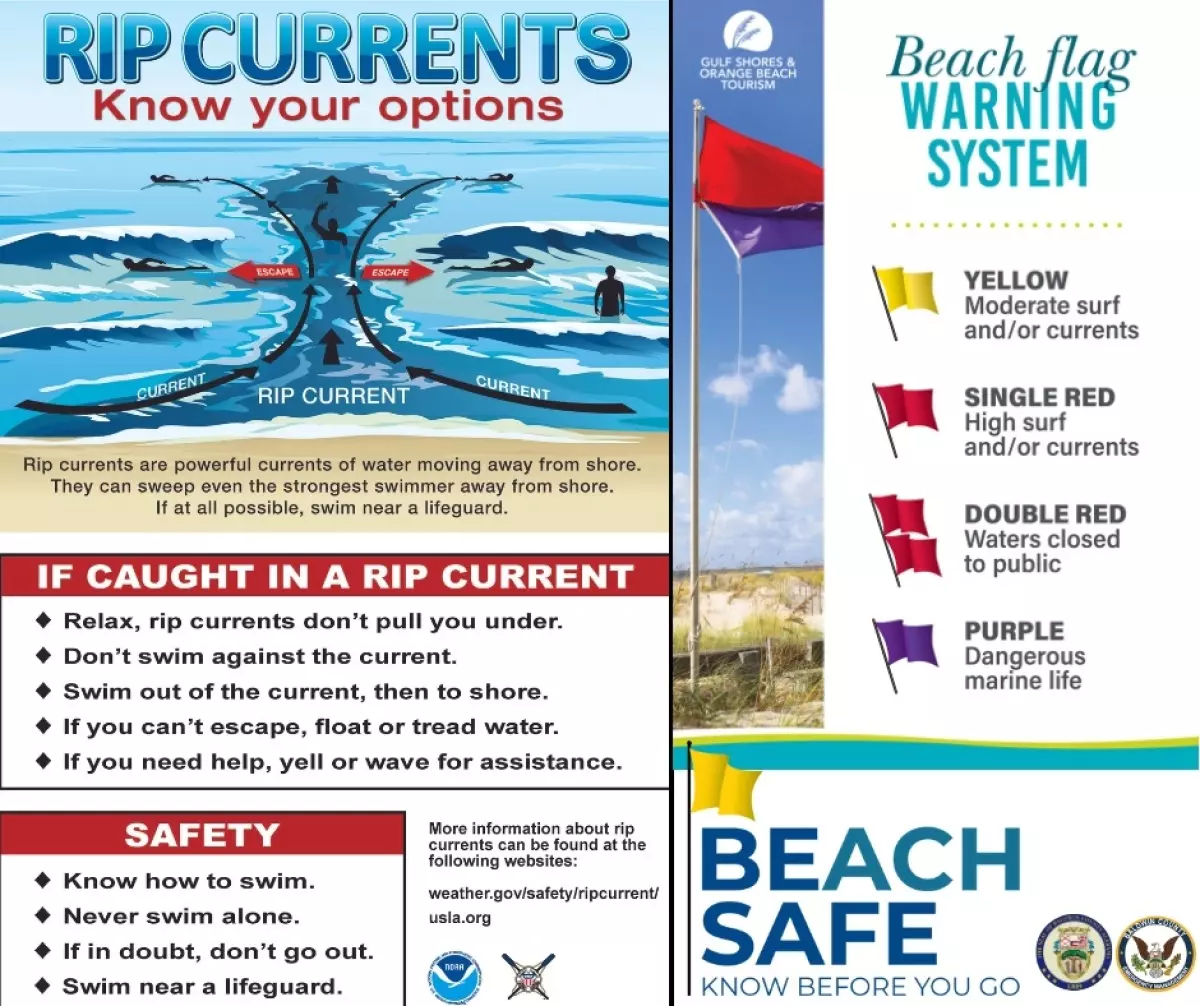
The National Weather Service recommends swimming near a lifeguard if you’re at the beach.
If you’re caught in a rip current, it’s best to remain calm. Swim parallel to the shore, not toward it, until you’re free of the current. Then swim back to land.
If you’re unable to escape, face the shore and call or wave for help. Make sure to check your beach conditions here, before you head into the water this summer.