Published on May 21, 2026 at 12:51 pm
Free local news and info, in your inbox at 6 a.m. M-F. Sign up for the Jacksonville Today newsletter.
NOAA forecasters expect atmospheric conditions associated with a developing El Niño to suppress Atlantic tropical cyclone activity during the 2026 season, increasing the likelihood of a below-normal year across the basin.
In its initial outlook released Thursday, the National Oceanic and Atmospheric Administration said there is a 55% chance of a below-normal hurricane season, with only 10% odds of the year finishing with above-normal activity.
Jacksonville Today thanks our sponsors. Become one.
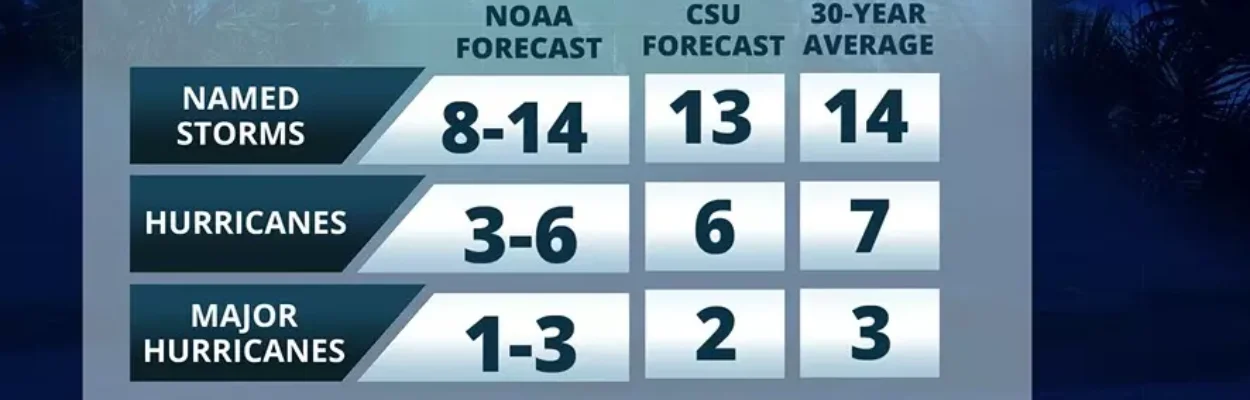
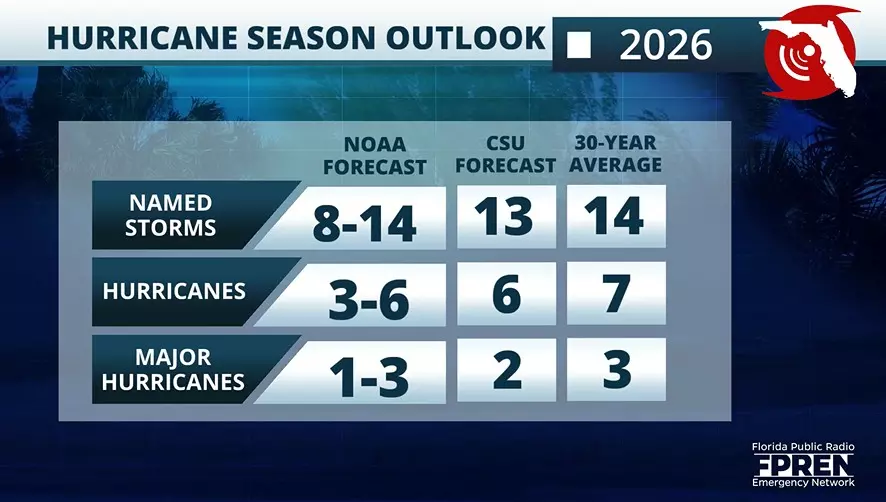
Based on calculations involving the expected Accumulated Cyclone Energy, forecasters expect eight to 14 named storms to form, of which three to six could become hurricanes, including one to three major hurricanes with sustained winds of at least 115 mph.
Typically, during an average year, 12 named storms form, with seven becoming hurricanes and three reaching major hurricane status.
Experts with Colorado State University released their initial outlook in April and came up with similar figures, forecasting 13 named storms, six hurricanes and two major hurricanes.



Jacksonville Today thanks our sponsors. Become one.
“So far, the 2026 hurricane season is exhibiting characteristics similar to the 2006, 2009, 2015 and 2023 seasons,” Phil Klotzbach, a CSU senior research scientist and lead author of the report, previously stated.
RELATED: How the 2026 hurricane season could play out
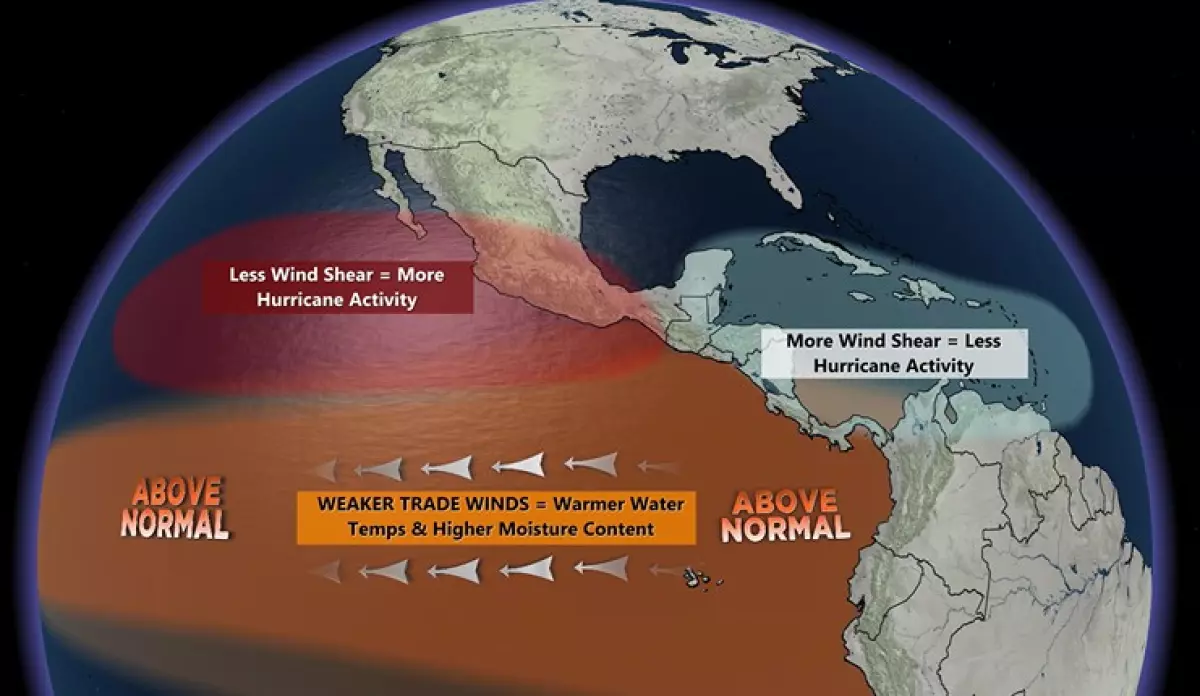
Forecasters with both groups said El Niño is expected to play the dominant role in suppressing activity during the peak months of hurricane season from August through October.
In the Atlantic basin, El Niño often increases upper-level winds across the Atlantic’s Main Development Region.
The Main Development Region stretches from the Caribbean through the tropical Atlantic and is where many long-lasting hurricanes typically form.
Despite expectations for a quieter season, officials continue to stress that seasonal outlooks are not landfall forecasts and even El Niño years can still produce devastating impacts.
For instance, the 2004 hurricane season, which featured El Niño conditions, produced 15 named storms, with five cyclones impacting Florida over a six-week time frame.
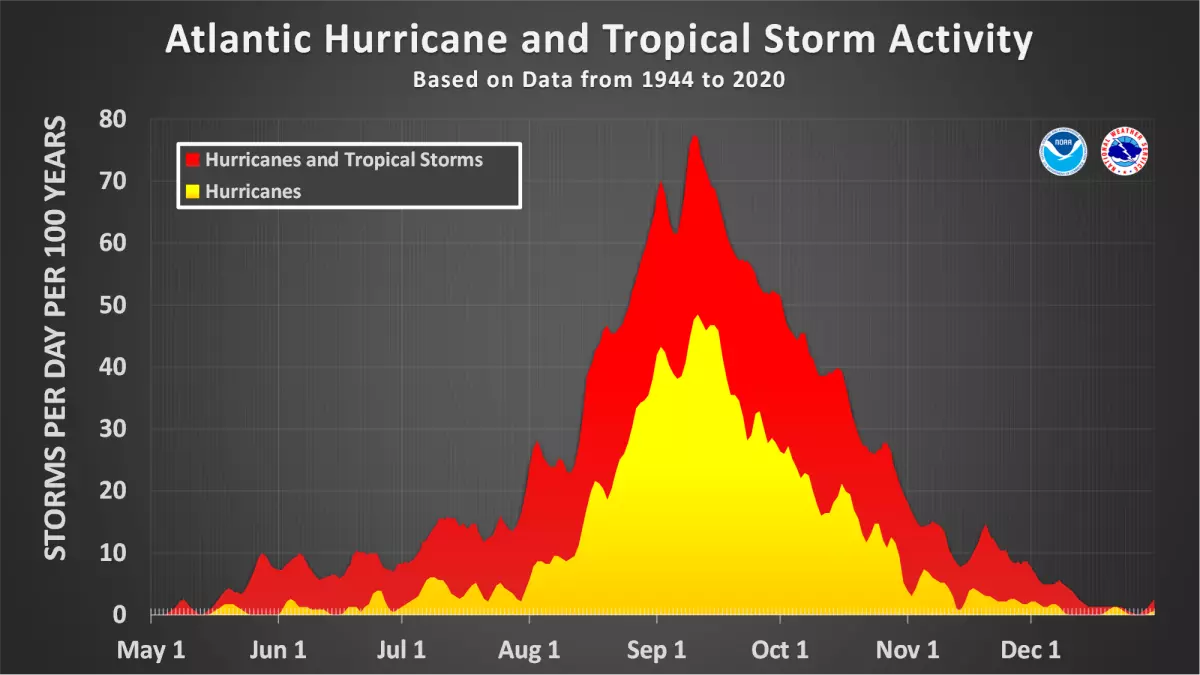
During an average year across the basin, the first named storm typically does not form until June 20, while the first hurricane usually does not develop until mid-August.
The first tropical storm of the 2026 season will receive the name Arthur, and there are no indications that formation will occur over the next few weeks.
The Atlantic hurricane season officially runs from June 1 through Nov. 30, with roughly 97% of all tropical cyclone activity taking place between those dates.
Copyright © 2026 Storm Center