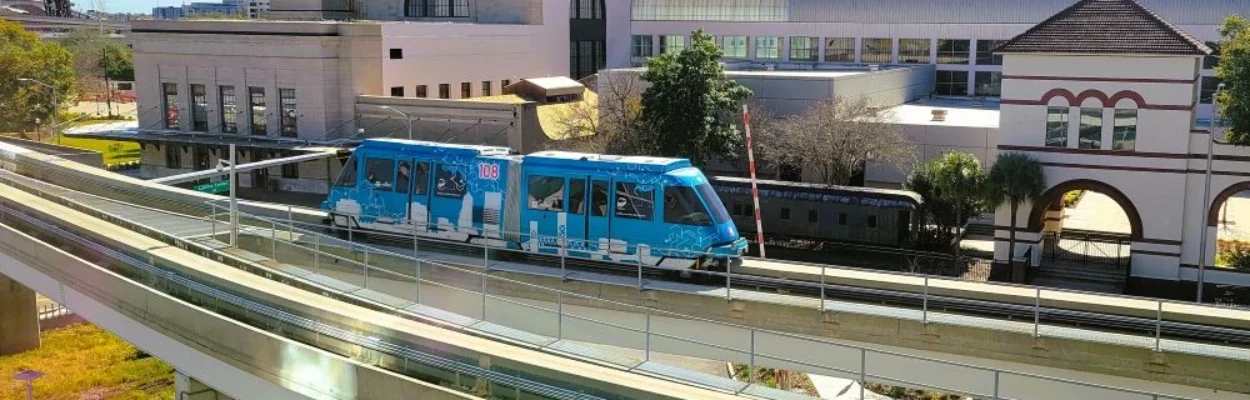
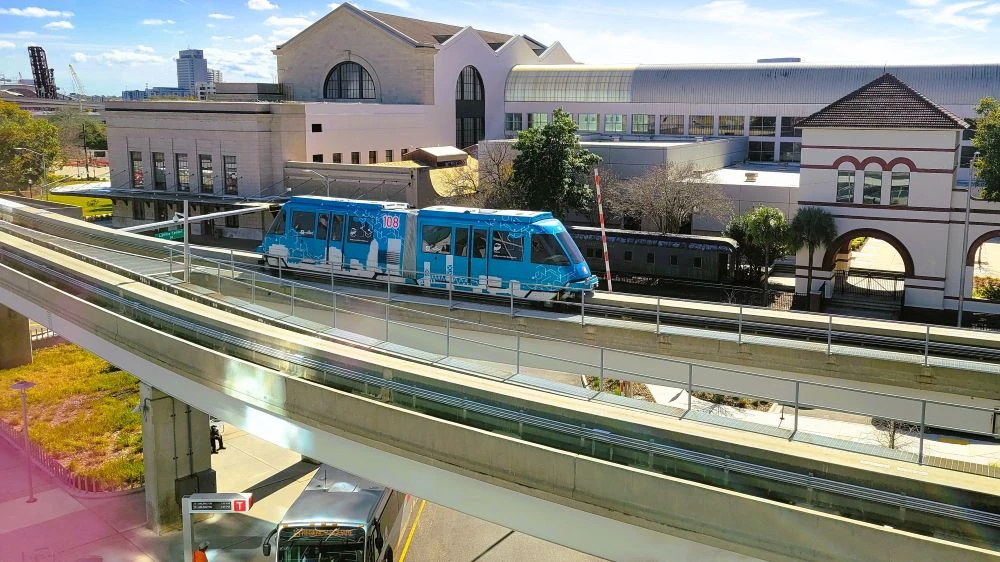
Skyway cars move into the LaVilla station of the Jacksonville Transportation Authority. | Dan Scanlan, Jacksonville Today
Published on April 7, 2026 at 5:50 pm
Free local news and info, in your inbox at 6 a.m. M-F. Sign up for the Jacksonville Today newsletter.
For anyone who wants to weigh in on the future of the Jacksonville Transportation Authority’s Downtown Skyway and autonomous shuttle system, there’s a deadline on Friday.
JTA officials are asking Jacksonville area residents and business owners to take its online survey on five alternatives proposals on how Downtown’s elevated monorail system should be modernized or retired as part phase II of its Ultimate Urban Circulator program, known as the U2C.
Jacksonville Today thanks our sponsors. Become one.
The survey will also help the agency determine how to complete buildout on its Neighborhood Autonomous Vehicle Innovations shuttle system, or NAVI.
Here are the options JTA is considering:
- Keeping the Skyway system operating as it does today and finding a manufacturer to repair, rehab and rebuild the vehicle fleet back to the original form.
- Replace the current Skyway system with a new fleet of modern autonomous people moving trains.
- Convert the track and system to autonomous vehicles.
- Remove the Skyway structure and operate autonomous vehicles on existing streets.
- Repurpose the Skyway as a multiuse trail and operate autonomous vehicles on existing streets.
After the surveys close Friday, JTA will analyze the alternatives. In May, there will be a second round of public meetings on the results.
June is when the JTA board will weigh in and select an alternative. By August, the agency wants to have a Project Development and Environment study completed that will include new cost estimates for the U2C with the selected Skyway alternative.

Jacksonville Today thanks our sponsors. Become one.
JTA held a series of community meetings on the alternatives in March and April, and Ford said there will be future public engagement after the alternatives are narrowed to three.
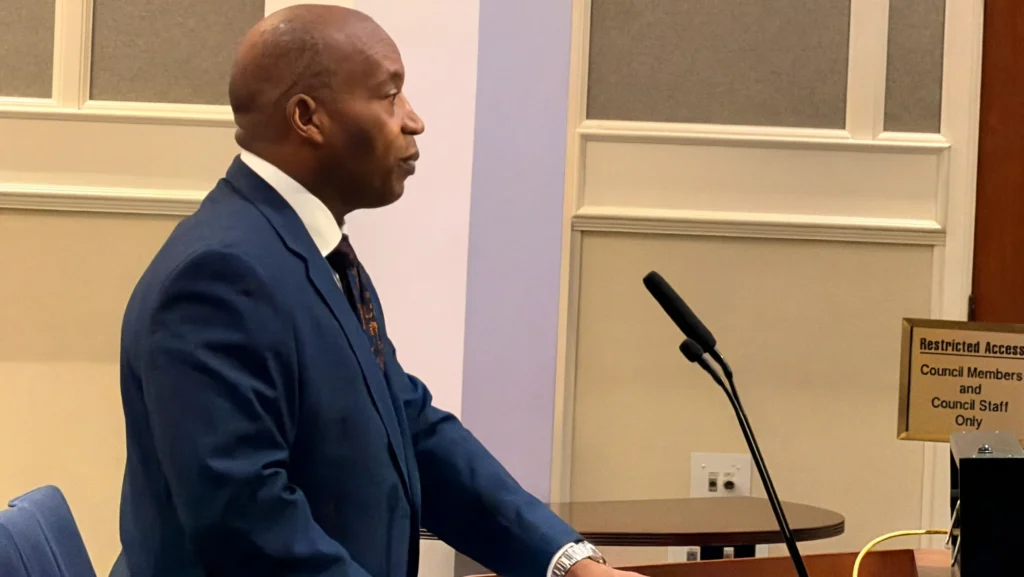
JTA CEO Nathaniel Ford gave an update on the surveys and study timeline Tuesday at a Jacksonville City Council Duval DOGE meeting.
He says, to date, survey results are showing there is a split between the two top favored alternatives — transforming the skyway into an elevated trail and retrofitting it to allow modern rubber-tired people movers.
Ford says there does not appear to be a lot of support for scrapping the asset all together.
Before launching a search for alternatives, plans for U2C phase II would have converted the elevated Skyway track into a roadway for the new autonomous vehicles created by Holon and create a ramp to bring the vehicles down to the existing NAVI loop.
Phase III would extend the autonomous shuttle system into the urban neighborhoods surrounding Downtown like Brooklyn and Riverside.
“We as JTA want to stay agnostic, and the plans that were originally envisioned for the U2C and the Skyway need to be scrutinized along with all of these other options and possibilities as to what we should do with this community asset called a Skyway,” Ford said Tuesday.
NAVI ridership rebounding?
Ford showed DOGE Committee members NAVI’s ridership numbers for March and the first quarter of 2026, which appear to suggest they may be rebounding from a dip at the end of last year.
According to Ford, that six autonomous vehicles operating on a 3.5-mile loop on Bay Street recorded 3,650 riders in the first three months of 2026. That’s up from 2,908 total in the fourth quarter of 2025 — a 35.4% increase. In March, the NAVI had 1,075 riders.
Ridership is down from the third quarter of 2025, which included 5,307 riders. Ford told the committee NAVI has had 11,892 riders since its launch on June 30.
That’s still far short of where JTA leaders project NAVI ridership should be by 2035 — an average of 280 per day and 6,067 per month.
Ford said NAVI vehicles have also been operative with altered routes and detours due to construction in the Sports and Entertainment District.
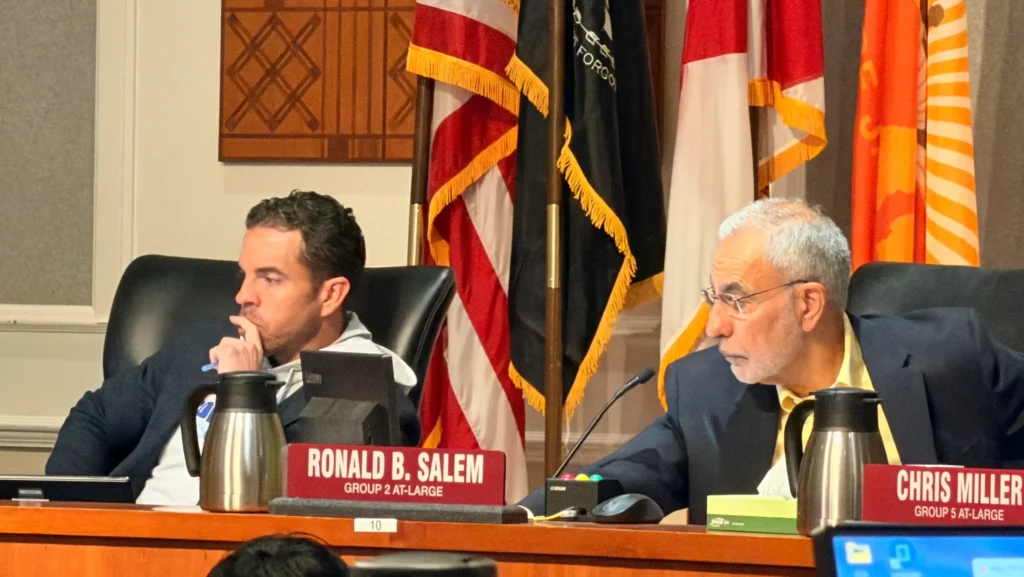
Some City Council members have been critical of the $400 million – plus U2C autonomous vehicle build out price tag and overall financial viability of the project.
On Tuesday, DOGE Committee members praised the alternatives and JTA’s reach out to federal transportation officials.
“As I’ve said before, it’s not just so much about ridership today. It’s about ridership into the future, and it’s also been found to be a driver of economic development for our city,” Ford said.