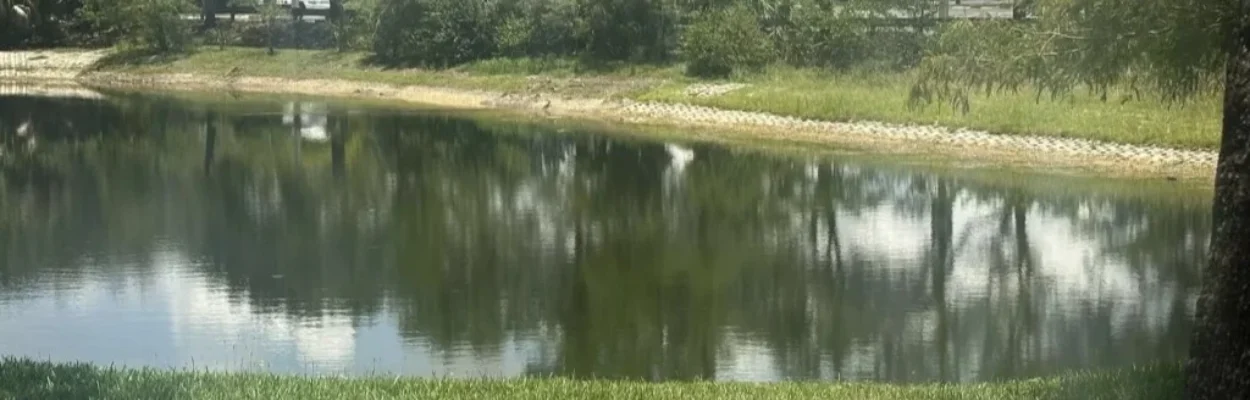
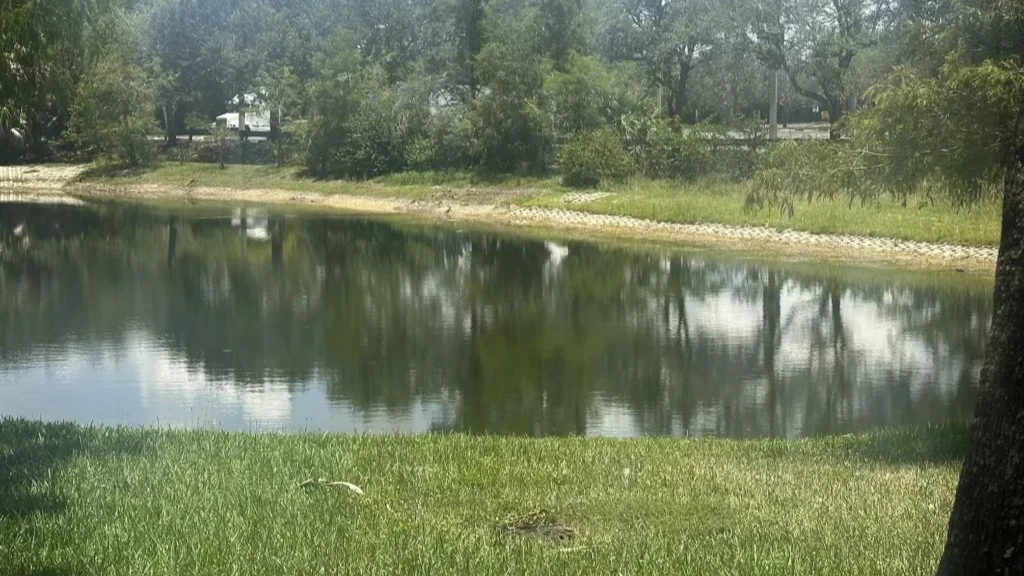
The drought has left low water levels across North Florida. | File photo, Jacksonville Today
Published on March 31, 2026 at 4:55 pm
Free local news and info, in your inbox at 6 a.m. M-F. Sign up for the Jacksonville Today newsletter.
Florida’s prolonged drought has JEA bracing for possible water pressure problems as dry conditions push the demand for irrigation.
Rob Zammataro, JEA’s chief water systems officer, told the utility’s board of directors Tuesday that some customers could notice lower water pressure in their showers, sinks and irrigation systems as dry conditions persist through mid-June.
Jacksonville Today thanks our sponsors. Become one.
According to Zammataro, localized water pressure issues will be most prevalent during times of “very high demand” from 5 to 9 a.m. JEA officials will be increasing its messaging effort in the coming days and weeks asking customers to limit irrigation and conserve water.
“If you go to irrigate your yard, the sprinkler heads won’t project as far. So you might start seeing some dry spots in your yard,” Zammataro said. “Most homes have a water saver. So if you’re only using 1 to 2 gallons a minute, you won’t notice it. But you do run the risk of seeing lower pressure in the shower or when you turn on your sink.”
The National Weather Services’s latest U.S. Drought Monitor report, released Thursday, shows that Northeast Florida remains in extreme drought. It comes as the state is experiencing its worst drought in more than two decades.
Jacksonville Today thanks our sponsors. Become one.
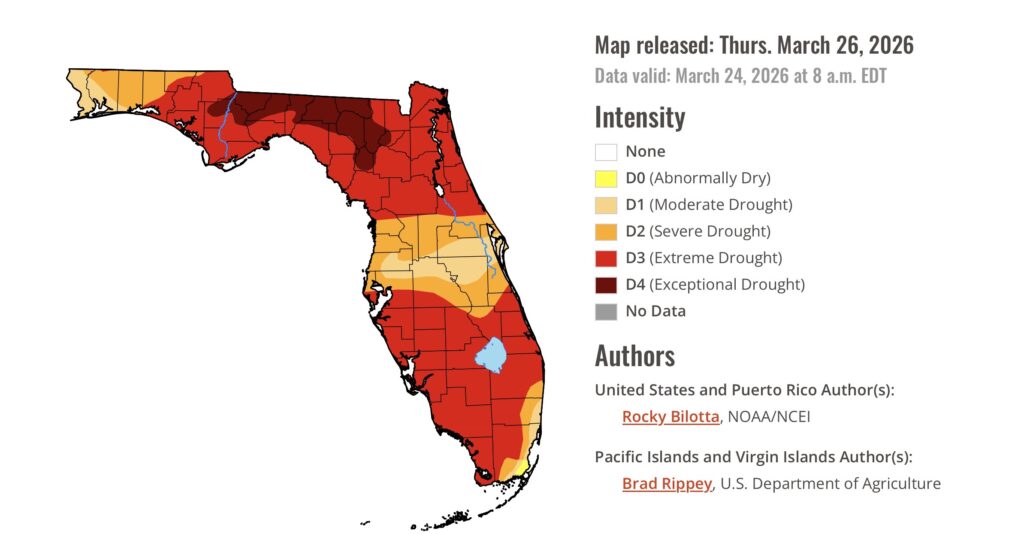
Zammataro said it’s the first time since the Drought Moniter launched in 2000 that the entire state is experiencing some level of drought simultaneously.
For JEA, Jacksonville’s city-owned electric and water system, conditions haven’t been this bad in its service territory since 2012.
”This is probably the worst conditions we’ve seen in 14 years,” Zammataro said.
The St. Johns River Water Management District, which issues water consumption permits in the region, declared a Modified Phase II severe water shortage on March 3 for portions of Northeast and Central Florida.
The directive prohibits wasteful or and unnecessary water use and limits landscape irrigations to one day per week to reduce demand.
It encourages voluntary reductions across several water use sectors — public supply, commercial, industrial, institutional, agricultural, landscape, recreation and aesthetic uses.
On Feb. 3, Gov. Ron DeSantis declared a major state of emergency, partly due to the widespread drought conditions and increased wildfire risk.
Water pressure by neighborhood
Not all neighborhoods in Jacksonville will see the same level of water pressure issues. JEA says infrastructure in older neighborhoods could see more water pressure problems.
“It’s … not a systemic issue where it’s the whole system. A lot of Jacksonville is over 100 years old. Those older neighborhoods, those pipes were not designed to have the modern carrying capacity of a newer neighborhood like Nocatee or eTown,” Zammataro said.
JEA officials will be monitoring the water system’s pressure gauges to see where any issues crop up.
‘Not in any danger’
Low pressure can also have an effect on city services like emergency response. JEA leadership say they’ve met with officials from City Hall, the Jacksonville Fire and Rescue Department and the National Weather Service to reinforce communications for fire enforcement.
“We’re not in any damager,” Zammataro said. “In the event there is a fire, the fire department does have a direct line to our (JEA’s) front desk, our 24-hour service.”
He says JEA has the ability to use its 300 pressure monitors systemwide to increase water pressure for emergency situations like a fire.
JEA’s residential water system usually registers at 60 pound-force per square inch, or PSI. JEA is expecting low pressure incidents to be around 40 PSI, still above the 20 PSI required by regulators.
“So we are there to ensure that public safety is going to be protected,” Zammataro said.