Published on March 25, 2026 at 11:56 am
Free local news and info, in your inbox at 6 a.m. M-F. Sign up for the Jacksonville Today newsletter.
Long before advanced manufacturing defined Jacksonville’s economy, one company helped lay its foundation, one casting at a time. The C.I. Capps Co. grew from a small foundry into a cornerstone of the city’s industrial history.
Humble beginnings: A foundry is born (1919)
In the early 20th century, as Jacksonville emerged as a vital shipbuilding and industrial hub, one company helped shape the city’s manufacturing backbone, quite literally in iron, steel, and brass.
Jacksonville Today thanks our sponsors. Become one.
The C.I. Capps Co., incorporated on March 6, 1919, began modestly in a 30-by-70-foot building on Catherine Street near the shipyards. Founded by Charles I. Capps, the company initially operated a small brass foundry producing fittings for ships built in town. Over time, it expanded to include a machine shop, laying the groundwork for decades of industrial contribution.
Capps himself embodied the grit of early American industry. Born near Charlotte, North Carolina, he worked various trades, including millwright, gold miner and machinist, before relocating to Jacksonville after a failed iron works venture in Virginia. His early local work included positions at the J.P. Campbell Co. and later at Merrill-Stevens Shipbuilding, where he worked as a lathe operator. These experiences would shape the enterprise he would build.
Forging a reputation: Growth in the 1920s
By the 1920s, the company had begun to grow in both size and reputation. In 1924, while operating on East Adams Street, the foundry produced ornamental brass work for the ticket windows at Daytona Beach’s passenger railroad station. Just two years later, in 1926, the company expanded significantly, relocating operations to East 8th Street and developing a 60,000-square-foot iron foundry. That same year, it secured contracts for cast iron window frames at the Mecklenburg County Courthouse in North Carolina, reaching beyond Florida.


Jacksonville Today thanks our sponsors. Become one.
Throughout the following decades, the company evolved into a full-service foundry producing gray iron, brass, bronze, aluminum and even magnesium castings, the latter making it unique in the Jacksonville area by the mid-20th century. Its work ranged from industrial machinery components to architectural elements. Among its notable contributions were ornamental bronze teller screens used in Florida National Bank branches, crafted by skilled molders at the plant.
Pressure builds: Regulation, industry change and decline

However, the foundry’s history was not without hardship. Fires damaged the facility multiple times, including a significant blaze in 1948 and additional destruction in 1961 and 1968. Labor tensions also surfaced; in 1956, union workers went on strike, highlighting broader industrial struggles of the era. Workplace dangers were ever-present, as seen in a 1957 incident where two workers were overcome by fumes while working near a smelter.
After Charles I. Capps’ death in 1959, leadership passed to the next generation. But by the late 1960s and 1970s, new challenges emerged. Increasing environmental regulations required costly upgrades to control air pollution, investments the company struggled to afford. In 1979, the city of Jacksonville’s Environmental Protection Board attempted to collect a $50,000 performance bond from the foundry for failing to install an air pollution control device by Jan. 15, a year after the board set up the performance bond requirement. Facing potential penalties and the threat of closure, company leadership warned that compliance could mean the end of the long-standing family business and the loss of 64 manufacturing jobs
These pressures coincided with broader shifts in the American metal casting industry. By the late 20th century, foreign competition, rising labor costs and slow adoption of new technologies had begun to erode domestic foundries. Production declined sharply, and many small and mid-sized operations closed their doors.
In 1989, after 70 years in operation, the C.I. Capps Co. ceased operations. Its equipment was auctioned off the following year, marking the end of an era.
Rebirth on Bennett Street: The rise of Phoenix Products
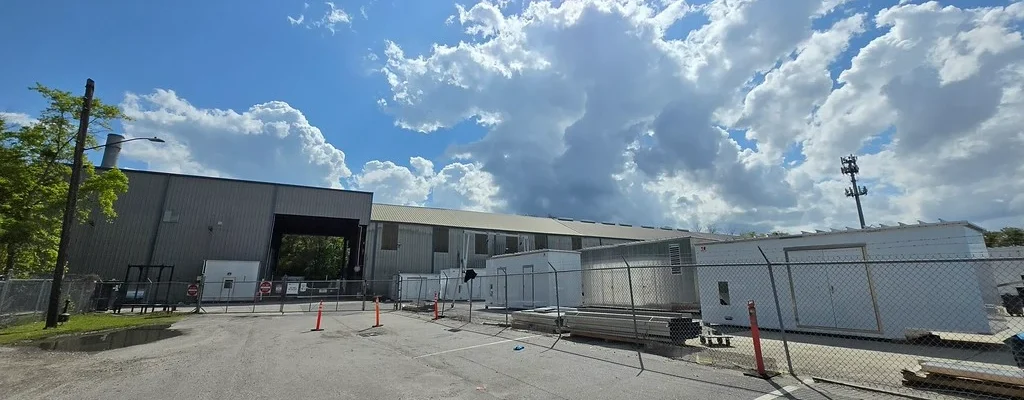
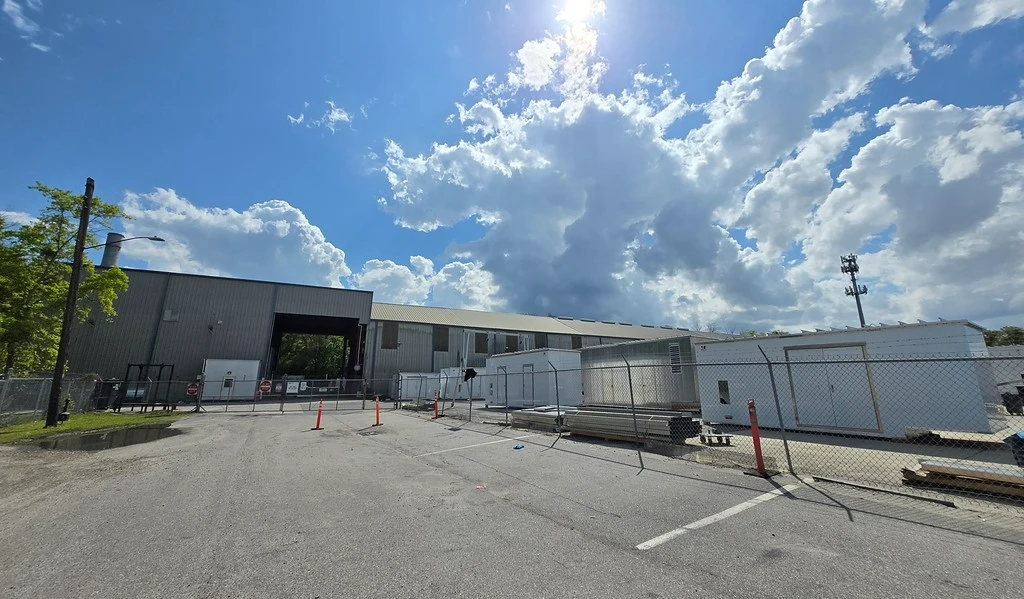
While the foundry ceased operations, its Bennett Street plant did not remain vacant for long. In 1991, Phoenix Products, Inc. was established, eventually occupying the former foundry grounds at 1727 Bennett St. The company shifted the site’s focus from traditional casting to modern fabrication, producing generator enclosures, fuel tanks, and fueling systems for a range of industries. In 2005, Phoenix Products was acquired by Ring Power Corp., further expanding its capabilities. At the time, Phoenix Products employed 26 people.
Over time, the site has continued to evolve. Recent developments include a new administrative building in 2022. Now a new chapter awaits. In 2025, Phoenix Products announced plans for a significant expansion that will see the company relocate from its current 89,000-square-foot facility to a new 231,000-square-foot state-of-the-art manufacturing facility at 1511 Zoo Parkway, Building 600. The expansion will allow the company to increase its workforce from 150 to 270 employees and implement multiple new production lines, achieving a 400% increase in manufacturing output capacity.

The company intends to retain ownership of the former foundry site, which is representative of a story of ambition, craftsmanship, adversity and adaptation. A story of Jacksonville itself.
A community story. A cultural record. A call to remember.
Jacksonville’s Gullah Geechee history lives in the land, the water, the neighborhoods, and the memories passed down through generations. Jacksonville’s Gullah Geechee Heritage brings those stories forward, rooted in place, shaped by community, and preserved for the future.

Jacksonville’s Gullah Geechee Heritage, a new book by Ennis Davis and Adrienne Burke, will be released by Arcadia Publishing on April 28, 2026.
“An invaluable resource combining extensive research, lived experience and generational knowledge inherited directly from within the culture, providing a variety of fresh insights into a truly unique mixture of faith, community, ingenuity and resilience that is definitively Gullah Geechee.”
— Ted Johnson, National Park Service, retired
Order your signed copy today
Preorder your signed copy of Jacksonville’s Gullah Geechee Heritage, available in hard and soft cover.