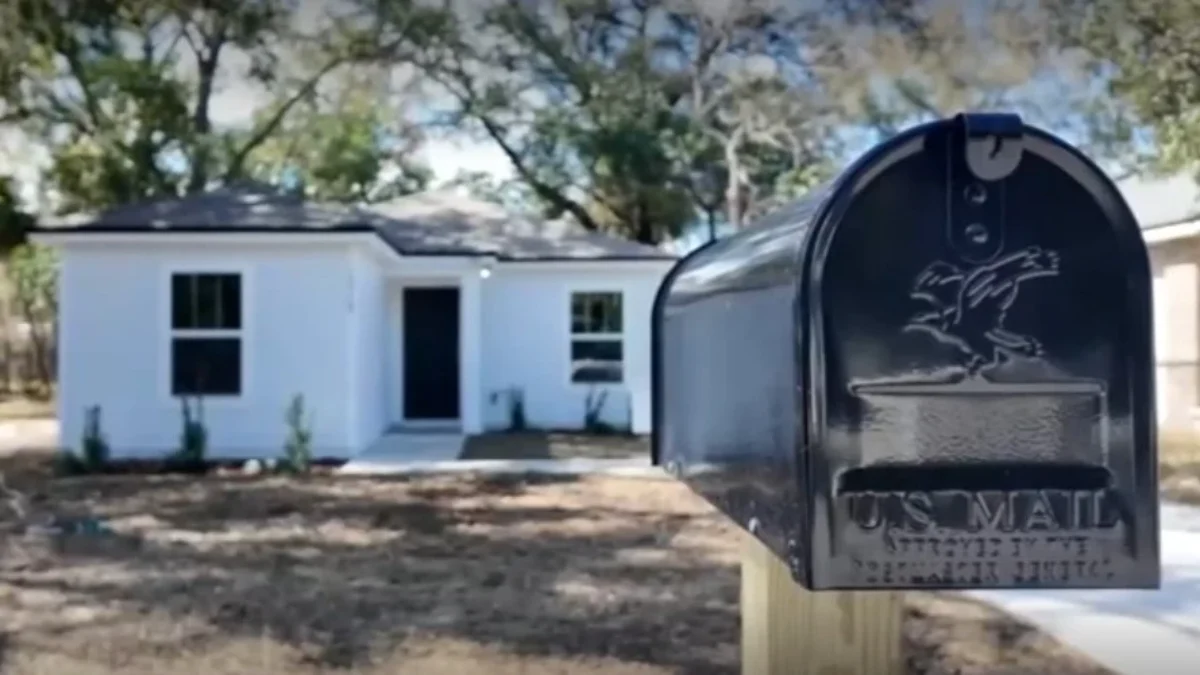
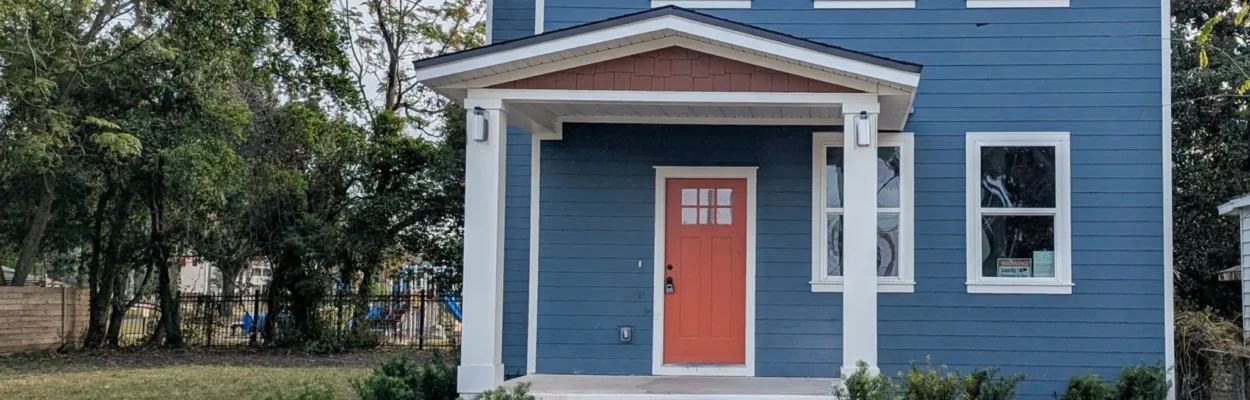
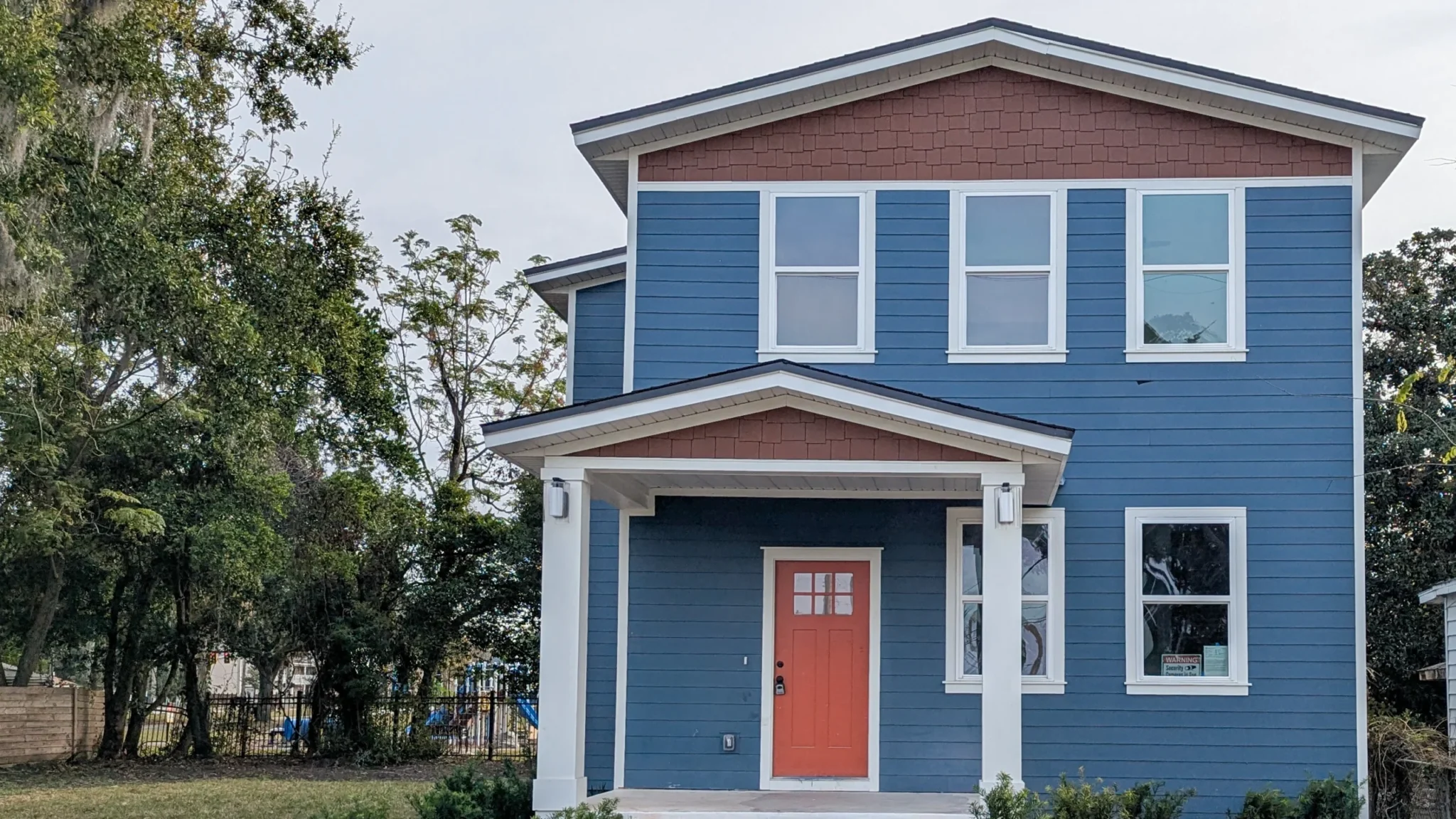
LIFT Jax purchased and renovated this home on Spearing Street on the Eastside in 2025 in order to sell it as an affordable housing property. | Will Brown, Jacksonville Today
Published on March 19, 2026 at 5:02 pm
Free local news and info, in your inbox at 6 a.m. M-F. Sign up for the Jacksonville Today newsletter.
The city of Jacksonville is launching a new housing program that aims to break ground this year on 10 affordable, single-family homes reserved for very low-income homebuyers.
City officials say the goal of the SHIP Single-Family Development Program is to use a mix of short-term construction loans and down payment assistance to increase homeownership among buyers making below 50% of the area median income.
Jacksonville Today thanks our sponsors. Become one.
That’s $35,900 per year for a single person household or $51,250 per year for a family of four, according to the latest data from the U.S. Department of Housing and Urban Development.
The mayor’s office made the project’s official announcement Thursday in a news release, less than a month after City Council unanimously approved legislation to reappropriate $2 million of Jacksonville’s State Housing Initiatives Partnership to fund the program.
Travis Jeffrey, city housing and community development director division chief, tells Jacksonville Today that $1.5 million will go toward the construction loans awarded to nonprofits contracted to build the homes. The final $500,000 will be set aside for down payment assistance to help buyers with the upfront purchase costs.
Jacksonville Today thanks our sponsors. Become one.
Jeffrey says the goal is to make the program self-sustaining, using the payback of the $1.5 million to begin successive rounds of homes.
“That’s the best bet. We get that back, (and) we just do it again and we do it again. Hopefully, we can find enough lots and find enough buyers,” Jeffrey told Jacksonville Today. “That’s going to be the trick.”
Finding help for homebuyers
The housing chief said Feb. 23 that the city has had sit-down conversations with First Coast Habitat for Humanity, the Jacksonville Community Land Trust and the Jacksonville Housing Authority, who he says have the land to execute the build and prospective buyers.
“They all have lots and a pipeline of buyers,” Jeffrey said. “I don’t want to slow the process, so if I can find some additional nonprofits that have lots, and we can find a pipeline of buyers for them as well, I’m open to any of them.”
According to the city, officials are finalizing a request for proposals to solicit construction bids for the homes.
“Our hopes are to have the 10 built by the end of this year,” Jeffrey said.
For now, the lots identified as viable for the first 10 houses are stand-alone, single-family builds. But Jeffrey said the city would not be opposed to adding townhome construction to the program in the future.
“We’re excited to increase affordable homeownership opportunities in Jacksonville and create new pathways for families to build generational wealth,” Mayor Donna Deegan said in the news release.
Since the Legislature updated the state SHIP law in 2021, city has seen an increase in SHIP funding. Jeffrey said the city now gets $7.5 million to $10 million annually. A coming deadline to use the funds on hand spurred the creation of the single-family home development program, he said.
Jacksonville has a suite of owner-occupied rehabilitation and buyer assistance programs on the books, many of which Jeffrey says close quickly every year because of high demand and limited funding.
Over the last five years, Jeffrey says, the city’s Headstart to Homeownership Program has awarded down payment assistance loans on 396 homes totaling $12.813 million. The program offers up to $25,000 for qualified buyers with 80% of the area medium household income or lower. More than half were on the Northwest and West sides of Jacksonville.
By Zip code:
- 32209: 86
- 32208: 77
- 32210: 50
- 32218: 38
- 32254: 26
- 32244: 22
- 32219: 15
- 32221: 13
- 32206: 13
- 32207: 7
- 32211: 5
- 32256: 5
- 32205: 4
- 32220: 4
- 32217: 3
- 32225: 3
- 32216: 3
- 32257: 2
- 32246: 2
- 32234: 1
- 32258: 1
The nonprofit Jacksonville Community Land Trust, which launched with the city’s endorsement in 2022, cut the ribbon on its first home this year.
Hurdles to homebuilding
Whether its existing home rehabilitation or new construction, Jeffrey says the biggest hurdle is securing the labor force.
“Our biggest challenge — always our biggest challenge — is getting enough contractors. The funny part is, there’s a million contractors in Duval (County),” he said. “The challenge with the city is it’s low-bid. So we put stuff out to bid. New contractors come in and if they bid one, two, three times and they don’t get any bids, they just won’t come back.”
Bill Lazar, a residential contractor and executive director of the St. Johns Housing Partnership, says for builders, the difficulty with building affordable housing is both the economics and workforce availability.
He says the housing industry is short of employees and struggling to find more people, still trying to recover from the Great Recession when 30% to 40% of small builders retired or switched careers. Until recent years, Lazar said, vocations technology programs were also underfunded.
Most construction lenders will provide small builders financing for only two to three houses at a time, which makes the business practicality of building low-income housing that less lucrative, less appealing.
“So when you have a builder trying to support his family, the big challenge ends up being, ‘Why am I going to build a 1,200 square foot house and make X-amount of dollars, when I can build a 2,200 square foot house and sell it and I can make more,’” Lazar told Jacksonville Today.
A city or government-funded construction loan program, Lazar says, provides a lane for many small builders to add affordable housing without overextending their lines of credit with their primary banks.
“If you make it easier for the small builder to participate, over a little bit of time, they may just be able to grow. They may be able to pick up a few more subs; they may be able to pick up an employee or two,” Lazar said. “If I build one and I’m successful, I’ll get another job. So they start thinking down the road a little bit — ‘could this be a small business line for me?’”
Beating the market
Lazar, who is also a past president of the Northeast Florida Builders Association St Johns Builders Council, says he built his career working in SHIP programs in multiple counties.
He says most counties have some form of down payment assistance program with housing counseling for the buyers. But what Jacksonville is doing by providing low-income construction financing to build single-family homes is not as common.
The demand is there, but Lazar says today’s median price points for homes can still put things out of reach for low-income buyers with down payment assistance.
A 2025 State of the Nation’s Housing report by the Harvard University Joint Center for Housing Studies shows buyers in Jacksonville needed a household income of $121,615 to afford the area’s medium home at the time: $390,000.
In February 2026, data from Northeast Florida Association of Realtors showed the median sales price of a single-family home in the six-county region was $388,500.
According to Lazar, St. Johns County’s down payment assistance program has a cap at $100,000 so buyers can afford the starting costs of owning a home. He says some programs will help buyers couple multiple down payment benefit programs.
“We keep hearing that young people are deciding they want to be renters instead of homeowners,” he said. “They’re not saying they don’t want to be homeowners. They’re saying I can’t afford the cost of buying a home because of whatever it is.”