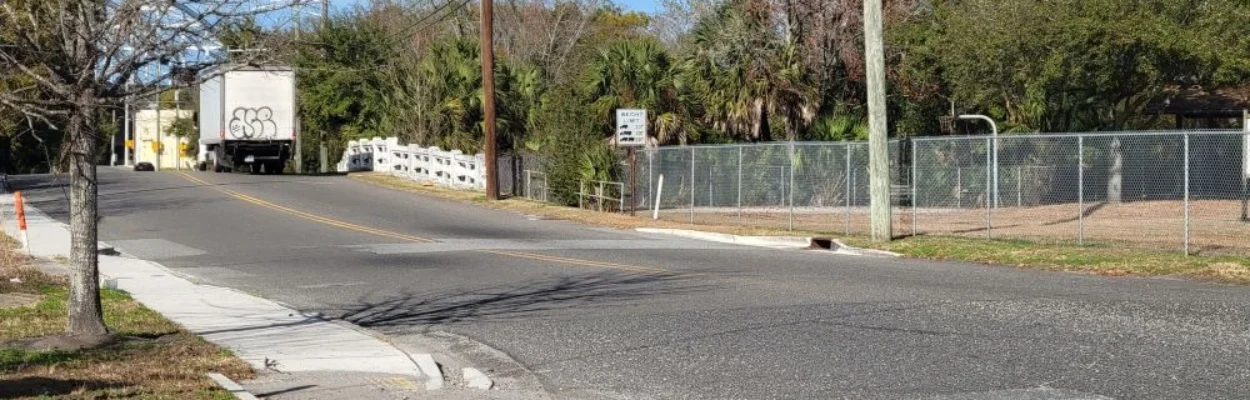
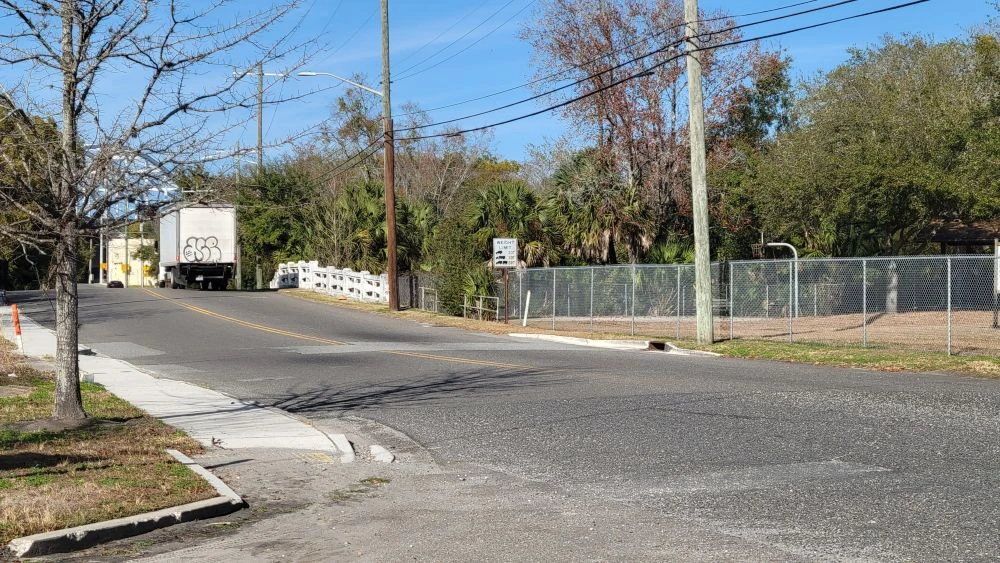
Empty lots line South Myrtle Avenue at McCoys Creek Boulevard in the Brooklyn neighborhood. | Dan Scanlan, Jacksonville Today
Published on February 18, 2026 at 2:31 pm
Free local news and info, in your inbox at 6 a.m. M-F. Sign up for the Jacksonville Today newsletter.
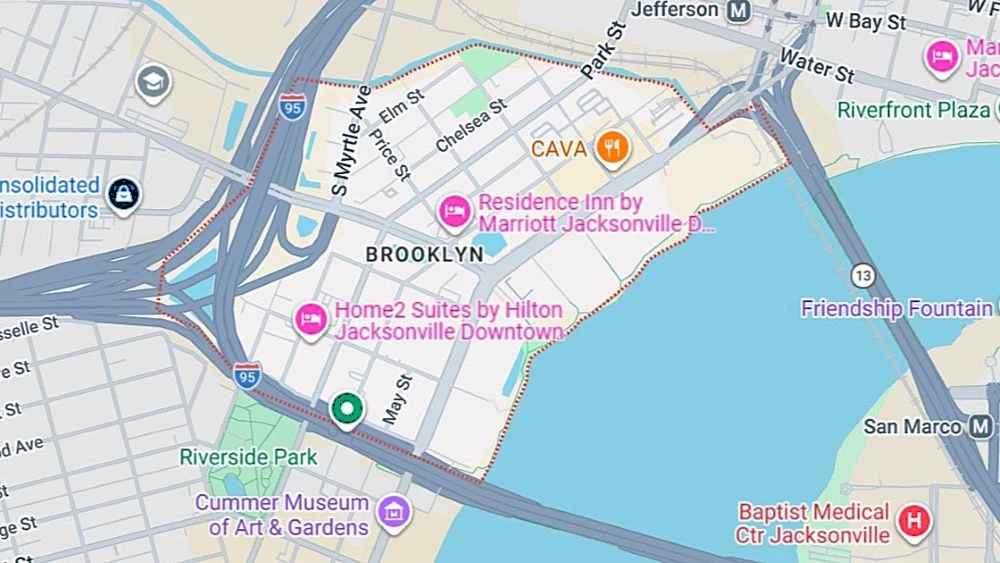
Q: Jacksonville has many community names, from Riverside and Five Points to Glynlea, Windy Hills and Sherwood Forest. Some, like Brooklyn, are names they’ve held for a century or longer.
Jacksonville Today reader Henri M. wonders why Brooklyn, nestled on McCoys Creek north of Riverside, has the same name as a New York City borough:
Jacksonville Today thanks our sponsors. Become one.
“Who … called the area where Blue Cross Blue Shield is ‘Brooklyn?’”
“It would properly be Riverside, or at most Riverside North, but Brooklyn never existed until I read about it in the last year or two,” he says.
A: Actually, Brooklyn has existed by that name for a century and a half, according to historical websites and local historians. It is a historic Black neighborhood that attracted freed slaves after the Civil War and later was destroyed through disinvestment and gentrification.
The Visit Jacksonville website states that a garrison of Black and white Union soldiers were stationed in Brooklyn for several years after the Civil War.
Jacksonville Today thanks our sponsors. Become one.
“Some of the Black soldiers remained or returned to live in the area and were joined by former slaves, making the northwestern section of Brooklyn a Black residential community,” the website says.
The Jaxson offers an even deeper dive into the community’s history.
A man named Philip Dell got an 800-acre Spanish land grant in 1801 and started a plantation on the south side of McCoys Creek, west of the St. Johns River, according to an article in 2022 by Ennis Davis, a sixth-generation Floridian with more than 20 years’ experience in planning, architecture and real estate.
The area was known as Dell’s Bluff because of 16-foot bluffs along the river, where enslaved Africans cultivated corn and cotton. During the Civil War, it was one of a few U.S. Colored Troops regiment campsites during the Union’s occupation of Jacksonville.
“The former plantation was acquired by Confederate veteran Miles Price in 1868,” Davis writes. “Price sold the southern 500 acres of the plantation to John Murry Forbes for $10,000 in gold, and Forbes went on to develop his acquisition as the neighborhood of Riverside. In 1869, Price platted the northern portion of the former plantation as the neighborhood of Brooklyn.”
“Why he named it that, I don’t know,” Davis tells Jacksonville Today.
With lots of rail lines nearby, Brooklyn quickly became a destination for freed slaves and their families, among them veterans of all-Black units in the U.S. Army during the Civil War.
One home, a boarded-up, 770-square-foot pine cottage on Chelsea Street, has often been called the “Buffalo Soldier’s House.” Davis writes that it was built between the late 1860s and 1885. It now is the last of its kind in a community annexed into Jacksonville in 1887, along with its 1,000 residents.
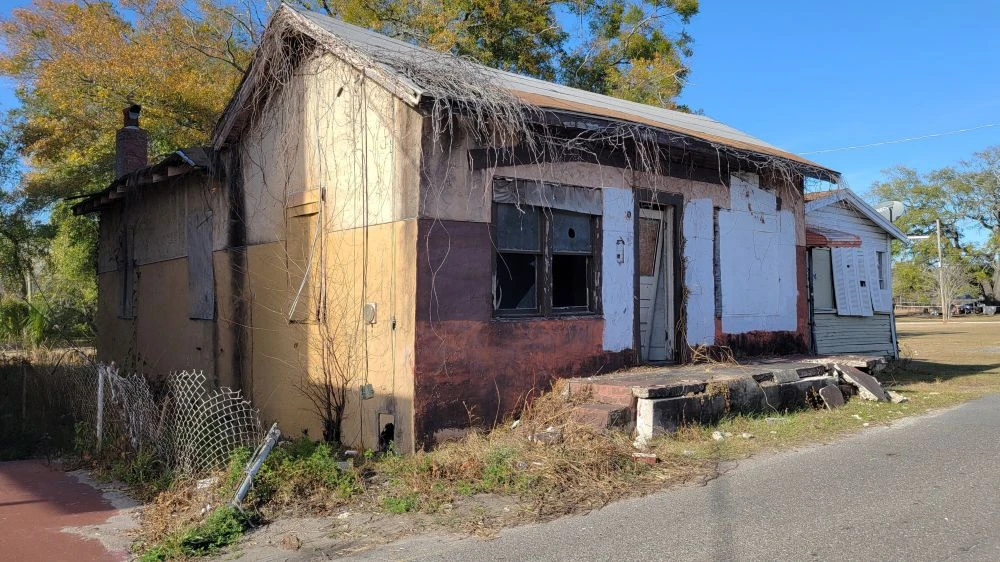
But Brooklyn would suffer in the years to come. In the 1930s, the area fell victim to redlining, the systemic denial of financial services such as mortgages and insurance to residents of mostly Black and minority neighborhoods.
Brooklyn reached a high population of 5,000 residents by 1950, but many of its residents — as in other low-income communities — were removed to allow for the construction of Interstate 95. The first section of the interstate opened in early 1960 between Lake Forest and Riverside.
Ruben Acosta, an architectural historian with the Florida Bureau of Historic Preservation, lists Brooklyn alongside Riverside, Springfield, LaVilla and the Eastside as historic districts.
“What makes the Eastside unique is it has preserved its historic collection of buildings, versus LaVilla and Brooklyn that were eviscerated by highways and urban renewal,” Acosta said in 2023, during a National Register Review Board meeting. “They were able to better weather the storms. The fascinating thing is much of this loss of historic resource occurred relatively recently in the ’80s and ’90s, not the ’50s and ’60s.”
Today, the community is attracting rampant development along its Riverside Avenue corridor, with hotels, restaurants, apartment complexes and shopping centers built in recent years.
Yet drive past Park Street toward I-95, and many former homesites have become grassy lots. Some hold older homes or shuttered stores. All are signs of the neighborhood’s long history with the same name: Brooklyn.
Jacksonville Today reporter Will Brown contributed to this story.