Published on February 4, 2026 at 10:56 am
Free local news and info, in your inbox at 6 a.m. M-F. Sign up for the Jacksonville Today newsletter.
The story of Jacksonville can be tasted as much as it can be told. Especially amongst Jacksonville’s Gullah Geechee community. The Gullah Geechee descended from enslaved Central and West Africans who worked the plantations of the Lowcountry in the coastal Southeastern U.S. After the abolition of slavery, the Gullah Geechee settled in remote areas, in particular the barrier islands stretching from North Carolina to Northeast Florida, where they formed a unique culture and strong communal ties that remain today.
Food has always been at the heart of Gullah Geechee life. This is certainly true in Jacksonville, where foodways are a bridge between land, water, ancestry and memory. Drawing from West and Central African, Native American, European, and Caribbean traditions, the region’s cuisine tells a story of creativity born from limited resources and of community sustained through flavor. Gullah Geechee food traditions remain an expression of identity and resilience in Jacksonville.
Jacksonville Today thanks our sponsors. Become one.
Gullah Geechee foodways in Jacksonville are more than meals. They are living archives of survival, celebration, and community care.
In honor of Black History Month, here is the story behind six traditional Gullah Geechee-inspired meals in Jacksonville.
1. One pot dishes

Gullah Geechee foodways are an important part of Jacksonville’s culture. Many classic Southern dishes served locally are derived from Gullah Geechee culture. One-pot dishes and other recipes featuring shellfish and locally cultivated rice and fresh vegetables, forming a hodgepodge of flavors, are a cultural foundation of Gullah Geechee cuisine. Many of these one-pot dishes involve the deep frying, boiling, steaming and baking of seafood and food types consistent with those received in weekly plantation rations. Sometimes spelled purloo, pilau, or pirlou, perloo is an example of a traditional one-pot rice dish with West African origins that is central to the cuisine in Jacksonville’s Gullah Geechee community.



Jacksonville Today thanks our sponsors. Become one.
2. Garlic crabs

Another popular one-pot dish featuring local shellfish, a variant of the well-known seafood boil, garlic crabs are cooked in a melted garlic butter sauce with sausage, corn, eggs and potatoes. Garlic crabs can be found across the coastal Southeast, but Jacksonville is the world capital of the dish, which is served up at dozens of local crab shacks and restaurants. The majority of businesses specializing in garlic crabs can be found in Jacksonville’s historic Northside neighborhoods where tributaries, including the Trout and Ribault Rivers, are home to numerous crab traps.
3. Boiled peanuts

Boiled peanuts, once known as “goober peas,” have deep roots in Southern folk culture and Gullah Geechee history. Brought to North America by enslaved Africans in the 18th century, peanuts were initially cultivated in small garden plots for family use. When crops were abundant, communities gathered for lively “peanut boils,” celebrating with conversation, music, and food. By the early 20th century, peanuts became a Southern staple. Today, across Jacksonville, this tradition lives on with boiled green peanuts available at roadside stands, farmers markets, flea markets, and local stores, continuing to connect past and present through a simple, shared delicacy.
4. Barbecue & Jacksonville-style mustard-based barbecue sauce

The word “barbecue” comes from barbakoa, an Indigenous Taino term for open-fire grilling. Indigenous peoples of Florida, such as the Timucua, West and Central Africans also practiced open-pit cooking, roasting meat and fish over flames. Learning how to barbecue hogs from Caribbean natives, the Spanish are said to have introduced the hog to Florida and the South around 1521. Enslaved Africans blended these traditions, shaping the regional barbecue styles known today, including a Jacksonville-style of mustard-based barbecue sauce.
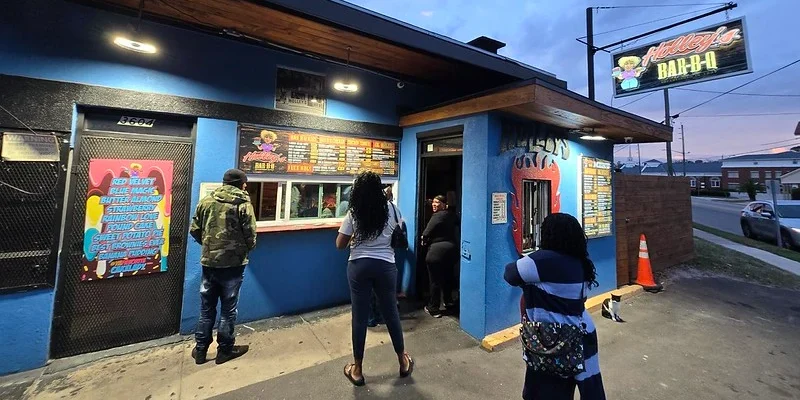
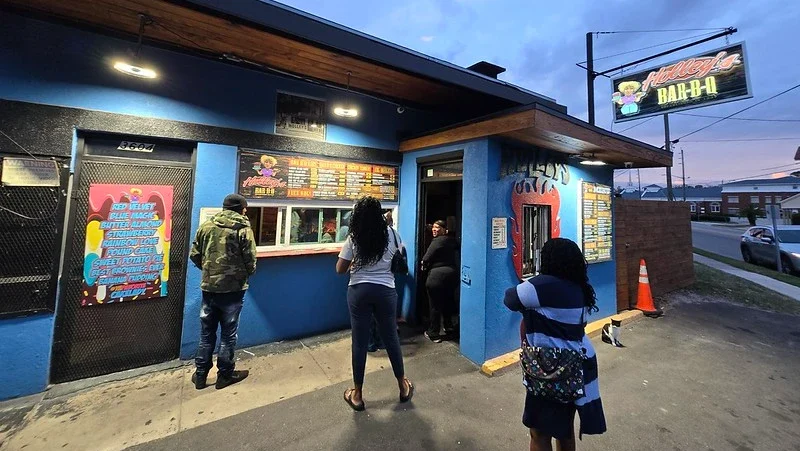
After World War II, the rib sandwich or plate became a local favorite. The sandwich consisted of three or four ribs served between slices of bread and mustard-based barbecue sauce. Eaten by hand, it remains a signature dish at many local legacy barbecue restaurants, including Holley’s Bar B Q, the city’s oldest restaurant.
5. Soul food

Soul food’s roots trace to West African cuisine, where staples like okra and rice originated before being brought to the Americas through the transatlantic slave trade. Blending African traditions with available Southern ingredients, it became a hallmark of African American culture. After Reconstruction, freedmen settling in Jacksonville brought these flavors, establishing eateries serving dishes that remain central to local culinary life. This culinary history lives on in local restaurants like Blu Diner, Soul Food Express, and Uncle Gene’s Soul & Seafood.
6. Shrimp and grits

Originally created by Native Americans through the grounding of corn, grits were passed on to enslaved Africans as a part of their food allowance provided by plantation owners. Maximizing local resources along the coast, enslaved Africans and their Gullah Geechee descendants caught and used shrimp and fish in a variety of ways, including combining them with grits. What was once a simple Gullah meal prepared by using food allowances, natural seasonings and readily accessible Lowcountry seafood is now a staple of Southern cuisine and a pricey dish on the menu of Jacksonville’s trendy restaurants.
Coming Soon: Jacksonville’s Gullah Geechee Heritage
A Community Story. A Cultural Record. A Call to Remember.
Jacksonville’s Gullah Geechee Heritage, a new book by Ennis Davis and Adrienne Burke, will be released by Arcadia Publishing on April 28, 2026.

Jacksonville’s Gullah Geechee history lives in the land, the water, the neighborhoods, and the memories passed down through generations. Jacksonville’s Gullah Geechee Heritage brings those stories forward, rooted in place, shaped by community, and preserved for the future.
“Gullah Geechee is a foundational culture for the United States influencing everything from our foodways and music to the way we speak. It has a descendant community that numbers in the hundreds of thousands internationally. Many of them contributed greatly to the economic engine that has fueled Jacksonville’s growing metroplex since Reconstruction. However, there are no universities or colleges in Florida (or elsewhere in the Gullah Geechee Corridor) that consistently offer courses in Gullah Geechee studies and none that provide a major or degree in the field. Works of public history like Davis and Burke’s “Jacksonville’s Gullah Geechee Culture” that successfully mine Florida’s public archives, government records, oral histories and scholarly publications demonstrate that a foundation for a teachable canon and generative scholarship about the centuries-long history of the Gullah Geechee people of Northeast Florida exists — and should be endowed.”
— Heather L. Hodges, Former Executive Director, Gullah Geechee Cultural Heritage Corridor (2017-2020)
Order your signed copy today
Preorder signed copies of Jacksonville’s Gullah Geechee Heritage, available in hard and soft cover.