

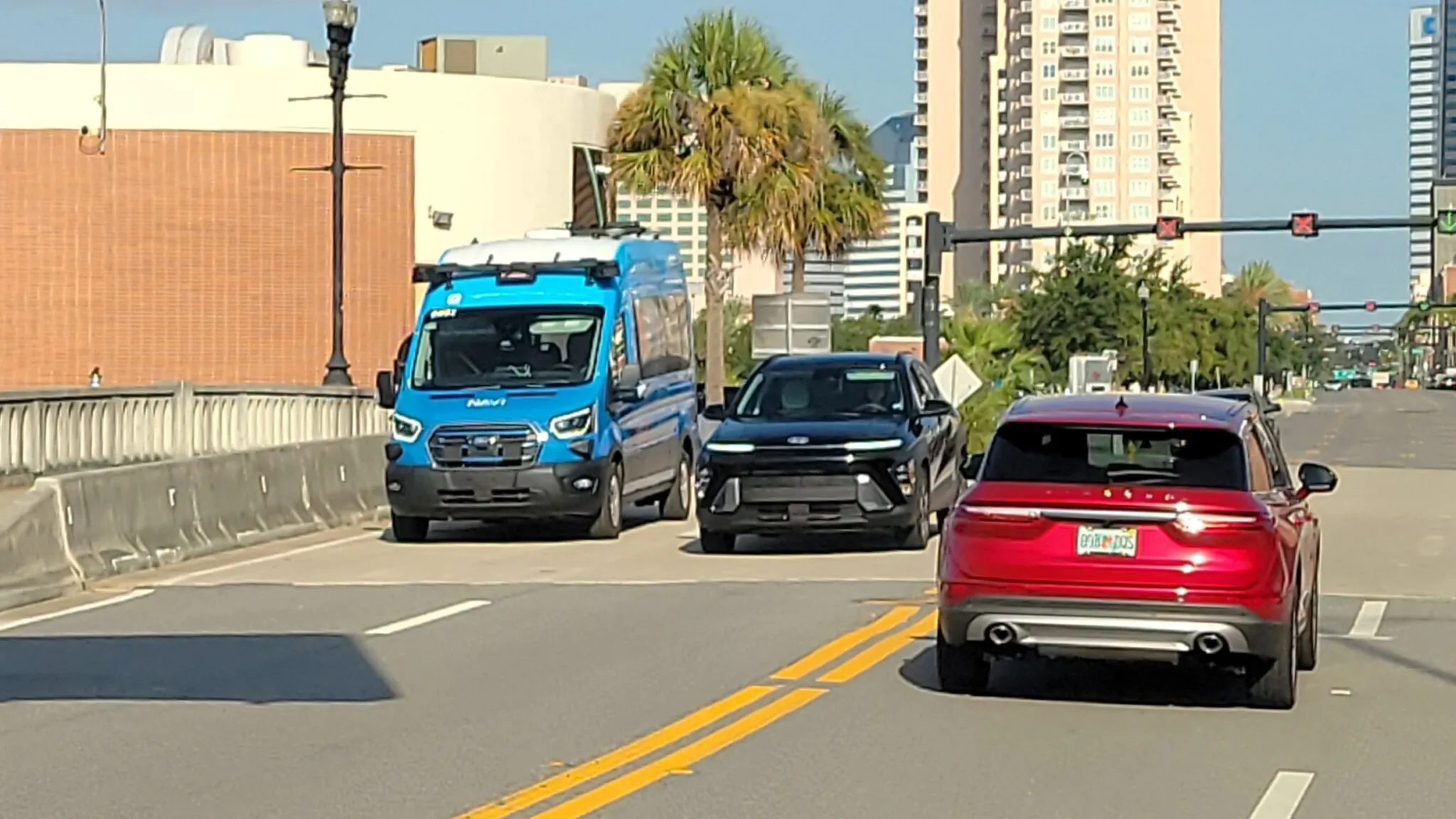
A NAVI autonomous shuttle moves through traffic on East Bay Street in Downtown Jacksonville. | Dan Scanlan, Jacksonville Today
Published on January 21, 2026 at 3:39 pm
Free local news and info, in your inbox at 6 a.m. M-F. Sign up for the Jacksonville Today newsletter.
Jacksonville’s autonomous NAVI transit system could be heading to the Beaches.
Nat Ford, CEO of the Jacksonville Transportation Authority, said Wednesday that a move to the Beaches is natural for the 6-month-old Downtown system.
Jacksonville Today thanks our sponsors. Become one.
“It’s just, I think, a natural development that we would look at autonomous vehicles that can operate in the Beaches area during tourism season,” Ford told Jacksonville Today.
NAVI conceivably could replace the JTA’s free, on-demand Beach Buggy ride service in Jacksonville, Neptune and Atlantic Beaches, Ford said.
“I think that’s a great opportunity, and folks are recognizing that this mobility innovation is coming and how they can leverage it for their mobility needs for their community,” he said.

Jacksonville Today thanks our sponsors. Become one.
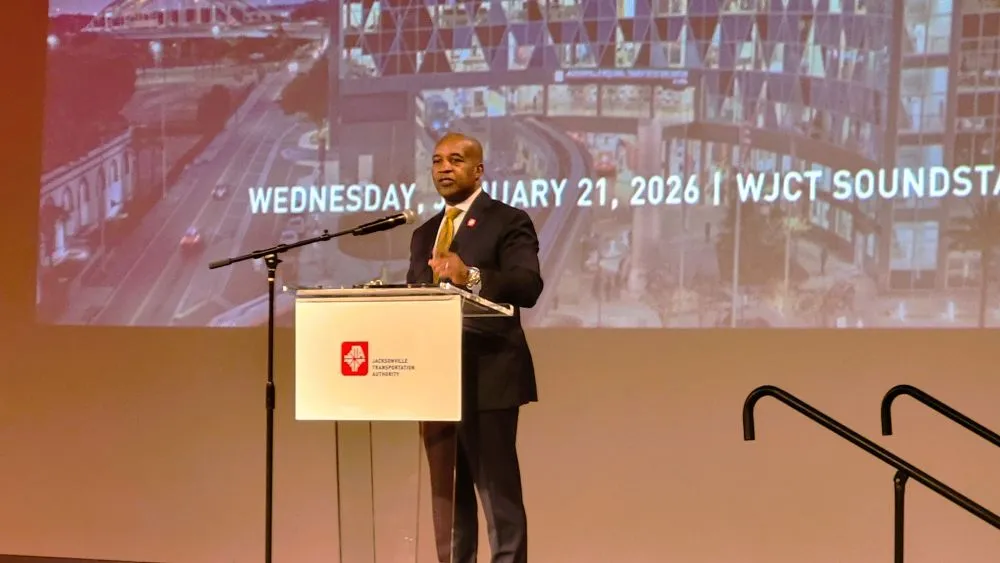
Ford made the comments as he presented JTA’s 2026 State of the Authority report.
The NAVI system — for Neighborhood Autonomous Vehicle Innovation — is the nation’s first autonomous public transportation service, stretching from LaVilla to the Sports and Entertainment District.
The shuttles are the first phase of a larger plan known as the Ultimate Urban Circulator, or U2C, which will send autonomous vehicles to the Southbank, San Marco, Brooklyn and Riverside.
JTA launched NAVI on June 30, and fares were free for the first three months, before rising to $1.75 in October.
JTA attracted just over 100 riders per day in its first three months and converted NAVI back to free ridership again on Dec. 15.
NAVI’s slow six months
NAVI currently runs on a 3.2-mile loop between LaVilla and EverBank Stadium. A JTA staffer sits on each of 14 Ford e-Transit vans to take over if necessary.
Ford said the service will see a boost when the University of Florida starts programs at its new graduate campus in the Lavilla area.
NAVI will benefit further as transit officials from other cities come to learn about NAVI — and when Holon begins to manufacture autonomous vehicles in Jacksonville, partly for the U2C system.
K. Jane Williams, a former Federal Transit Administration administrator, praised the U2C project during Wednesday’s State of the Authority presentation. She said the U2C was one of three innovative transit-oriented programs to get federal funding.

“One of the key reasons for their success was JTA’s attention to the fact that we had written in innovation as a factor in selections, and they paid attention to that, and that was a big part of their success in all of our funding programs,” Williams said. “So when JTA brought the U2C project to our attention, we listened — we were interested, and we wanted to collaborate with our trusted partner and support them in taking on this bold and innovative step because we wanted them to succeed. JTA had delivered, so we looked for ways to help them get this off the ground.”
The U2C’s second phase will convert the existing 2.5-mile Skyway system in Downtown and San Marco into an elevated roadway for the Holon people movers. Ramps will allow them to travel from Bay Street to the overhead roadways, including stops at the Jacksonville Regional Transportation Center at LaVilla and across the Acosta Bridge to the Southbank.
The $246 million second phase will be funded through the extension of the local option gas tax. No construction date is set yet.
The U2C’s third phase will put the shuttles on streets in the Brooklyn and Riverside areas, with an estimated $100 million price tag. No funding source has been identified.
JTA’s future
Ford also announced Mobility Visioning Plan 2050, a roadmap for Jacksonville’s transportation future, which will include rail, biking and other modes. He said the plan is in its early stages, with no specifics yet as JTA prepares to hold public meetings to learn what residents want from JTA in the future.
The authority just held six regional town meetings to hear any concerns about its service.
After getting pushback from customers, JTA backed off on canceling its Connexion Plus door-to-door ride service for customers with disabilities. Instead, starting Feb. 1, Connexion Plus passengers will see a fare hike based on miles traveled, plus a new limit of 46 trips per month to accommodate the expected number of trips during longer months, JTA said.
The JTA board is set to vote on that change Thursday.