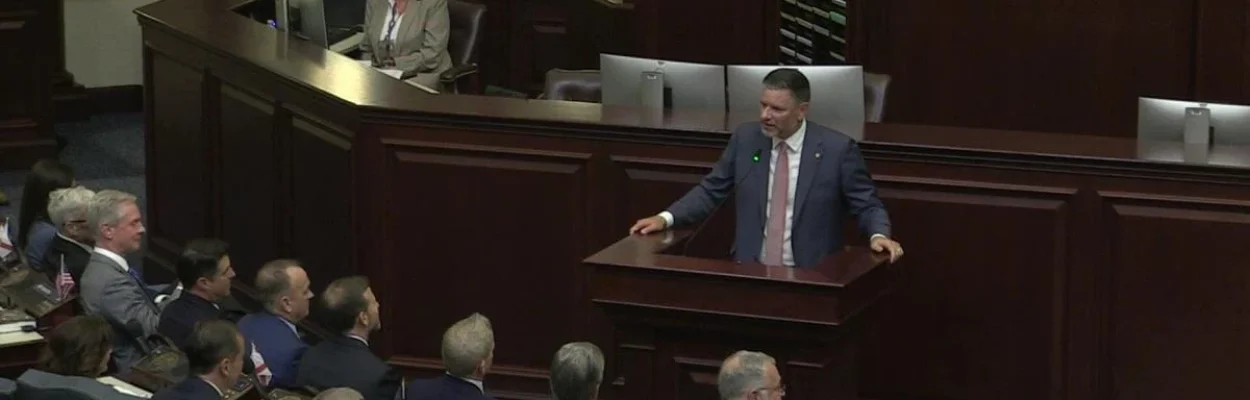
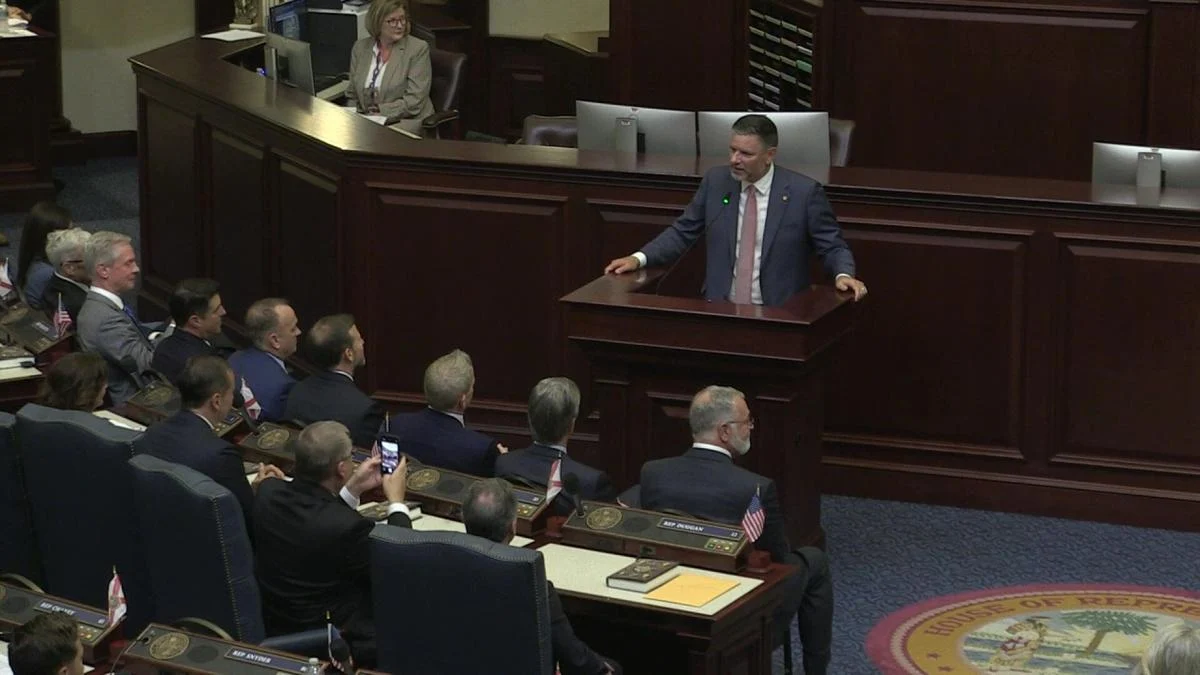
Rep. Sam Garrison, R-Fleming Island, was formally designated Thursday, Oct. 9, 2025, to become the next Florida House speaker. | Tom Urban, News Service of Florida
Published on January 9, 2026 at 1:55 pm
Free local news and info, in your inbox at 6 a.m. M-F. Sign up for the Jacksonville Today newsletter.
While property tax cut proposals will take center stage in the 2026 legislative session, Florida House Speaker-designate Sam Garrison expects lawmakers to debate how the state regulates artificial intelligence and data centers.
“I think this year, outside of property tax, I think AI policy is going to be probably the biggest area of tension that we’re going to see because it doesn’t fall on traditional partisan lines,” Garrison, a Republican state representative for Clay County, said during an interview with WJCT News 89.9’s First Coast Connect.
Jacksonville Today thanks our sponsors. Become one.
“You can have very conservative Republicans and very liberal Democrats who might find common cause on — maybe not what to do with AI — but how it should be done,” he said.
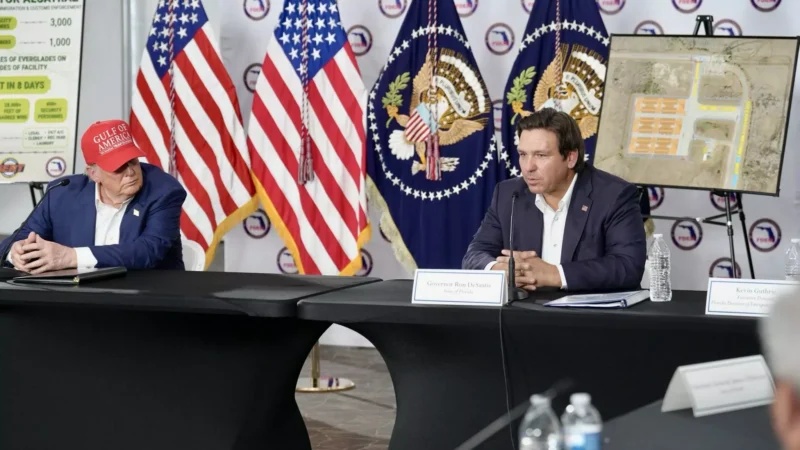
Garrison’s comments come as Florida Gov. Ron DeSantis has become more vocal on his desire to regulate AI at the state level and will be one of his priorities when the Legislature convenes Tuesday for the 60-day session in Tallahassee.
In December, DeSantis proposed what he’s calling a Citizen Bill of Rights for Artificial Intelligence. It would institute new consumer protections for AI users and regulate the development of data centers in Florida that power and store information for AI companies like Open AI, Meta, Amazon and others.


Jacksonville Today thanks our sponsors. Become one.
The governor’s proposal puts him at odds with a Dec. 11 executive order by President Donald Trump that says a national AI policy should protect the industry from a “patchwork” of state level regulations.
Trump’s order also calls for a review of AI state law to establish an AI Litigation Task Force to challenge state laws that are “inconsistent” with the order’s idea to “enhance the United States’ global AI dominance through a minimally burdensome national policy framework for AI.”
Garrison, an ally of DeSantis, said in the interview Dec. 29 that he sometimes differs with the governor on “substantive policy” positions. But it was not clear during the interview how much separation he has with DeSantis on regulating AI.
Garrison said he doesn’t know if he’s as skeptical as DeSantis on data centers and AI issues, “but I think he has some very, very good points.”
“The governor’s really big right now on artificial intelligence. He has a very strongly held belief that AI is probably trending in a direction that is not good for Floridians,” Garrison said. “I’m not sure that I agree or disagree with him on that. But that’s an issue that we’re going to see, I think, some debate.”
Garrison, 49, said there will need to be new regulations in order to ensure AI data centers developed in Florida do not put strain on local water resources and electric grids and protect communities where they’re built.
A report released in December 2024 by the U.S. Department of Energy analyzed the increase in electricity demand from data centers. The report found that data centers were responsible for 4.4% of the U.S. total electricity consumption in 2023, and that number is expected to jump to 12% by 2028. Large scale data centers also can need millions of gallons of water annually to operate.
“If you’re going to have a data center, it has got to be extraordinarily regulated to make sure that you’re not adversely impacting the quality of life for Floridians,” Garrison said. “I am not a big proponent of telling people what they can and can’t do on their land. So if you’re a property owner and Amazon wants to come to town and says they want to build a data center, sure. Go for it. But you’re going to have to be regulated like heck to make sure that nothing on that property is going to adversely affect the residents of a community — whether it’s from electrical use, whether it’s from water. Things of that nature.”
Current Florida House Speaker Daniel Perez, who Garrison is slated to succeed in leadership after the 2026 midterm elections, recently told the News Service of Florida that he disagreed with the governor’s approach “diminishing the president’s opinion” on AI regulation.
Perez said in the interview that he doesn’t think states should be involved in national technology policy, but he’s open to having a conversation about AI.
In addition to supporting some state regulations, Garrison appeared skeptical in the interview about offering state-level incentives for data centers.
“You don’t see data centers coming up in Florida right now. A lot of other states have provided incentives to attract that sort of investment,” Garrison said. “Florida will just never do that. It’s just not how we roll.”
A study prepared by PricewaterhouseCoopers for the industry association The Date Center Coalition shows Florida is ranked third nationally in 2023 for the number of jobs supported by data centers — 335,800 positions.
Some states offer millions in tax credits and other incentives annually to support data center development. And there are some county and local-level incentives in Florida for data center development.
For example, Sumter County Economic Development advertises on its website cash incentives of up to $3 million over three years for data center projects with a minimum capital investment of $10 million and at least 100,000 square feet.
Garrison’s future role
The interview on First Coast Connect also covered Garrison’s political role as speaker-designate in helping Republicans get elected in this year’s midterm elections; his predictions on the coming property tax debate and his expectation that any changes will not affect the state sales tax; and his overall philosophy on governance.
Listen to the full interview here.