Fairfield saw the demolition of entire blocks of homes for construction of expressways and the Matthews Bridge.
Published on December 16, 2025 at 1:50 pm
Free local news and info, in your inbox at 6 a.m. M-F. Sign up for the Jacksonville Today newsletter.
Tucked along the western bank of the St. Johns River, just northeast of Downtown Jacksonville, the neighborhood of Fairfield holds a history far richer than its modest footprint suggests. Once a thriving hub of entertainment, innovation, and ambition, Fairfield played a formative role in Jacksonville’s early growth. Over time, however, waves of industrialization and large-scale infrastructure projects reshaped the area, leaving behind a layered legacy that mirrors the broader story of urban development in Northeast Florida.
Fairfield: A vision born after the Civil War

Fairfield’s story begins in the aftermath of the Civil War, during a period when Jacksonville was rapidly rebuilding and redefining itself. In the late 1860s, Jacob S. Parker, a businessman from New York, acquired more than 150 acres of riverfront land east of the city. Parker saw opportunity where others saw marshland and distance. At a time when Jacksonville was still relatively compact, Parker envisioned a self-sustaining community that could serve as both a destination and a gateway to the city.
Jacksonville Today thanks our sponsors. Become one.
Unlike many speculative developments of the era, Parker’s plans for Fairfield were deliberate and multifaceted. He promoted the area as a place for leisure, commerce and transportation, an ambitious combination that would soon set Fairfield apart from other emerging suburbs.
Home to Duval County’s first toll road

One of Parker’s most lasting contributions to the area was transportation infrastructure. In 1873, he helped establish what became one of Duval County’s first paved roads, running along the route now known as Talleyrand Avenue. To fund its construction and maintenance, Parker implemented a toll system, among the earliest in the county.
This roadway dramatically improved access between Jacksonville and outlying areas such as Panama Park and Fairfield, accelerating development and commerce. In an era before automobiles, such infrastructure was transformative. The road not only connected Fairfield to the city but also symbolized Jacksonville’s outward expansion during Reconstruction.

Jacksonville Today thanks our sponsors. Become one.
Florida’s first fairgrounds

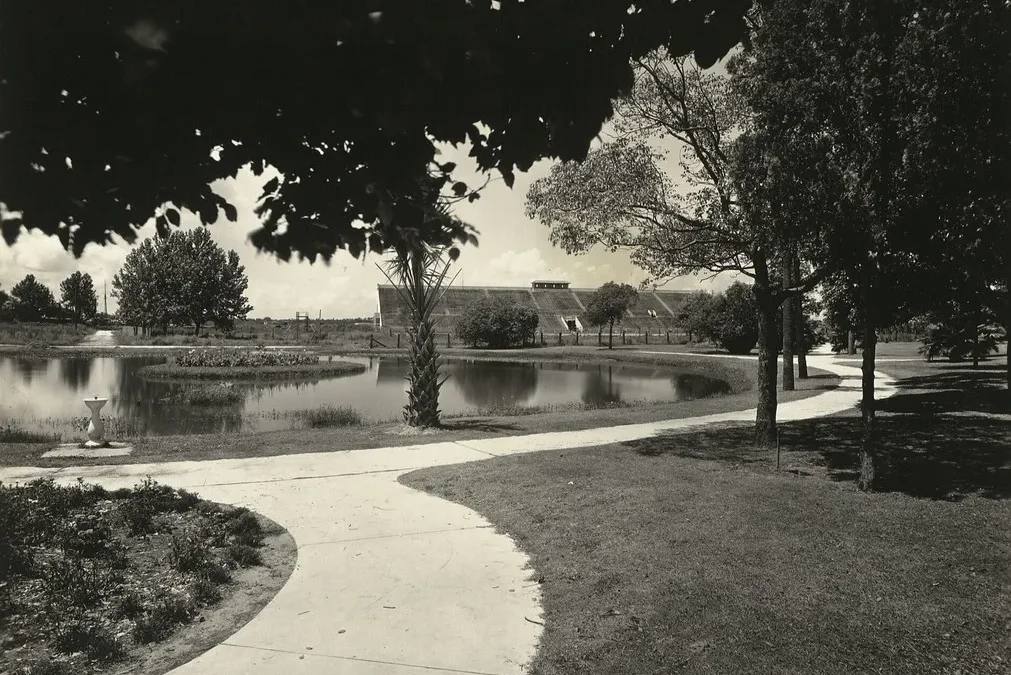
Perhaps Fairfield’s most notable claim to fame came in 1876, when Florida’s first state fairgrounds were established on the northern portion of Parker’s property. The fairgrounds featured exhibition halls, agricultural displays and a horse racing track, quickly becoming a major attraction for residents across the region. For a time, Fairfield was Jacksonville’s primary entertainment district. Visitors arrived by riverboat and carriage to attend fairs, races and festivals. Hotels, restaurants and saloons sprang up nearby, creating a lively commercial strip that rivaled Downtown in popularity. This period marked Fairfield’s golden age, when the neighborhood buzzed with activity and optimism.
A town of its own

The success of the fairgrounds and surrounding development led Fairfield to incorporate as an independent town in 1882. Jacob S. Parker became its first mayor, overseeing a community that functioned with its own governance, services and civic identity. Despite this independence, Fairfield’s fate was closely tied to Jacksonville’s growth. By 1887, with a population of just over 500 residents, Fairfield was annexed into the city of Jacksonville. The move reflected a broader trend of consolidation as Jacksonville expanded its municipal boundaries to encompass nearby settlements. Fairfield’s brief chapter as a standalone town ended, but its influence on the city’s early development endured.
From entertainment to industry

In 1908, Fairfield became the home of Kalem Studios, the first company to open a permanent silent film studio in Jacksonville. This studio made the first adaptation of Dr. Jekyll and Mr. Hyde. Its success led to Jacksonville’s boasting more than 30 movie studios by 1916. However, by 1920, Fairfield’s role began to change. Entertainment gradually shifted elsewhere, and the neighborhood’s riverfront location made it increasingly attractive for industrial uses. Rail lines, docks and warehouses replaced silent film studios and racetracks. A major milestone came in 1924, when the Ford Motor Co. opened an assembly plant in Fairfield. The massive facility brought jobs and economic activity, cementing the neighborhood’s transition into an industrial powerhouse. For decades, the Ford plant stood as a symbol of modern manufacturing and Jacksonville’s integration into national industrial networks. Today, Fairfield maintains its dominance as an important maritime industrial center in the heart of the city.
Bridges, expressways, and disruption

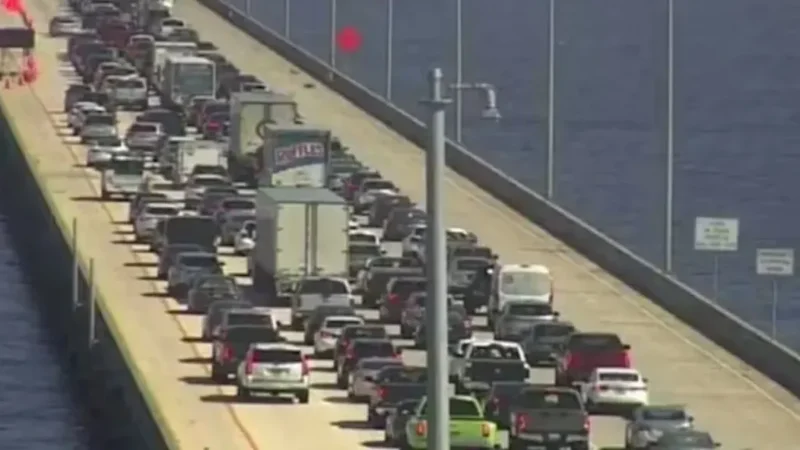
While industry brought opportunity, mid-20th century infrastructure projects would profoundly alter Fairfield’s landscape. The construction of the Mathews Bridge in 1953 connected Arlington to Downtown Jacksonville, with its approaches cutting directly through Fairfield. Soon after, additional expressways and the construction of the Hart Bridge followed. These projects improved regional mobility but came at a steep local cost. Entire blocks of homes and businesses were demolished, severing neighborhood connections and erasing much of Fairfield’s historic commercial district. What remained was a fragmented community shaped more by transportation corridors than by neighborhood streets.
A story often overlooked

Today, Fairfield is rarely mentioned alongside Jacksonville’s more prominent historic neighborhoods. Yet its legacy is woven into the city’s DNA. This Eastside neighborhood was a testing ground for early infrastructure, a pioneer of organized entertainment in Florida, and a key site in Jacksonville’s industrial rise. While few physical remnants of Fairfield’s earliest days remain, its story offers important lessons about growth, ambition and the unintended consequences of progress. As Jacksonville continues to grapple with questions of redevelopment, equity and historic preservation, Fairfield stands as a reminder that even small neighborhoods can leave an outsized imprint on a city’s history.