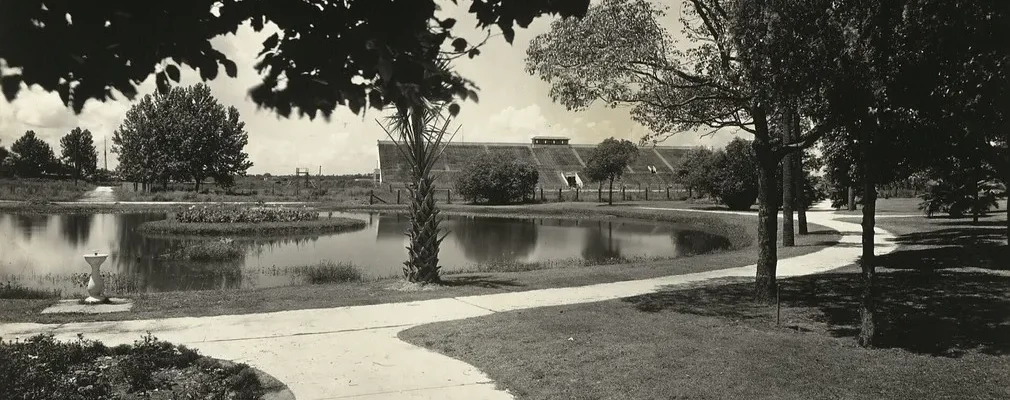

Fairfield Park was eventually replaced by the football stadium.
Published on December 9, 2025 at 11:18 pm
Free local news and info, in your inbox at 6 a.m. M-F. Sign up for the Jacksonville Today newsletter.
Here is a trip down memory lane, highlighting five early 20th century Jacksonville parks that don’t exist anymore.
East Jacksonville Park and Fairfield Park

For decades before the rise of Jacksonville’s Sports & Entertainment District, the neighborhoods of Fairfield and East Jacksonville thrived east of Downtown and Hogans Creek. These communities were home to two of the city’s earliest public parks: East Jacksonville Park and Fairfield Park.
Jacksonville Today thanks our sponsors. Become one.
East Jacksonville Park served residents of East Jacksonville, a former independent city annexed by Jacksonville in 1887. Developed in 1910, the park occupied a full city block bounded by Adams, Monroe, Van Buren, and Georgia streets. Known also as Palm Square, the 2.8-acre space featured a central water fountain and stood as a defining public amenity for the neighborhood. Over the 20th century, however, East Jacksonville was gradually erased as more than 30 blocks were cleared to accommodate expansion of the sports district and its surface parking lots. In 2003, VyStar Ballpark was constructed on the former site of this early municipal park.
A few blocks to the east lay Fairfield Park, a four-acre green space stretching across several blocks in the heart of Fairfield between Adams, Church, Weare, and Victoria streets. Fairfield, incorporated as a town in 1880, hosted Jacksonville’s first fairgrounds in 1876 and joined the city through annexation in 1887 with a population of 543. The park’s defining features included pedestrian promenades and a picturesque pond with an island and fountain located between Monroe and Duval streets. Fairfield Park ultimately disappeared as the Gator Bowl expanded and Gator Bowl Boulevard was constructed. Today, the site is occupied by EverBank Stadium.
Mason Park

On August 22, 1903, the North Jacksonville Street Railway, Town and Improvement Co. launched streetcar service for Jacksonville’s Black community. Organized by prominent Black leaders R. R. Robinson, H. Mason, F. C. Eleves, Walter P. Mucklow, George E. Ross and Frank P. McDermott, the system became known as “The Colored Man’s Railroad.” Hundreds attended the grand opening to ride cars operated by Black motormen and conductors.

Jacksonville Today thanks our sponsors. Become one.
The following year, the company opened Mason Park along the line at Myrtle Avenue and West 13th Street in Durkeeville. Ten thousand people attended the New Year’s Eve and Emancipation Day celebration held there during its first year. Events followed a morning parade through LaVilla featuring floats from the Afro-American Benefit Association, the Independent Order of Good Templars, local businesses and teachers and students from Stanton School. After the procession ended at Davis and State streets, many boarded North Jacksonville streetcars to travel to Mason Park. The program included performances by the Welcome Cornet Band, a reading of the Emancipation Proclamation by Miss Maggie Alexander, and a benediction by the Rev. James Johnson, father of James Weldon and Rosamond Johnson.
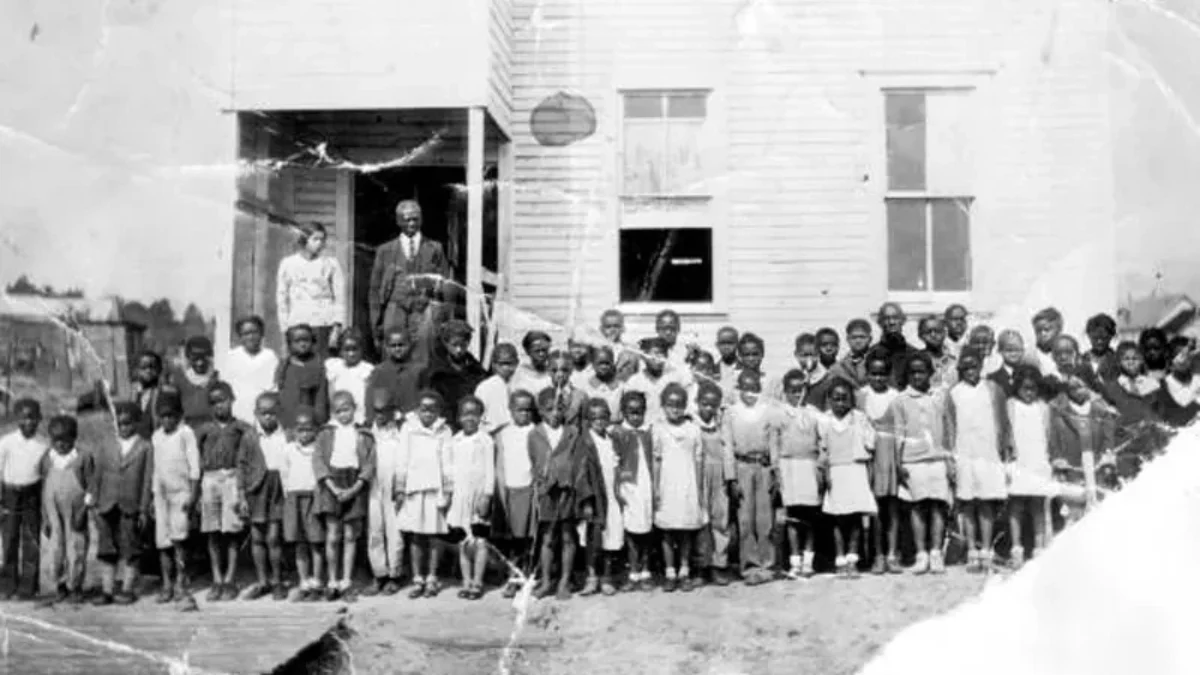
The streetcar company that founded Mason Park was later acquired by the Jacksonville Electric Company. The route remained heavily used by the Black community and was among the last streetcar lines abandoned in December 1936. In 1953, the former Mason Park property became the site of New Stanton Senior High School. Today, it is home to Stanton College Preparatory School.
Lincoln Park

Lackawanna is a historic streetcar suburb on Jacksonville’s Westside that took shape largely after the Great Fire of 1901. As the city rebuilt, new housing spread rapidly outward from Downtown, and the neighborhood was platted between 1904 and 1907 near the Seaboard Air Line Railway’s West Jacksonville shops. A streetcar line soon linked Lackawanna to Downtown, accelerating its residential growth. At the western end of the streetcar route, the streetcar company developed Lincoln Park to serve the area’s Black residents. Located along Lenox Avenue, the park quickly became a popular destination for recreation, celebrations and live entertainment.
In February 1904, Lincoln Park hosted New Orleans comedian and dancer Billy Kersands, who recounted a lively Sunday excursion beginning with a Vaudeville show at the park and ending with an evening performance at Mason Park by members of Pat Chappelle’s renowned Rabbit’s Foot Company.
During summers and holidays, Lincoln Park drew crowds in the thousands. In 1907, its entertainment program was operated by the New Orleans–based Kenner and Lewis Amusement Company.
Captivated by Jacksonville’s energy from his earlier visit to Lincoln and Mason Parks, Billy Kersands relocated his traveling minstrel show’s headquarters to Jacksonville in 1910. Nineteen-year-old Ferdinand Morton, living and performing in LaVilla at the time, decided to join the show. While on tour, Morton received his nickname “Jelly Roll.” By the end of Morton’s career he had become known as the “Father of Jazz.”
Lincoln Park eventually closed, and the city of Jacksonville acquired the property. In 1929, the city opened the Lackawanna Playfield, envisioned as Jacksonville’s premier athletic facility. It was renamed Mallison Park in 1968 to honor Nathan L. Mallison, who had served as superintendent of the Recreation Department from 1929 to 1968. Today, Mallison Park remains a vibrant public space on the Westside.
Wilder Park

During the 1920s, the growing economic strength of Jacksonville’s African American community supported expanding social and cultural opportunities. To meet the needs of this rapidly increasing population, the Jacksonville Public Library opened the Wilder Park Library in 1927 at 3rd and Lee streets.
Three years later, descendants of Charles B. Wilder donated 30 acres surrounding the library for use as a public recreational space for the city’s African American residents. Accessible by the Davis Street streetcar, Wilder Park became the largest public park available to Black Jacksonville. It featured a running track, baseball diamond, diamond ball field and the branch library. Football games drew thousands of spectators, and within its first decade, the Wilder Park Library had achieved one of the highest circulation totals in the city. The park’s amenities expanded in 1938 with the opening of the Wilder Park Community Center, located at 3rd and Mt. Herman streets. The center quickly became a hub of activity hosting a variety of programs, including popular Saturday night dances sponsored by the “Mummies Club.”
Despite its success, Wilder Park’s future was short-lived. In 1955, the newly created Jacksonville Expressway Authority targeted the park and surrounding neighborhood for highway construction. The authority routed a new expressway, later Interstate 95, through the heart of the park. The Wilder Park Community Center was demolished in 1958, and the completion of I-95 in 1960 placed a concrete barrier between the library and the neighborhoods it once served.
Cut off from its community, the Wilder Park Library closed in 1965 and was replaced by the Myrtle Avenue Branch. Today, little remains of the once-grand public space or the vibrant community that flourished around it.