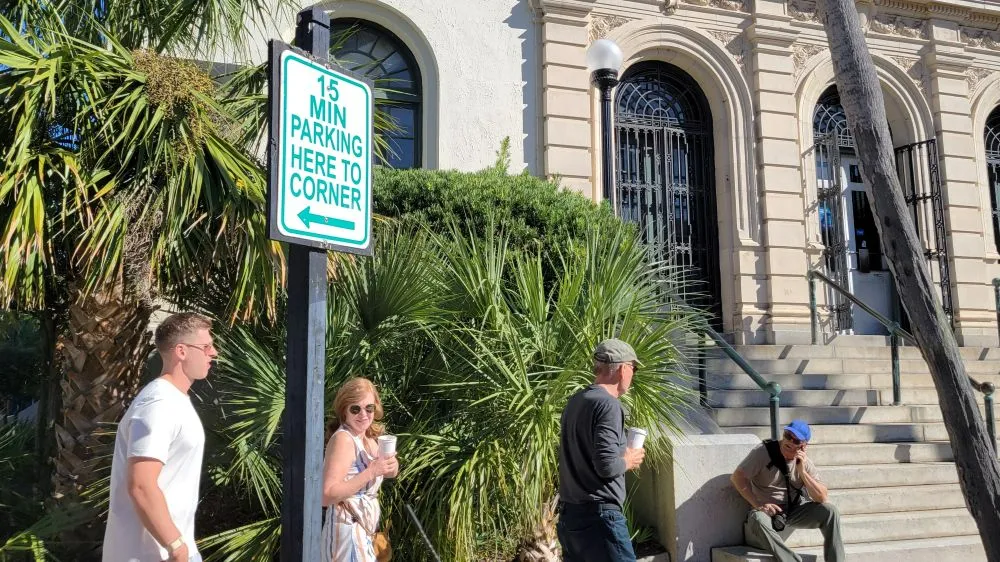
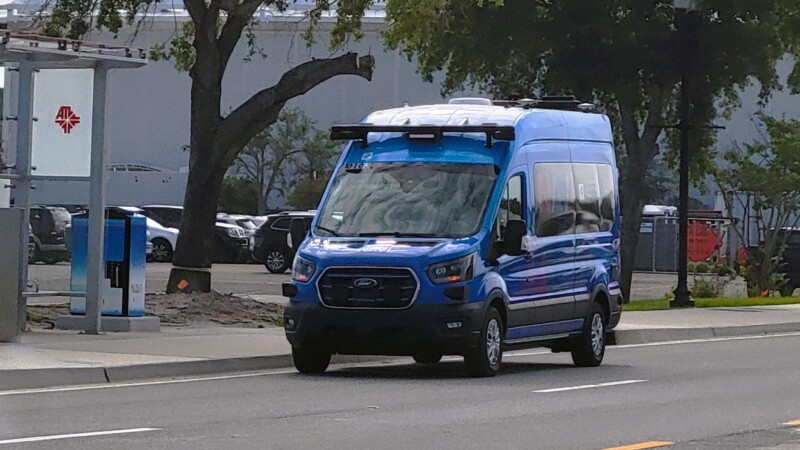
This parking spot in front of the Downtown Fernandina Beach post office at 401 Centre St could be included in the proposed paid parking plan.
Published on December 3, 2025 at 3:27 pm
Free local news and info, in your inbox at 6 a.m. M-F. Sign up for the Jacksonville Today newsletter.
A ordinance that would allow paid parking to begin early next year in Fernandina Beach got initial approval from city commissioners during a meeting Tuesday.
The 3-1 vote now moves the controversial plan to a second and final vote on Jan. 6. The plan could be instituted by late winter next year in a defined downtown area.
Jacksonville Today thanks our sponsors. Become one.
The city has already approved a contract with a company that would set up the paid parking program if the commission approves it Jan. 6. But opponents have filed a lawsuit trying to stop it, and a voter referendum is set for mid-August.
City officials say paid parking would raise money for multiple improvements downtown. So they went ahead with the initial vote even though the lawsuit or referendum could stop the plan after only a few months.
Some residents, including Richard Dean, had their say at the commission meeting.

Jacksonville Today thanks our sponsors. Become one.
Dean approved of the parking proposal, calling it a necessary revenue source for capital projects.
“Unfortunately, previous commissions did not move beyond discussions or planning phases on these projects,” Dean said. “Kicking the can on projects that need to be completed comes with a higher price tag because materials and labor increase every year. There is also some urgency because the city has received grants for the seawall project that are time-limited.”
But resident James Klauder said he moved to Fernandina Beach 20 years ago because “of what is was then.” He said he is open to change, but he suggested an alternative — giving parking permits to everybody who is a taxpaying resident on the island.
City officials said downtown residents and property owners will receive two parking permits for unlimited parking. But Klauder said he was against that and basically against paid parking.
“To me that is sort of a Trojan horse. There’s is no such thing as a temporary tax,” Klauder said. “Two or three years down the road, when you don’t get enough money for this, the simple solution will be, let’s take away those stickers and permits from the people who got them, and we will get more money that way.”
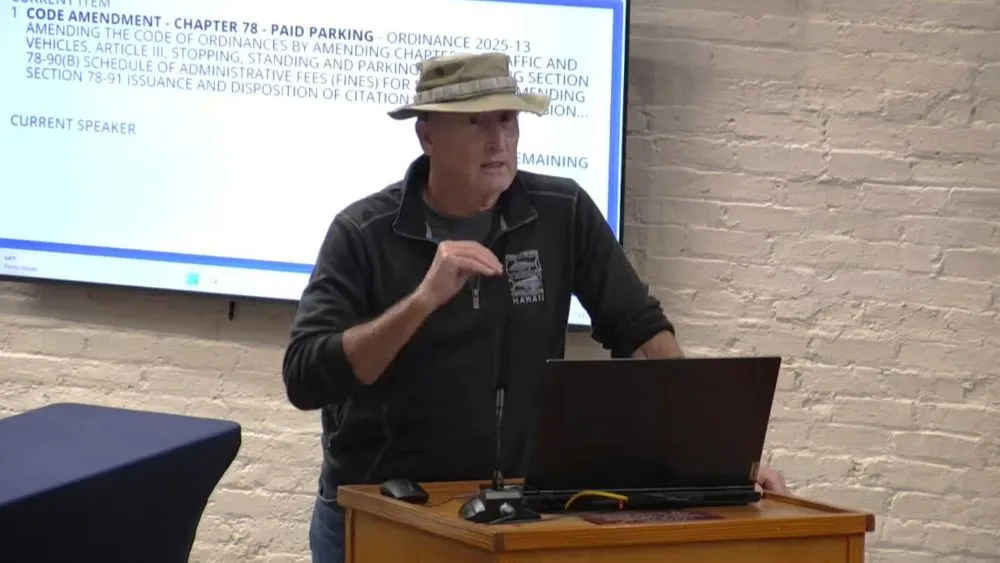
Resident Jack Ember said instituting paid parking would start “a whole waterfall of bad activity that we don’t have now.”
“Use the money you’ve got for the needs at hand,” he said. “The town is not a business. Your town is like your home. You don’t charge people to come to your house.”
History of paid parking
The five-member City Commission set a priority this year to develop other sources of revenue outside taxes, pointing to the city’s growth from 7,800 people in the 1970s to over 13,900 now.
A report projected revenue of $1.5 million to $2.5 million annually if paid parking were instituted. That would help fund projects like a new $20 million to $25 million seawall and demolishing Brett’s Waterway Cafe to expand existing docks. The funds also could help rebuild aging infrastructure downtown.
The plan would affect all public parking lots and parking spaces from Ash Street to Alachua Street and from Front Street east to, but not including, 8th Street. It also includes the public parking lots at the marina.
Opponents have said that many shops and restaurants in the downtown area survive because of how easy it is to park for free, right in front of them. A petition on Change.org, with more than 8,600 signatures, states that a paid parking system could threaten the historic city’s charming atmosphere “and disrupt our way of life.”
Rising opposition also prompted a lawsuit in October from Citizens Against Paid Parking, a nonprofit group opposed to the plan without a voter referendum.
The lawsuit seeks an injunction against the plan until voters get a say, which has been set for Aug. 18.
How parking would work
City officials say there will be no physical parking meters. Instead, signs will direct people to pay through a smartphone app.
City residents, including property owners and residents within the city limits, could get two annual parking permits at no cost and more for $24 each. There will be a 20-minute grace period, allowing people to briefly park to run an errand without paying, city officials said.
Commissioner Tim Poynter recused himself from Tuesday’s vote as officials review what was called a perceived conflict. They said he did so out of an abundance of caution since he owns or leases a few of the 460 parcels in the area where paid parking could be approved.