
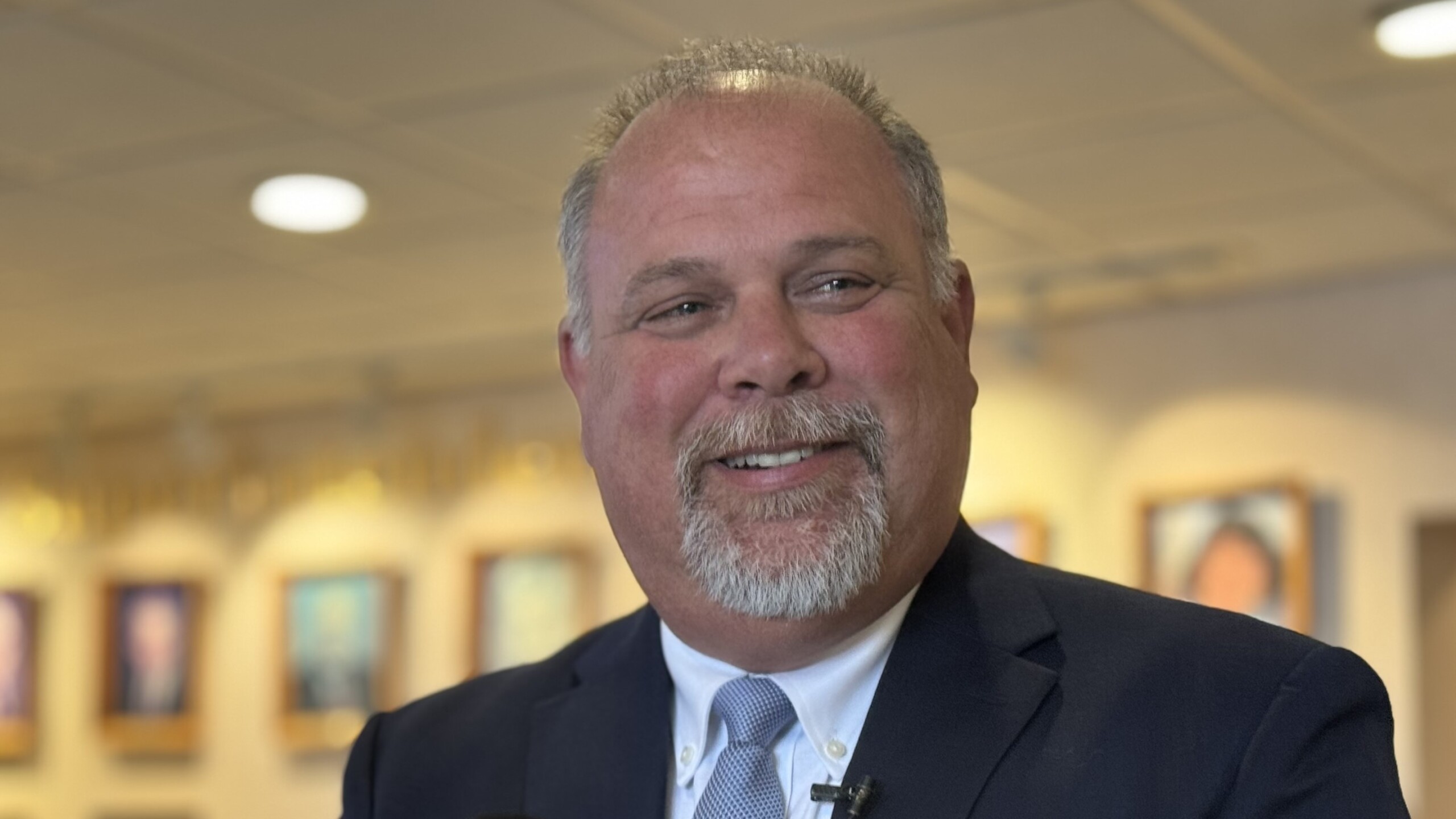
Duval Schools Superintendent Christopher Bernier has changed the way he talks about the district's finances amid the latest round of proposed school closures. | Megan Mallicoat, Jacksonville Today
Published on November 30, 2025 at 8:21 pm
Free local news and info, in your inbox at 6 a.m. M-F. Sign up for the Jacksonville Today newsletter.
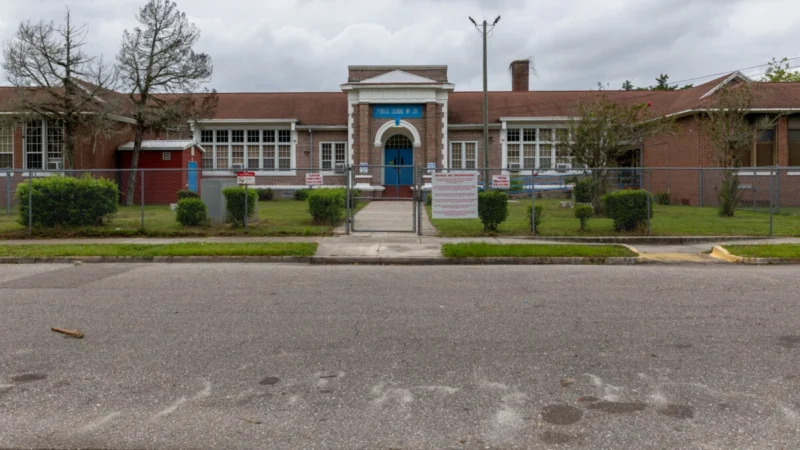
The Duval County School Board will vote Monday whether to close two more elementary schools: the urban core’s 108-year-old Long Branch Elementary and Anchor Academy, which serves many military families stationed at Mayport.
Officials say the district has 30,000 unfilled seats and they need school closures in order to “right-size” the district — in other words, to operate with enough students to break even with state funding. The district has too many small schools, Superintendent Christopher Bernier says in an oft-repeated slide presentation, and each school needs at least 700 students to recoup the cost of keeping the doors open.
Jacksonville Today thanks our sponsors. Become one.
While those reasons have remained consistent, the language that Bernier uses while talking about the financial urgency of school closures has done something of a 180 — from needing to fill a $100 million budget hole to “truly balancing” the budget a year later — though the savings from school closures do not come close to $100 million.
Last year, when the board voted to close six schools, Bernier warned the district was facing a “$100 million debt” and needed to scale back costs or risk cutting jobs. And the superintendent repeatedly raised the specter of a state takeover due to depleted reserves.
“We have a better fund balance than we’ve had in the past,” Bernier told the board this November. “We’re moving away from that critical factor of state takeover.”


Jacksonville Today thanks our sponsors. Become one.
At the time of last year’s vote, the meeting agenda showed the district’s “ending fund balance” was 4.04% of revenue, above the state’s 2% takeover threshold. That was down from previous balances of 8% in 2020 and 2021.
What happened to the ‘$100 million debt’?
A year ago, Bernier came back again and again to the “$100 million” talking point.
On the eve of a round of school closures that rallied communities, Bernier said Duval Schools had a “$100 million debt” that would not go away unless the board made cuts like closing schools.
A week later, the board voted to close three schools at the end of that school year and three more at the end of this one. This spring, the district announced most secondary schools would cut one of their eight daily periods, which it said would save as much as $10 million. Leaders floated eliminating bus transportation to magnet schools but later decided against it.
During Duval Schools CFO Ron Fagan’s presentation to the board last month, District 4 School Board member Darryl Willie — who voted against half of the 2024 school closures — asked Fagan what happened to the “$100 million” debt.
“One of the conversations we kept coming back to was this number, about a hundred million dollars. That was a number the public knew,” Willie said.
Fagan chalked up the shift, in part, to a change in the district’s accounting methods.
“That original $100 million was basically looking at your prior years…we kept seeing a fund balance continuing to go down. At the same time, [COVID-era funding] was getting ready to go away,” Fagan said. “We were projecting, if we continue on with this trend, we’re going to have a $50 [million] to $70 million problem.”
In previous years, Fagan explained, his predecessor underfunded some categories to balance the budget — like using salary averages instead of actual figures, for example — and then used reserves to make up for any shortfalls at the end of the year. Fagan says his approach fully funds all categories, and so eliminates the potential for large transfers from reserves to cover shortfalls. And, a one-time bump from leftover federal COVID funding is helping pad this year’s reserves.
“So now the objective is to control that spending moving forward and make sure we budget sufficient reserves to handle any hiccups in the future regarding an unexpected expense or a decline in the reserves,” Fagan said.
Fagan tells the School Board the district’s finances are steadily improving.
For one, the state Department of Education recently notified the district it would receive an additional $1 million based on student enrollment, in addition to a belated $2.3 million payment the district was already expecting.
And, Fagan said, an incremental increase in the district’s reserves “shows a very strong, stable financial structure.”
School closures and saved dollars
Consolidating schools to save money is complicated by the fact that not all students choose to attend their assigned new school. Projected savings can be negated by the loss of state funding for students who leave the district altogether.
Corey Wright, Duval Schools’ chief of accountability and assessment, told the board in November that student retention after closures averages somewhere in the mid-80% range.
If a school has 300 students, and 15% don’t stay, those 45 students represent nearly $400,000 lost in state funding.
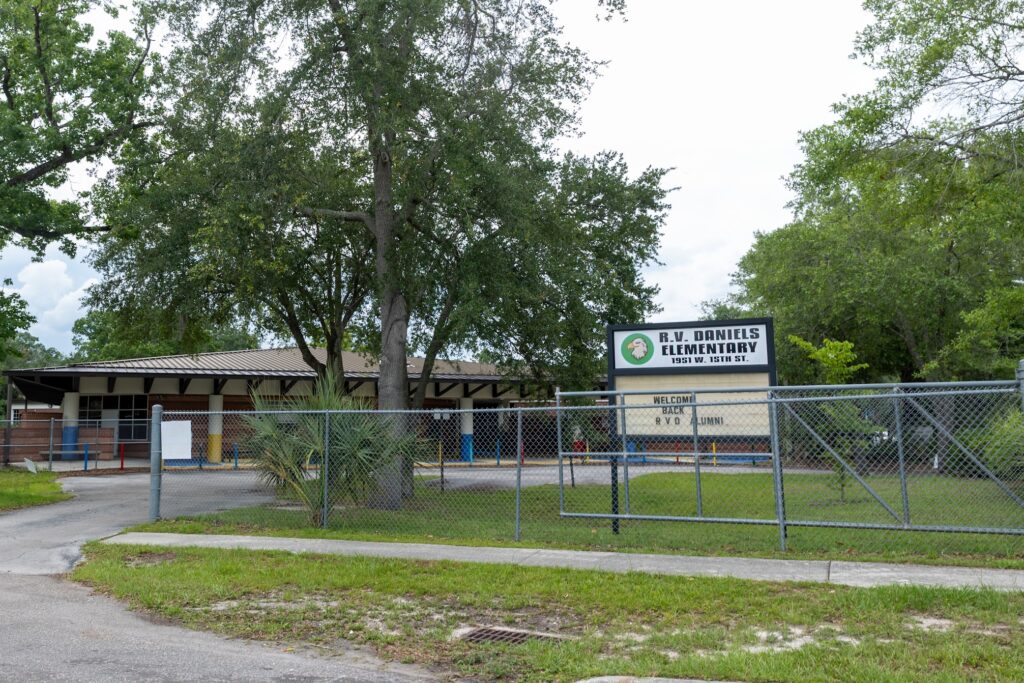
Another danger of leaving the receiving school under-enrolled comes from the state’s Schools of Hope program, which allows certain independent charter operators to open in low-enrollment or vacant schools.
“It still leaves the consolidated school with too many open seats,” District 2 school board member April Carney said. “And that, to me — especially with all these Schools of Hope letters that we’re getting…How do we bring more people into those open seats once the school is consolidated?”
Carney said she’s received feedback that the current consolidation process creates “animosity” and pits the two schools against each other.
“It’s such a sticky, uncomfortable process that nobody wants to go through,” she said. “How do we help communities change those attitudes and come together so that we end up having the right amount of utilization in the consolidated school?”
Wright said two schools with low enrollment numbers are a bigger risk than one.
“If you keep two schools open that are really low-utilized, then you have opportunity for Schools of Hope to operate in two schools. Until we get to a point where our district is really right-sized, this is going to be a battle,” Wright said.
Jacksonville’s schools are not evenly distributed geographically. District 4 has two-and-a-half times as many schools as District 7, for example, but less than 20% more students enrolled.
“We can’t talk about consolidation without talking about the history and the inequities that were built before — because some students could not go to school together, so you had two schools right beside each other,” District 4 rep Willie said, referring to mandatory racial segregation.
Duval Schools only achieved unitary status — a designation from the federal government signifying that its schools are no longer segregated — in 1999.
“That’s why we’re in this place now,” Willie said. “And we haven’t rectified that or come to a place where we say, ‘You know what? Let’s figure that out.’”
Parents who live in his district notice “there’s a lot of schools within the North and Northwest side that are closing,” Willie said.
“We have to figure out on whose back are we building this?” he said.